
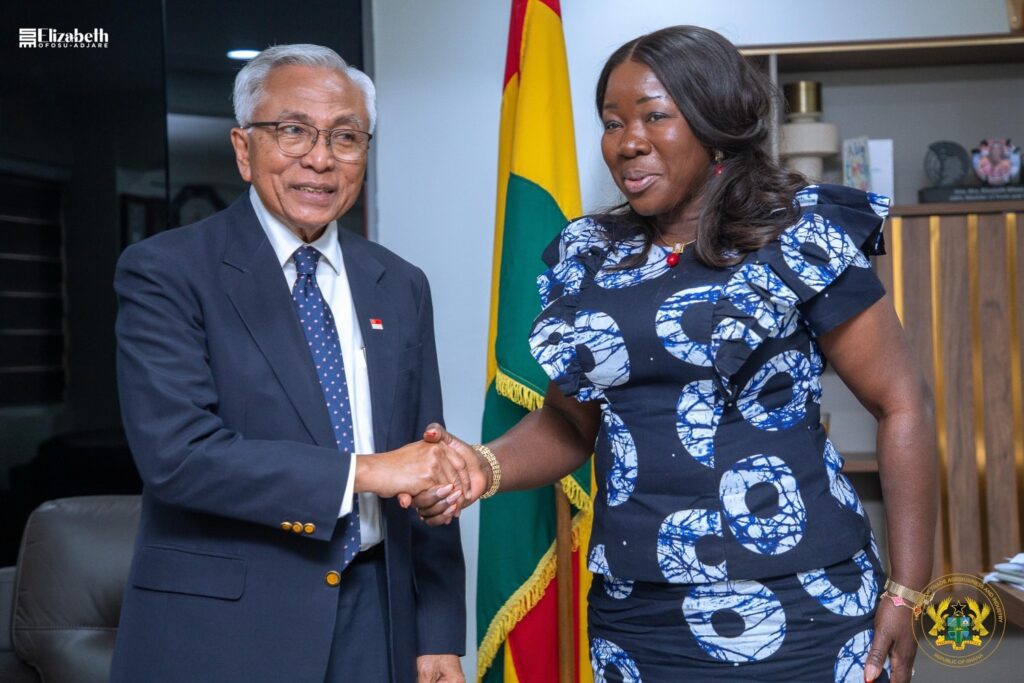
A recent high-level diplomatic engagement in Accra between Hon. Elizabeth Ofosu-Adjare, Minister for Trade, Agribusiness, and Industry, and the Singaporean High Commissioner, H.E. Hamazi Daipi, has signaled a structural shift in Ghana’s approach to Foreign Direct Investment (FDI).
The meeting, which moved beyond traditional bilateral pleasantries to outline a specific, model-driven industrial agenda for the Ghanaian economic landscape, was a strategic attempt to import the “Singaporean Miracle” – a framework defined by precision planning, green industrialization, and high-value agribusiness.
According to the Ministry of Trade, Agribusiness and Industry (MoTAI), the timing of this meeting was significant, with the government looking for development partners that offer more than just loans to help accelerate its economic vision.
“The meeting marked a significant step towards deepening bilateral ties between the two nations, with a strong emphasis on expanding trade, investment, and cooperation in agribusiness. High Commissioner Hamazi reaffirmed Singapore’s commitment to increasing its investment footprint in Ghana, particularly in sectors such as agribusiness, trade, and industrial growth”
Ministry of Trade, Agribusiness and Industry
Singapore, with its history of transforming a resource-poor island into a global trade and financial hub, provides the exact technical and urban-planning template Ghana requires to operationalize its economy.
The discussion centered on expanding Singapore’s investment footprint, specifically targeting the manufacturing of textiles, garments, and pharmaceuticals – sectors that are critical to reducing Ghana’s import bill and stabilizing the Cedi.
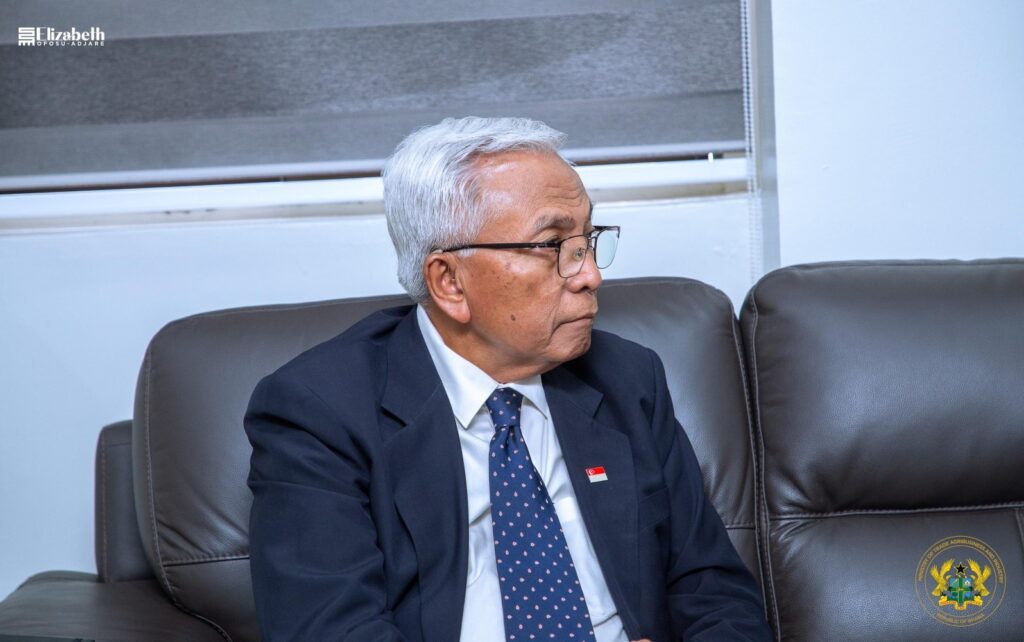
“We see immense potential in Ghana, and we are eager to contribute to its development. Singapore is ready to collaborate with Ghana to unlock the country’s potential as a hub for investment in Africa”
H.E. Hamazi Daipi, Singaporean High Commissioner
MoTAI referenced the recent commissioning of a state-of-the-art pasta plant by Olam Agri as a testament of the current Ghana-Singapore economic relationship. Inaugurated by H.E. President John Dramani Mahama, the facility serves as evidence for Ghana’s industrialization strategy.
Olam Agri, a global powerhouse headquartered in Singapore, represents the type of anchor investor the government seeks – firms that bring proprietary technology, global supply chain access, and a commitment to local value addition.
By highlighting this investment, Hon. Ofosu-Adjare nodded to how the Olam Agri model proves that foreign investment can drive local industrialization while creating thousands of direct and indirect jobs in the agribusiness value chain.
Replicating the Singaporean Model
The Ministry revealed that the most unique takeaway from the meeting was the Minister’s focus on sustainable urban planning, where Hon. Ofosu-Adjare explicitly expressed her determination to replicate Singapore’s “Green City” model within her own constituency and broader industrial zones.
This represented a shift toward functional aesthetics – the idea that for an industrial zone to be productive, it must be clean, well-planned, and environmentally sustainable. She added that integrating green spaces and sustainable infrastructure into industrial planning improves Ghana’s investment profile for institutional investors who are increasingly wary of dirty industrialization.

The Minister’s admiration for Singapore’s “beautiful and clean,” cities was not just about vanity; it was about creating a high-quality environment that attracts top-tier global talent and ensures the long-term viability of Ghana’s urban centers.
“Ghana is poised to take full advantage of the opportunities presented by the AfCFTA, and we see Singapore as a key partner in this journey,” she added.
For Singaporean firms, Ghana’s strategic position as the host of the AfCFTA Secretariat was the key selling point as Hon. Ofosu-Adjare placed it as the logistical gateway to a market of 1.3 billion people.
She noted that Singaporean companies can manufacture high-value goods within Ghana’s Free Zones – benefiting from tax holidays, duty-free imports, and streamlined regulations – and then export those goods duty-free across the African continent under the AfCFTA framework.
The Ministry emphasized the “ease of doing business,” within these zones, and called for increased collaboration in the pharmaceutical and textile sectors – industries where Singapore possesses significant technical depth.
It was also added that establishing production bases in Ghana can allow Singaporean firms to bypass the logistical costs of shipping finished products from Asia to Africa, and instead utilize Ghana’s emerging “supply chain resilience,” to dominate regional trade.
The meeting concluded with a mutual agreement to deepen ties in agribusiness and industrial growth, with an emphasis on value addition.
MoTAI reiterated that the goal is to move Ghana away from the export of raw agricultural produce toward the export of refined, branded food products and the involvement of Singapore provides the necessary capital and capability to bridge the current infrastructure gap.
High Commissioner Hamazi’s reaffirmation of Singapore’s commitment showed that the next phase of this partnership will involve more joint ventures and technology transfers.
READ ALSO: Free Primary Healthcare Programme Boosted as Government Procures 24,534 Medical Equipment