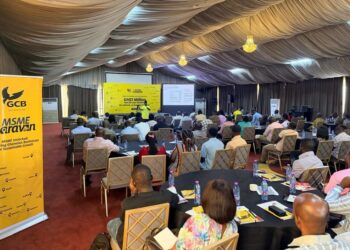

The African Development Bank (AfDB) has initiated a high-level diagnostic of Ghana’s quality infrastructure as it prepares to deploy a transformative ten-year developmental roadmap.
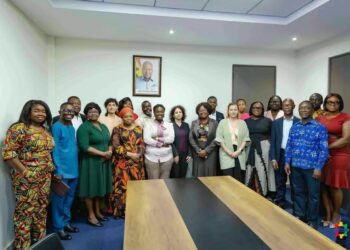
This follows a delegation from the Bank’s Independent Development Evaluation (IDEV) unit holding strategic talks with the Director-General of the Ghana Standards Authority (GSA), Prof. George Agyei, at the Authority’s headquarters in Accra.
The engagement marked a critical data-gathering phase for the AfDB, which is seeking to refine its funding mechanisms for Private Sector Engagement (PSE) and agricultural growth across the continent through 2036.
“The team, led by Mr. Andson Nsune of the Independent Development Evaluation (IDEV), explained that the visit was aimed at gathering findings and key lessons to help shape the implementation of the Bank’s new 10-year strategy focused on promoting private sector growth within the agricultural sector”
Ghana Standards Authority
For the GSA, the visit represented an opportunity to demonstrate that standardization is not merely a regulatory hurdle but the essential connective tissue that allows the private sector to scale.
As the AfDB shifts toward a strategy focused on deepening the commercial viability of African agriculture, the GSA’s role in ensuring product quality, safety, and international competitiveness has become the primary metric for the Bank’s future intervention success.

The AfDB delegation noted that it is currently undertaking a rigorous evaluation of the Bank’s support for private sector growth in Ghana, with the audit designed to extract “key lessons,” from previous funding cycles to ensure that the next decade of capital deployment is more surgical and impactful.
The Bank is focused on moving away from raw production toward value-added agricultural systems that can thrive in a competitive global market, and visiting the GSA acknowledged that credit facilities and infrastructure projects are insufficient if the resulting products do not meet the rigorous standards required for export and high-value domestic retail.
The GSA serves as the ultimate validator in this pipeline. Prof. Agyei emphasized that the Authority’s mandate is inextricably linked to every facet of the Ghanaian economy, positioning standardization as a non-negotiable prerequisite for the private sector’s “license to operate” in a modernized agricultural landscape.
Driver Of Gender Equity
A distinct and vital component of the AfDB’s evaluation was the focus on Gender Equality and Women’s Empowerment (GEWE). It highlighted how women have dominated the primary production and informal processing stages of the agricultural value chain in Ghana, yet they have faced disproportionate barriers to formalizing their businesses.
One of the primary barriers is the cost and complexity of meeting national and international standards. The GSA’s engagement with the Bank’s IDEV team suggested a growing recognition that “gender-neutral” policies often fail to account for the specific challenges faced by female entrepreneurs.

Through the integration of gender-sensitive evaluations into its new 10-year strategy, the AfDB is looking to the GSA to help create a more inclusive standardization framework. This involves simplifying compliance for small-scale processors – many of whom are women – to ensure they are not excluded from the lucrative supply chains that the Bank’s private sector support aims to build.
The GSA’s positioning during this visit was one of total economic integration. Prof. Agyei’s assertion that the Authority is “closely aligned to every sector” was a strategic reminder to the AfDB that quality infrastructure is a horizontal necessity, not a vertical silo.
Whether the Bank is funding poultry value chains, cocoa processing, or irrigation projects, the “standardization stamp” remains the final gatekeeper of bankability. For the AfDB’s new strategy to succeed, the standardization-to-growth pipeline must be strengthened.
This means moving beyond occasional project-based support toward institutionalizing quality culture. If the GSA can prove to the IDEV team that its standards-setting and metrology services have directly contributed to the survival and expansion of private firms, the Authority may see its role expanded within the Bank’s upcoming continental projects.
Mr. Nsune and his team noted that the findings gathered will ultimately dictate how the AfDB allocates billions of dollars in development assistance over the next ten years.
The Bank is seeking to create a template for agricultural transformation that can be exported across the continent. Ghana, with its relatively robust standards framework, is being used as a primary case study for how institutional alignment can catalyze private investment.

The GSA’s involvement ensures that this 10-year strategy will be grounded in the realities of market access – since without a strong standards body, private sector growth is often hollow, leading to products that cannot compete with cheaper, standardized imports.
The AfDB concluded with the fact it hopes to builds a roadmap that prioritizes the market-readiness of African goods, ensuring that the next decade of growth is both sustainable and inclusive, by securing the GSA’s insights.
READ ALSO: Ghana Strengthens Commitment To Child Protection With New Strategy