
The Minister for Fisheries and Aquaculture Development, Hon. Emelia Arthur, has executed a strategic inter-ministerial mission to Buipe to bridge the operational gap between energy supply and the inland fisheries value chain.
Flanked by the Member of Parliament (MP) for Central Gonja and Minister for Energy and Green Transition, Hon. John Abu Jinapor, the visit to the Savannah Region represents a high-level coordination effort to synchronize fuel logistics with industrial fishing requirements.
According to the Ministry of Fisheries and Aquaculture Development (MoFAD), engaging directly with the frontline actors of the Buipe fishing hub signaled a shift toward integrated resource management, where the success of the Blue Economy is tethered to the efficiency of the nation’s energy transition and infrastructure development.
“Community members and key stakeholders highlighted several critical issues requiring urgent attention. Top among the concerns raised were the timely supply and effective distribution of premix fuel, access to essential fishing inputs to support productivity, and the need for improved landing sites to enhance overall operational efficiency”
Ministry of Fisheries and Aquaculture Development
The arrival of both ministers in Buipe, as part of Hon. Arthur’s six-day nationwide tour, was a targeted assessment of the bottlenecks stalling the region’s aquatic productivity. The Savannah Region, a critical node in Ghana’s inland water network, has faced persistent challenges regarding the reliability of energy inputs and the physical state of landing sites.
The presence of Hon. Jinapor alongside the Fisheries Minister was a reiteration of the state’s view of the fisheries sector through a multi-sectoral lens, recognizing that the sustainability of the sector depends on a transparent and reliable energy backbone to power outboard motors and processing facilities.
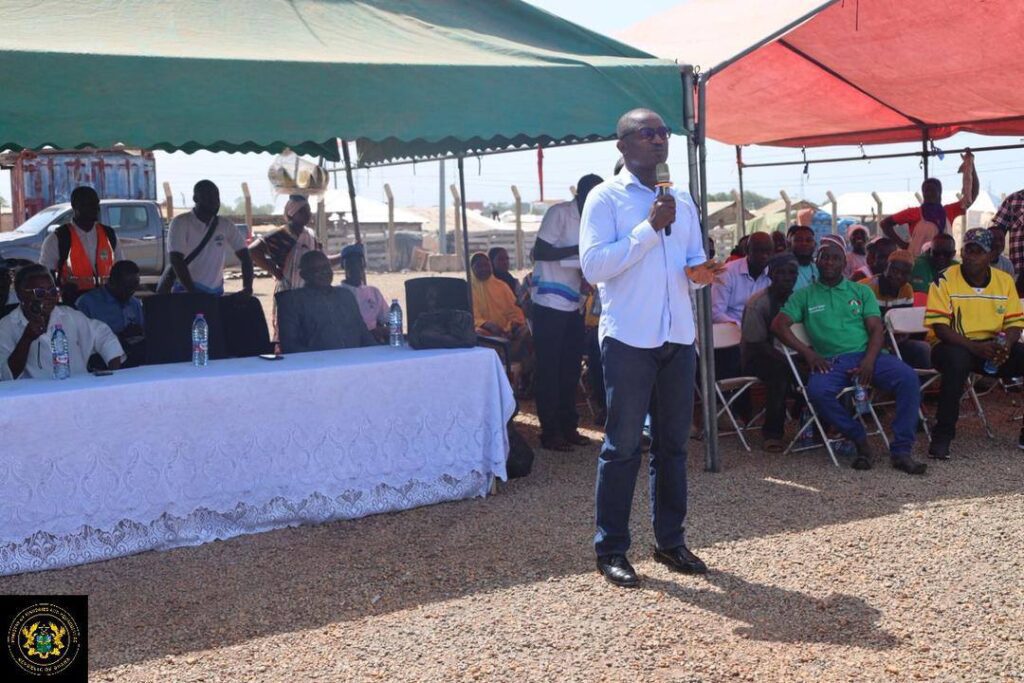
The core of the stakeholder engagement in Buipe centered on the distribution mechanics of premix fuel. For the fishing communities of Central Gonja, the availability of fuel is the primary determinant of economic survival.
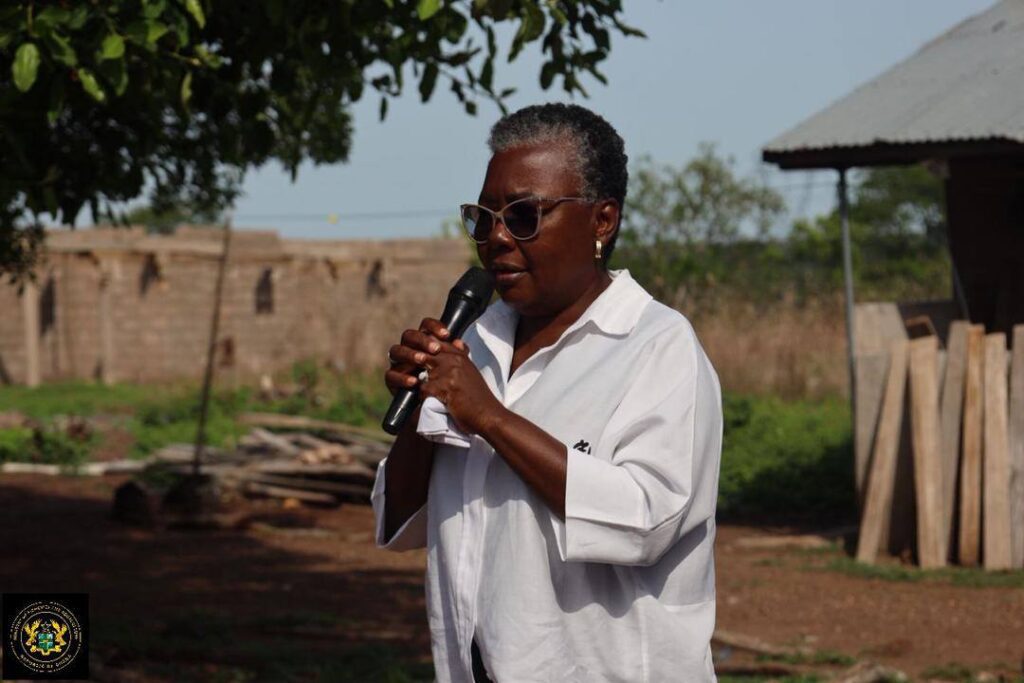
Community members and industry stakeholders were vocal about the need for a more transparent and timely supply system that eliminates artificial shortages and price gouging. Hon. Arthur’s visit allowed the MoFAD to gather raw data on the specific logistical failures within the current distribution model, providing the necessary feedback to refine the supply chain.
MoFAD cited the involvement of the Ministry of Energy and Green Transition as evidence of the government looking to apply modern logistical oversight to the premix sector. The objective is to ensure that the fuel intended for fisherfolk reaches the landing sites without being diverted or sold at inflated rates.
This transparency is the essential precursor to the broader modernization of the fleet. Without a guaranteed energy supply, the transition to more advanced fishing techniques remains impossible. The joint ministerial presence served to reassure the community that the energy requirements of the Blue Economy are now a cabinet-level priority.
Industrializing Value Chain
Beyond the immediate requirements of the catch, the mission focused heavily on the post-harvest sector, particularly the role of women in fish processing and trading.
In Buipe, the traditional methods of smoking and drying fish are being challenged by the need for higher hygiene standards and better shelf-life for national distribution. Hon. Arthur addressed these challenges by proposing the deployment of modern fish processing equipment.
This move is designed to transform subsistence-level processing into a formal industrial activity that can supply urban markets with consistent quality. The provision of modern equipment was coupled with the planned improvement of landing sites. Currently, the lack of structured handling and storage facilities at the water’s edge leads to significant post-harvest losses.
The Minister noted that the government’s commitment to improving these sites is an investment in the physical infrastructure of the Savannah Region, intended to create a more hygienic and efficient transition point from the lake to the market.
Strengthening this specific link in the value chain is aimed at boosting local economic activity and improving the daily working conditions for thousands of women who are the primary drivers of the region’s fish trade.
“Hon. Emelia Arthur reaffirmed the government’s commitment to addressing the concerns of fisherfolk and ensuring that interventions are responsive to the real needs of communities, with a focus on implementing sustainable policies and targeted support programmes to enhance productivity”
Ministry of Fisheries and Aquaculture Development
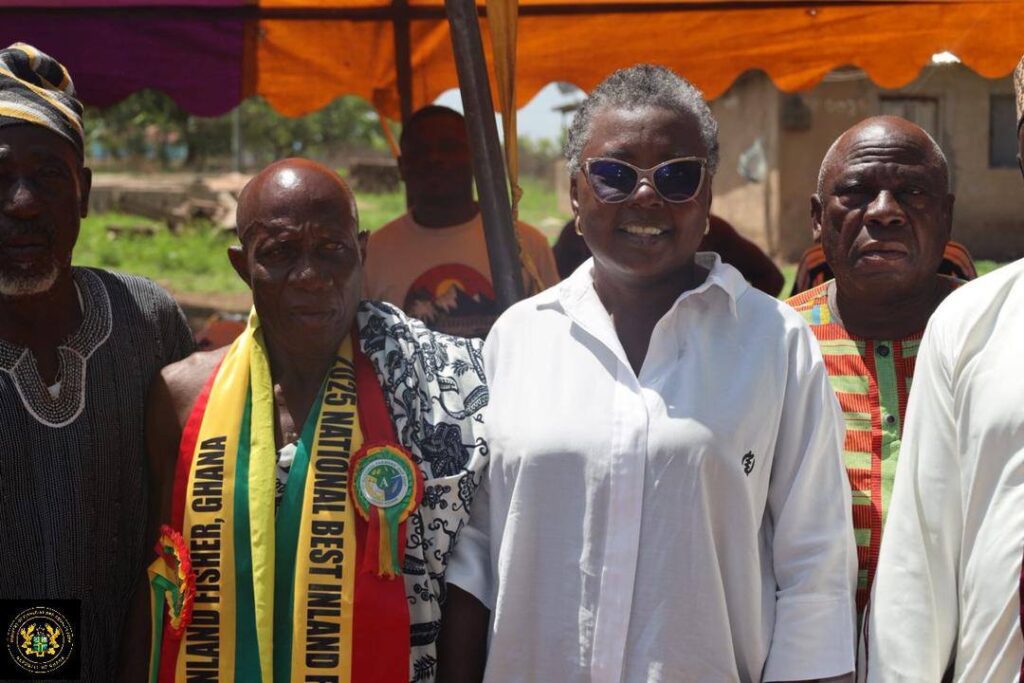
The tour extended to Kintampo-Abodwese, where Hon. Arthur held a technical consultation with the headman of the local fisherfolk, who is also the recipient of the Best Inland Fisher award at the National Farmers Day 2025. This interaction provided the Ministry with high-level insights from the sector’s top-performing practitioner.
The discussion focused on the scalable success of the Best Inland Fisher’s operations and how those practices can be replicated across other inland communities to raise the national baseline of productivity.
The insights gained from Kintampo-Abodwese are expected to inform the zero-draft Inland Fisheries Management Plan, particularly regarding the welfare of fisherfolk and the sustainable management of inland resources. The headman’s dual role as a community leader and a national award winner makes him a critical bridge between government policy and local implementation.
A Unified Vision
The collaborative tone of the visit was reinforced by Hon. John Abu Jinapor, who assured the people of Central Gonja that the partnership between the Fisheries and Energy ministries is a permanent administrative fixture.
This inter-ministerial cooperation is the foundation of the government’s broader stakeholder engagement initiative, which seeks to move away from top-down directives and toward inclusive, decentralized development. The Savannah Region is now positioned as a testing ground for this new model of resource governance.
As the Minister for Fisheries and Aquaculture Development continues her nationwide tour, the findings from Buipe and Kintampo-Abodwese will be used to calibrate national support programmes. The focus remains on delivering practical, scalable solutions that address the specific needs of each region.
The mission has established that the future of Ghana’s fisheries depends on the successful integration of energy logistics, modern processing technology, and a deep, consultative relationship with the people who anchor the industry.
Through the joint leadership of Hon. Emelia Arthur and Hon. John Abu Jinapor in Buipe and the surrounding districts, the state has identified the critical intersection of energy and industry that will determine the success of the Blue Economy.
For MoFAD, prioritizing premix fuel transparency, modernizing processing infrastructure, and consulting with proven industry leaders is laying the groundwork for a more productive and sustainable fisheries sector in the Savannah Region.
The commitment to responsive, inclusive development ensures that the voices of the Buipe and Kintampo-Abodwese communities will directly shape the future of Ghana’s national fisheries policy.
READ ALSO: Expanding Electoral College Was Meant to End Voter Apathy — Kodua Frimpong