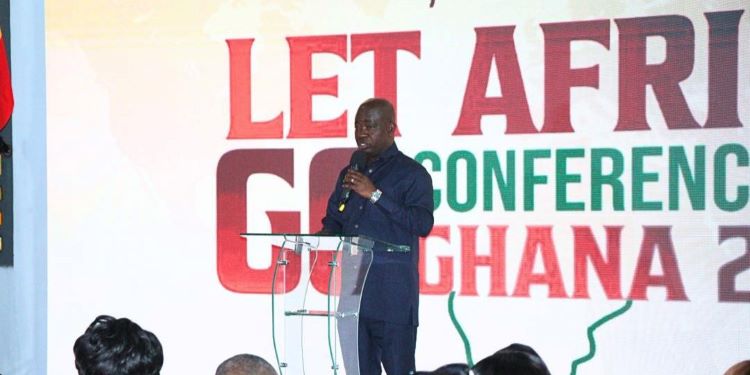
The boundaries between trade policy and moral philosophy have recently been dissolved at the 2026 Let Africa Go Conference, as the Deputy Minister for Trade, Agribusiness and Industry, Hon. Sampson Ahi, reframed Africa’s industrialization not merely as a fiscal target, but as a byproduct of a profound socio-economic and spiritual awakening.
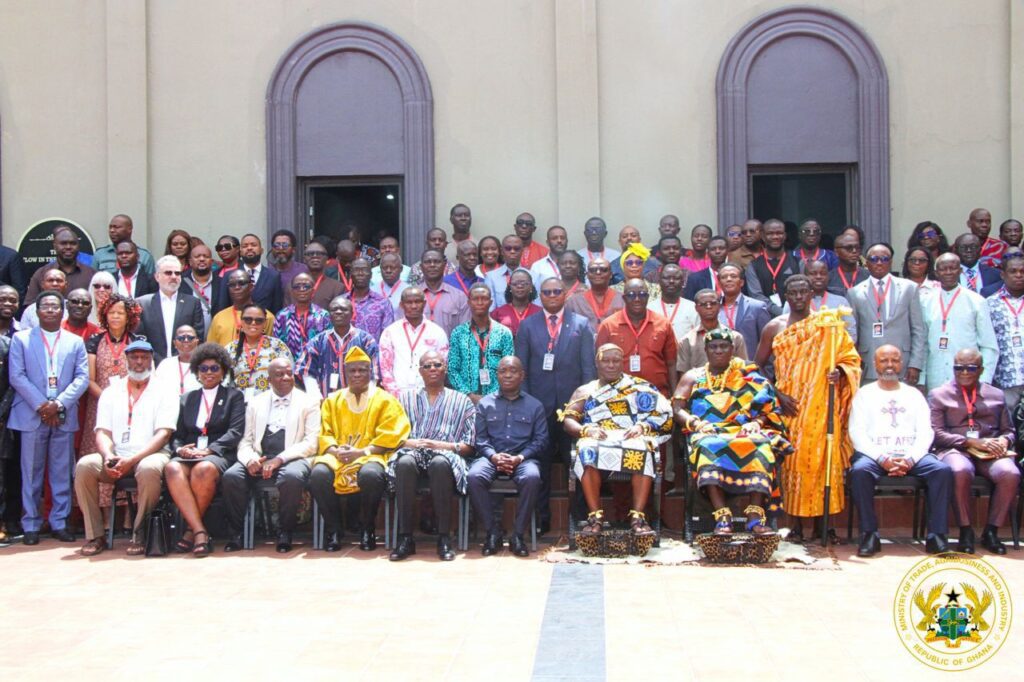
Speaking to a diverse assembly of faith leaders, entrepreneurs, and policymakers at the Anagkazo Campus in Akwapim Mampong, the Deputy Minister asserted that the continent is entering a “new dawn” characterized by visionary innovations and a decisive break from narratives of underdevelopment.
The core of Hon. Ahi’s message, delivered on behalf of the Sector Minister, Hon. Elizabeth Ofosu Adjare, centered on the belief that economic transformation – driven by trade, agribusiness, and innovation – cannot be sustained in a vacuum. Instead, it must be anchored in a shift of national consciousness.
“The clarion call of ‘Let Africa Go’ is not just spiritual; it is deeply economic and developmental. Africans are increasingly taking ownership of their development agenda with solutions tailored to the continent’s realities. Africa is entering a new era defined by hope, resilience, innovation, and self-determination”
Hon. Sampson Ahi, Deputy Minister for Trade, Agribusiness and Industry
For the Ministry of Trade, Agribusiness and Industry (MoTAI), the conference theme, “A New Dawn for Africa: Pursuing Visionary Innovations for Continental Transformation,” was a direct challenge to the status quo, as the conference title itself, “Let Africa Go,” was interpreted as a dual mandate.

Hon. Ahi emphasized that while the continent’s youthful population and vast natural resources are essential components of growth, they require a foundation of self-determination and ethical leadership to reach their full potential.
He argued that the call for Africa’s release is a demand to remove the structural and psychological barriers that have long tethered the continent to a narrative of poverty, by taking ownership of the development agenda and implementing solutions tailored specifically to continental realities.
Central to this localized solution is the African Continental Free Trade Area (AfCFTA). The Deputy Trade Minister highlighted the AfCFTA as the ultimate transformative opportunity – a mechanism to unify the African market and unlock a level of shared prosperity previously deemed impossible.
In Hon Ahi’s view, the AfCFTA is the physical manifestation of the conference’s call for continental transformation, providing the infrastructure for jobs, growth, and industrial synergy across borders.
Moral Anchor
One of the more striking elements of the Deputy Minister’s address was the warning against “growth without direction.” In a sharp departure from standard bureaucratic rhetoric, Hon. Ahi argued that economic metrics alone are insufficient to define a successful nation, positing that development must be tethered to a robust set of moral and ethical values.
Without this anchor, industrial expansion risks becoming destructive rather than productive. He placed faith-based organizations at the center of the industrial strategy with this perspective, charging them with the responsibility of shaping the ethical leadership required to manage Africa’s growing wealth.
The Minister’s stance was that social cohesion and national consciousness are as vital to the trade ecosystem as capital and labor. When development is divorced from values, it loses its human-centric focus, leading to growth that may benefit a few but leaves the majority behind.
Through his advocacy for “holistic development,” Hon. Ahi emphasized that the path to a unified African market requires a collective commitment to integrity and strategic partnerships between the state and religious institutions.
The conference also featured significant contributions from the Ministry of Local Government, Chieftaincy, and Religious Affairs. Hon. Ahmed Ibrahim echoed the call for a unified front, praising the church’s historical contributions to the foundational pillars of education and healthcare in Ghana.
This synergy between religious institutions and the state is seen as a prerequisite for the “socio-economic renewal” envisioned by the government. Hon. Ibrahim’s call for investment in human resources and digital technology further underscored the multifaceted approach required for modern transformation.
The “Let Africa Go Movement” was positioned as a catalyst for this revival, merging the power of prayer with the pragmatism of leadership development. The Ministry of Trade recognized that the challenges of the 2026 economic landscape require a workforce that is not only technologically proficient but also socially conscious.
Moreover, the emphasis on digital technology during the conference reflected a broader ministerial drive to ensure that Africa’s industrialization is “future-proofed” through innovation and high-tech integration.
The conclusion of the Ministry’s address was a call for a permanent shift in how Africa views itself, leveraging the entrepreneurial spirit inherent in Africa’s youth and the vast opportunities presented by the AfCFTA to rewrite its economic history.
READ ALSO: Jeffrey Nortey’s “3 Faces of Jeffrey Nortey” Back to National Theatre