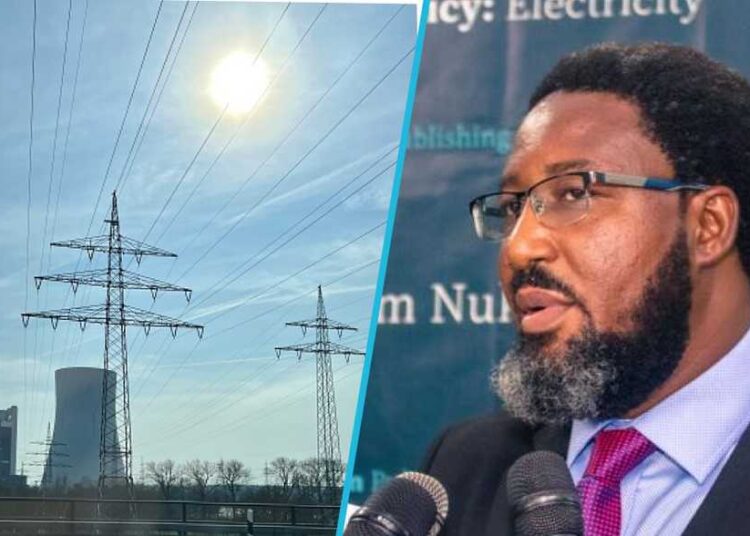
Lom Nuku Ahlijah, a law lecturer and energy expert, has urged government to dismantle the sweeping operational monopoly of the Electricity Company of Ghana (ECG) by dividing its expansive southern distribution zone into smaller, independent private concessions.
This strategic unbundling model aims to radically curb the crippling aggregate technical and commercial losses that have plagued the state utility provider for decades.
By decentralizing the power distribution framework, the expert contends that private players can inject the necessary efficiency, local oversight, and capital required to stabilize the national grid and restore the financial viability of the broader energy sector.
“So now, the goal is to do smaller concessions within the ECG. So instead of having one big entity like PDS taking over, you have about 20 or 15. More manageable, easier to focus on and deal with the issues.”
Lom Nuku Ahlijah, a law lecturer and energy expert

Mr. Ahlijah underscored that the sheer size of the current ECG operational territory, which encompasses the entire southern sector of Ghana, makes holistic oversight and revenue collection highly inefficient.
Under the proposed model, which aligns with recent policy dialogues involving the International Monetary Fund (IMF) and previous Millennium Challenge Corporation frameworks, the distribution giant would be unbundled into fifteen or twenty manageable regional concessions.
Unlike the ill-fated Power Distribution Services (PDS) framework which attempted a single-entity wholesale takeover of ECG’s commercial functions, this multi-concession approach splits the geographical burden, allowing localized entities to effectively manage power distribution, track systemic leakages, and optimize bill collections within clearly defined territorial boundaries.
Tackling Commercial Losses and Systemic Theft
Addressing the core drivers of cash suppression within the power value chain requires an aggressive confrontation with commercial losses, which account for a substantial portion of the estimated 20% to 30% total system leakages.

The energy expert observed that while technical losses due to long-distance transmission heat and line capacities are inevitable, commercial losses primarily driven by sophisticated power theft, illegal connections, and meter tampering constitute a deliberate attempt to siphon resources from the state.
Crucially, this phenomenon is not merely an issue of small-scale domestic consumers, as “some are large industries, large companies, big consumers” who possess the capacity but lack compliance culture to pay for their actual energy consumption.
To mitigate these deliberate infractions, the energy expert emphasized that the power sector requires substantial capital to install advanced tracking technologies that notify utilities of real-time theft.
Historically, the state has relied on physical task forces to go around and catch perpetrators, a reactive methodology that remains inadequate given the scale of the southern zone.
By breaking the distribution network into smaller units, a concessionaire managing a concentrated zone like Greater Accra would possess the administrative agility to deploy specialized localized monitoring systems, identify theft points immediately, and enforce strict legal penalties against defaulters without systemic delays.

Resolving Capital and Tariff Optimization Dilemmas
Implementing advanced grid monitoring infrastructure introduces a complex economic paradox regarding consumer tariffs and sectoral capitalization.
Ahlijah acknowledged that “the more we invest in the energy sector, the more the bills will go up because it’s about cost,” meaning that state-funded infrastructure overhauls frequently translate into higher financial burdens for ordinary citizens.
This capital constraint justifies the public-private partnership approach currently considered by policymakers, as it shifts the primary burden of capital expenditure from the national treasury to private concessionaires.
Consequently, the state can optimize its regulatory functions while private capital finances the technological modernization necessary to suppress distribution losses.
Restructuring ECG to Mitigate National Energy Crises
The proposed balkanization of the southern distribution zone addresses a fundamental structural vulnerability, as the Electricity Company of Ghana remains structurally positioned at the epicenter of nearly every fiscal and operational crisis within the national energy value chain.
When the distribution sector fails to collect revenues effectively, the financial deficit cascades upward, starving transmission and generation segments of vital liquidity.

Restructuring ECG into smaller, highly liquid concessions breaks this cycle of circular debt by ensuring that cash collected at the retail level flows seamlessly back to upstream generation and transmission segments, thereby mitigating the systemic fuel supply bottlenecks that trigger widespread power outages.
Ultimately, the adoption of smaller localized concessions offers a resilient blueprint to transition Ghana’s energy sector out of recurring power crises and into long-term financial self-sufficiency. By replacing a single, unmanageable institutional bureaucracy with smaller, agile, and technically proficient private operators, the nation can achieve unprecedented precision in revenue collection and infrastructure management.
This structural evolution not only fulfills international fiscal recommendations but fundamentally redefines the domestic energy landscape, proving that smaller, localized management units are the key to safeguarding the nation’s vital power infrastructure.
READ ALSO: Real Madrid Confirm Carvajal Departure After 23-Year Association