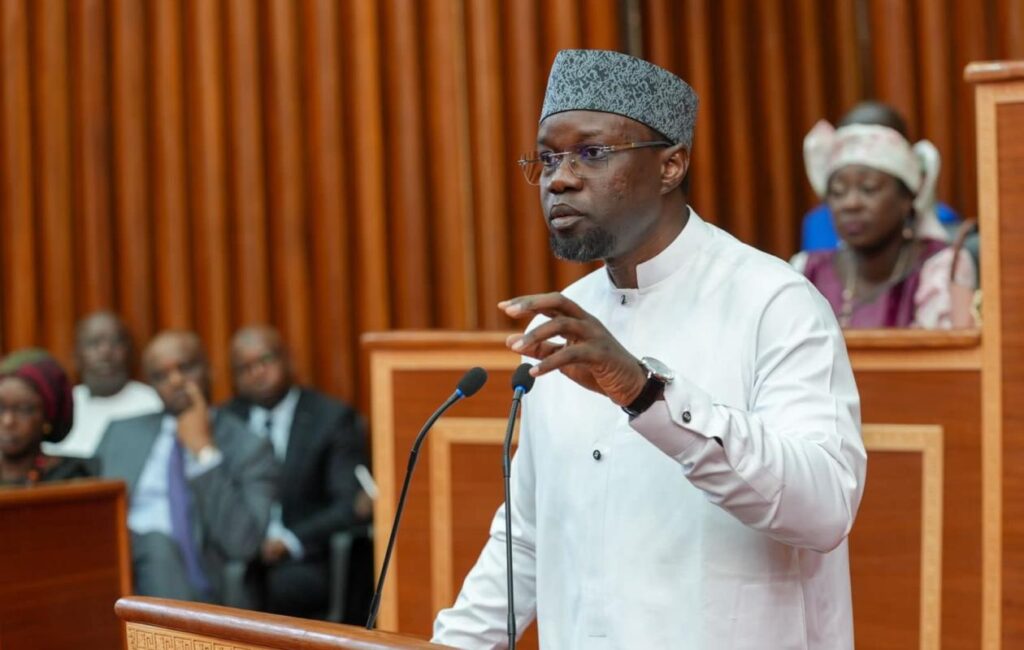
Senegal’s National Assembly has elected Ousmane Sonko as Speaker, days after President Bassirou Diomaye Faye dismissed him as Prime Minister in a dramatic move that has widened rifts within the country’s ruling leadership.
The election reinstated former Prime Minister Ousmane Sonko as a member of parliament and handed him one of the country’s most influential political positions, underscoring his continued influence within the ruling Pastef party despite his abrupt dismissal from government.
The development comes amid a growing power struggle between Faye and Sonko, once close political allies whose partnership helped secure a historic electoral victory in 2024. Their relationship has steadily deteriorated in recent months as disagreements emerged over economic policy and the direction of government.
Sonko’s election to lead the National Assembly follows President Faye’s decision to dismiss him as Prime Minister and dissolve the government after months of mounting tensions.

President Faye moved quickly to appoint a replacement, naming senior economist and former regional central banker Ahmadou Al Aminou as Prime Minister.
Despite losing his position in government, Sonko remains one of Senegal’s most popular political figures.
His return to the National Assembly was made possible after parliamentary speaker El Malick Ndiaye, a close ally, resigned from office.
This move cleared the way for Sonko to assume leadership of the legislature, where Pastef commands a dominant majority with 130 of the chamber’s 165 seats.
His new role is expected to keep him at the centre of Senegalese politics and could provide a platform from which to influence legislation and challenge the president’s agenda.
Ousmane Sonko: The Rise of Senegal’s Most Influential Political Figure
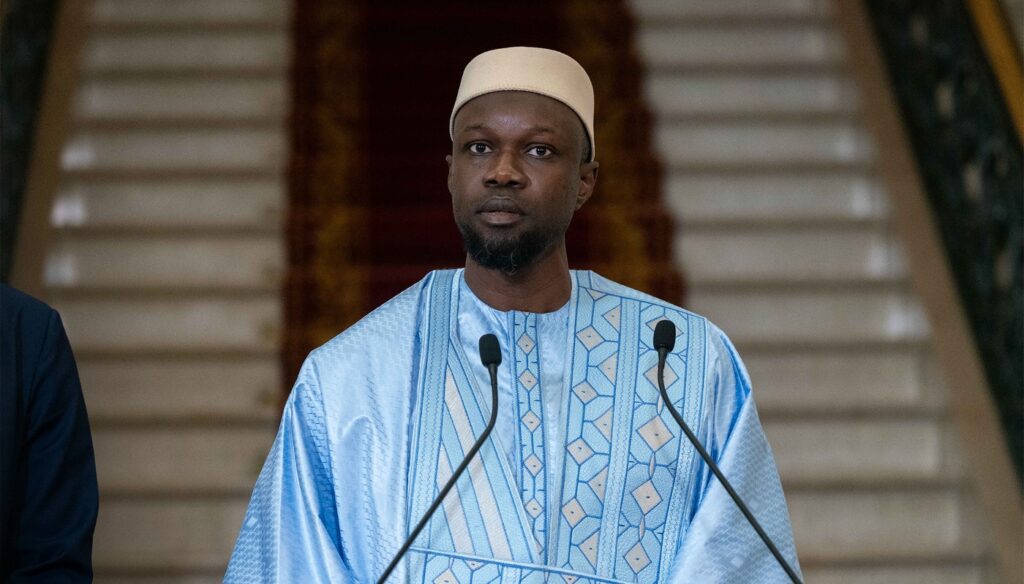
Ousmane Sonko’s election as Speaker of Senegal’s National Assembly marks the latest chapter in one of the most remarkable and controversial political careers in the country’s recent history.
Once a tax inspector and trade union leader, Sonko has spent more than a decade transforming himself into one of Senegal’s most influential political figures, building a loyal following that reshaped the nation’s political landscape.
Born on July 15, 1974, in Thiès, Sonko spent much of his childhood in Sébikotane near Dakar and in the southern Casamance region. After earning a master’s degree in public law from Gaston Berger University, he trained as a tax inspector at Senegal’s National School of Administration and rose through the civil service ranks.
His political journey began while working in the tax administration, where he founded the Autonomous Union of Tax and Domain Agents in 2005. During this period, he met Bassirou Diomaye Faye, who would later become both his closest political ally and eventual rival.
Sonko entered national politics in 2014 when he founded the African Patriots of Senegal for Labor, Ethics and Fraternity (PASTEF). Three years later, he won a seat in the National Assembly and quickly gained a reputation as one of the country’s fiercest anti-corruption voices.
His criticism of the political establishment, opposition to foreign influence, and appeal to young voters fueled a growing movement that supporters dubbed “Sonkomania.”
His popularity surged after he finished third in the 2019 presidential election, capturing about 16 percent of the vote despite competing against incumbent President Macky Sall. The result established him as the leading figure of the opposition and a serious contender for future national leadership.
The years that followed were marked by both political successes and legal battles. Sonko led opposition coalitions that scored major victories in local elections, including his election as Mayor of Ziguinchor in 2022. However, he also faced a series of court cases and arrests that he and his supporters described as politically motivated efforts to block his rise.
His legal troubles ultimately prevented him from contesting the 2024 presidential election. Instead, PASTEF selected party Secretary-General Bassirou Diomaye Faye as its candidate.
Following their release from prison just days before the vote, the two campaigned together under the slogan “Diomaye mooy Sonko,” which means “Diomaye is Sonko,” helping propel Faye to a decisive victory.
Upon taking office, Faye appointed Sonko as Prime Minister, giving the longtime opposition leader a central role in implementing the administration’s reform agenda. Together, they promised a break from past governance practices, focusing on anti-corruption efforts, economic sovereignty and institutional reforms.
Yet cracks gradually emerged within the partnership. Differences over economic policy, political strategy and the management of Senegal’s mounting debt burden increasingly strained relations between the two men.
By early 2026, Sonko openly suggested he could leave the government and return to the opposition if the administration drifted from what he viewed as PASTEF’s founding principles.
Those tensions culminated in his dismissal as Prime Minister by President Faye.
However, Sonko’s swift return to the political spotlight as speaker of the National Assembly demonstrates that his influence remains undiminished.
Backed by a commanding parliamentary majority and a devoted grassroots base, he continues to be one of the most powerful figures in Senegalese politics, with many observers viewing him as a potential contender for the presidency in the years ahead.
READ ALSO: Tyla Makes History with Double Win at 2026 American Music Awards