The Majority Chief Whip and Member of Parliament for South Dayi, Rockson-Nelson Etse Kwami Dafeamekpor, has argued that the proposed 0.75 mobile money transfer charge cannot be classified as an E-Levy charge because it lacks parliamentary approval. He explained that only Parliament holds the constitutional authority to impose taxes or levies on financial transactions in Ghana.
He stated that the charge originated from a private fintech company linked to MTN and did not emerge from government policy or legislation before Parliament. The Majority Chief Whip added that comparisons between the proposed charge and the E-Levy are politically motivated.

The South Dayi MP recalled that the E-Levy charge passed through Parliament after extensive debate and sponsorship by government. He added that the current proposal follows a completely different process because no bill has been introduced before the parliament.
“The Constitution is clear that only Parliament can impose a tax or levy. This proposed charge did not come through legislation. That is why it cannot be described as E Levy.”
Honourable Nelson Dafeamekpor
The Majority Chief Whip also pointed to the intervention by the Bank of Ghana as evidence that the proposed fee lacks the necessary approval. He explained that the central bank has directed the company involved to suspend implementation and engage regulators before taking any further steps.
Addressing the growing public debate surrounding the issue, Honourable Dafeamekpor criticised attempts to draw political comparisons between the National Democratic Congress and the New Patriotic Party on electronic taxation. He stressed that the former E-Levy became a law only after parliamentary approval while the proposed charge remains under regulatory review.
He argued that some political messaging around the issue is designed to create confusion by blurring the line between state taxation and private sector pricing. The South Dayi MP further explained that the proposal does not carry the legal backing of a government-imposed levy.
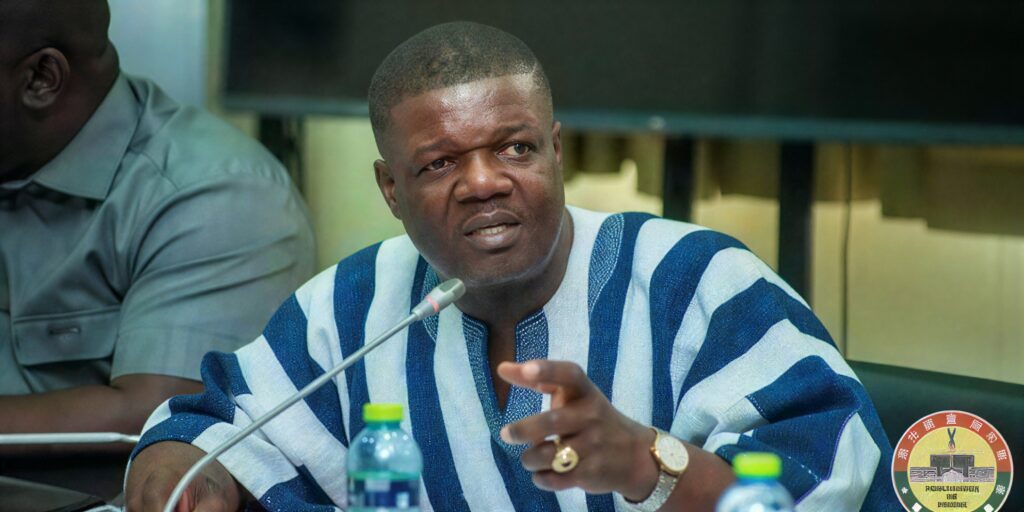
Honourable Dafeamekpor also urged media organisations to frame discussions on the matter within the proper legal context. He noted that attention should be placed on the private entity behind the charge and the ongoing regulatory engagement with authorities.
“The questions should be directed at the company imposing the charge. Government has not brought any bill before Parliament on this matter. Those distinctions are important for public understanding.”
Honourable Nelson Dafeamekpor
In addition, the Majority Chief Whip advised the media and commentators to distinguish clearly between state-imposed levies and commercial service charges introduced by private institutions. He said such clarity is necessary to avoid public misunderstanding of financial policy issues.
Service Charge Debate Dominates Mobile Money Transfer Discussions
Honourable Dafeamekpor has described the proposed mobile money deduction as a commercial service charge linked to fintech operations rather than a government tax. He explained that it reflects operational costs within the digital payments ecosystem.

“This is coming in the form of a service charge. It is not backed by legislation before Parliament. The attempt to label it as E-Levy will not succeed.”
Honourable Nelson Dafeamekpor
He further noted that discussions surrounding the proposal have directed into public perception and political framing rather than its technical nature. According to him, the debate has been influenced more by interpretation than by policy substance.

The Majority Chief Whip added that digital financial services naturally involve user fees and transaction costs, which differ from statutory taxation systems. He stressed that understanding this distinction is key to evaluating the current debate.
Honourable Dafeamekpor also addressed commentary suggesting political inconsistency in how electronic charges are being interpreted. He rejected such comparisons and insisted that the current situation should not be equated with past tax policies.
He encouraged public communicators and analysts to ensure accuracy when engaging the topic, noting that clearer explanations would help reduce misinformation and improve national understanding of digital finance issues.
READ ALSO: Ghana Escapes Debt Trap After 12 Years As It Hits Moderate Debt Risk