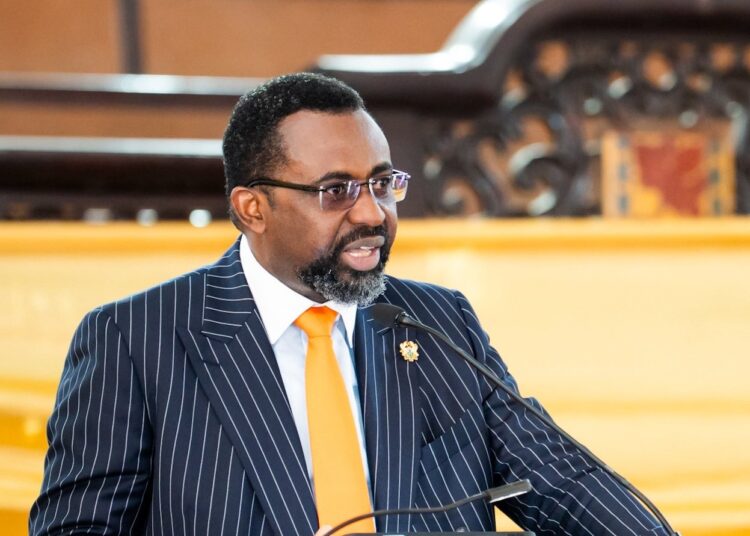
The Governor of the Bank of Ghana, Dr. Johnson Pandit Asiama, has reaffirmed the Central Bank’s unwavering commitment to preserving the country’s recent monetary policy achievements and safeguarding the resilience of the banking sector.
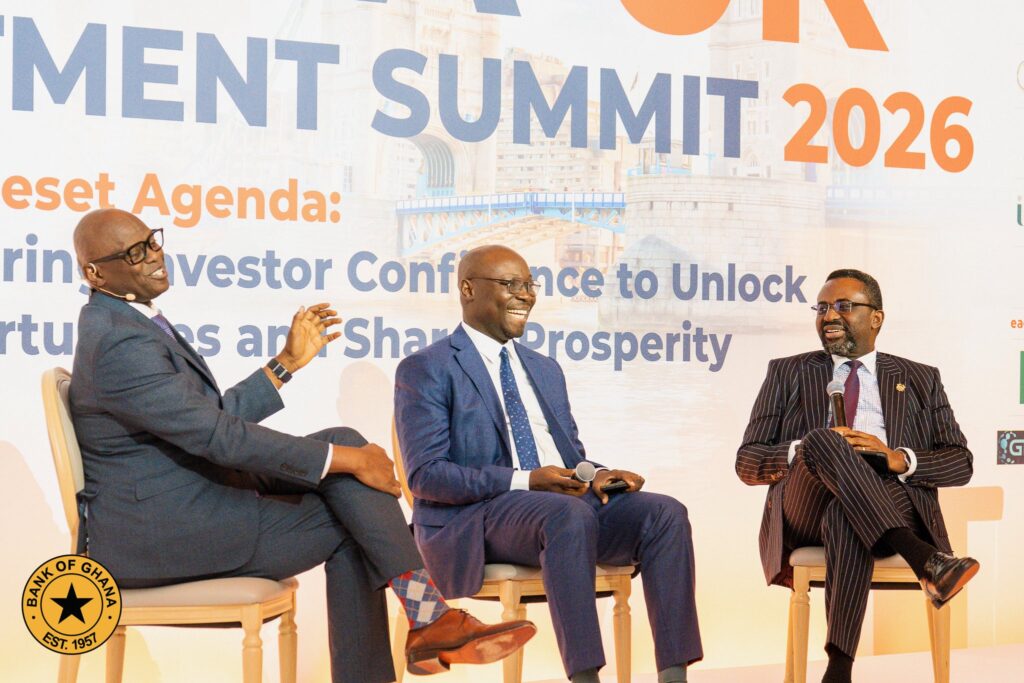
Speaking at the High-Level Ghana International Bank Breakfast Meeting in London, Dr. Asiama stressed that protecting the gains made in the financial sector remains a top priority for the Central Bank as Ghana continues its economic recovery journey.
His remarks come at a time when investor confidence, fiscal discipline, and financial stability are increasingly critical to sustaining economic growth and attracting both local and foreign investment.
“We are fully committed to protecting current gains,” Dr. Asiama declared, emphasizing the Bank of Ghana’s determination to ensure that the progress achieved through difficult policy decisions is not reversed.
According to him, maintaining a strong and resilient financial system is essential to reinforcing trust among investors, development partners, businesses, and the general public.
Building Confidence in Ghana’s Financial System
The Governor noted that confidence remains one of the most valuable assets in any economy. He explained that Ghana’s recent economic reforms and policy interventions have helped restore stability, but sustained efforts will be required to maintain momentum.
He pointed out that protecting the banking sector is not only about ensuring financial institutions remain strong but also about demonstrating the government’s commitment to prudent economic management.
Dr. Asiama indicated that development partners and international investors closely monitor the country’s fiscal and monetary policy environment before making investment decisions.
A stable and well-regulated financial sector, he said, sends a strong signal that Ghana remains committed to responsible economic governance and long-term growth.
His comments are expected to reassure market participants who continue to watch the country’s economic trajectory following recent fiscal consolidation measures and reforms aimed at restoring macroeconomic stability.
Driving Financial Innovation and Cross-Border Opportunities
Beyond preserving financial stability, the Governor revealed that the Bank of Ghana is actively working to create an environment that supports financial innovation and cross-border intermediation.
He emphasized that technological advancements and innovative financial solutions will play a significant role in deepening financial inclusion and facilitating economic growth across the continent.
According to Dr. Asiama, strengthening cross-border financial services can unlock new opportunities for businesses, investors, and exporters while improving access to capital and international markets.
The Governor believes that modern financial systems must evolve to meet the demands of an increasingly interconnected global economy.
As Ghana positions itself as a strategic gateway for trade and investment in West Africa, fostering innovation within the financial sector will be essential to maintaining competitiveness.
Closing Africa’s Massive Trade Finance Gap
One of the key highlights of Dr. Asiama’s address was his focus on Africa’s trade finance deficit, which he estimated at approximately US$80 billion annually.
The Governor described the financing gap as a major obstacle to economic transformation across the continent, limiting the ability of businesses to expand, trade, and create jobs.
He stressed that addressing the challenge goes far beyond a technical financial exercise. Instead, it requires strong partnerships between governments, financial institutions, and development organizations.
Dr. Asiama specifically identified Ghana International Bank as one of the institutions uniquely positioned to help bridge this gap and facilitate greater trade activity between Africa and international markets.
According to him, institutions with strong governance structures, adequate capitalization, and a forward-looking vision will be instrumental in unlocking the continent’s vast economic potential.
Strong Institutions Key to Transformation
The Governor underscored the importance of strong institutions in achieving sustainable economic growth.
“Policy alone is not sufficient,” he stated, adding that effective economic transformation requires institutions that are well-governed, well-capitalised, and outward-looking.
He praised Ghana International Bank as an example of the type of institution capable of supporting long-term economic development and facilitating greater international business engagement.
His remarks highlighted the growing recognition that successful economic policies must be supported by strong institutions capable of translating policy objectives into tangible outcomes.
Industry observers believe such institutions can play a crucial role in mobilizing investment, supporting businesses, and strengthening economic resilience.
Ghana-UK Partnership Offers New Opportunities
Dr. Asiama also highlighted the strategic importance of the Ghana-UK partnership in advancing trade, investment, and economic development objectives.
According to him, the longstanding relationship between the two countries provides a powerful platform for collaboration in finance, trade, and investment.
He noted that trade-focused banks have a critical role to play in driving economic transformation by facilitating exports, mobilizing capital, and supporting private sector growth.
“Trade Banks have a central role to play in the transformation agenda, as banks like the Ghana International Bank can help unlock exports, mobilise capital and deliver what can be described as shared prosperity.”
Dr. Johnson Pandit Asiama
His message resonated strongly with participants at the London meeting, reinforcing the importance of strategic partnerships and resilient financial institutions in shaping Ghana’s future economic success.
As Ghana continues to navigate an evolving global economic landscape, the Bank of Ghana’s commitment to protecting current gains and fostering innovation may prove pivotal in securing long-term prosperity and investor confidence.
READ ALSO: Ghana Advances Transatlantic Commercial Alliance at Accra Industrial Summit