Minister for Energy and Green Transition, John Abdulai Jinapor, has announced that the persistent power outages plaguing the Greater Kumasi area in the Ashanti Region are set to ease significantly following the imminent completion of critical infrastructure upgrades.
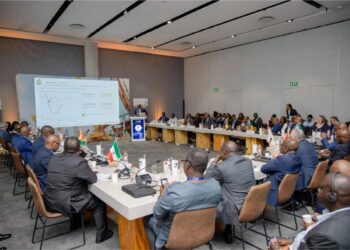
Speaking during the second day of the Ghana–UK Investment Summit in London, the sector minister assured residents and businesses that ongoing interventions to reinforce the region’s weak sub-transmission network will be officially finalized and handed over by Friday, June 5, 2026.
This decisive state-led intervention targets the root causes of localized grid instability, promising a transition toward uninterrupted power distribution for the country’s second-largest economic hub.
“When we assumed office, we realised there was what you call localised load shedding in Kumasi. The infrastructure was so weak that even when you have a reliable supply of power, the people of Kumasi keep suffering. We’ve done an emergency project, we’ve put in additional transformers, and the briefing I got this morning is that by Friday the project will be completed and handed over.”
Minister for Energy and Green Transition, John Abdulai Jinapor
To achieve this milestone, the government initiated an aggressive emergency intervention designed to overhaul the fragile distribution network that historically failed to withstand optimal power loads.

While national electricity generation has remained broadly stable, the antiquated and congested local transmission lines in Kumasi routinely suffered from technical bottlenecks, triggering forced localized load shedding to prevent total system collapse.
The corrective engineering works involve the strategic construction of high-capacity power lines alongside the installation of robust auxiliary transformers, which collectively expand grid capacity, reduce transmission losses, and prevent voltage fluctuations across metropolitan neighborhoods.
Chronology of Network Interventions and Project Timeline
The systemic vulnerabilities within the Ashanti Region’s energy architecture required a rapid-deployment strategy rather than standard, long-term procurement cycles.
Over the past several months, engineering teams have worked continuously on stringing high-tension cables and balancing the load distribution across under-fire substations.
This infrastructural deficit meant that even during periods of peak national generation, the local network acted as a bottleneck, isolating Kumasi from the benefits of a stable national grid.
The ministerial briefing received on the morning of June 2 indicates that the final structural phase predominantly involving system testing, thermal imaging of new connections, and synchronized load switching is currently underway.

With the technical handover locked in for Friday, June 5, 2026, the transition from old, fraying distribution mechanisms to high-voltage, high-capacity sub-transmission infrastructure is expected to occur with minimal disruption to consumers.
This timeline underscores a critical shift from reactive maintenance to proactive utility management within the jurisdiction.
Socio-Economic Relief for Households and Commercial Hubs
The structural completion of this emergency project is poised to bring immediate, transformative relief to the socio-economic landscape of the Greater Kumasi area.
For years, unpredictable outages, colloquially known as dumsor, have exacted a heavy financial toll on local businesses, forcing small-scale enterprises and large manufacturing units alike to rely on expensive diesel generators.
By eliminating localized load shedding, the upgraded grid will drastically lower operational overheads, restore predictable production schedules, and stimulate industrial growth across the regional capital.
Beyond the commercial sector, domestic consumers will experience a substantial improvement in their quality of life through stable home refrigeration, reliable healthcare delivery at localized clinics, and safer nighttime public spaces.
For a population that has long endured the frustration of blackouts despite adequate national power generation, the realization of grid reliability means an end to damaged household appliances caused by frequent power surges.

Hon. Jinapor expressed immense confidence that these completed works will thoroughly resolve the recurring outages, thereby safeguarding both livelihoods and residential comfort.
Investment Implications and Ghana’s Green Transition Agenda
Detailing these localized grid achievements on an international platform like the Ghana–UK Investment Summit highlights the broader economic strategy of tying infrastructure development directly to foreign direct investment.
Stable power is the foundational prerequisite for industrialization, and by speaking directly to UK investors, the energy minister positioned the Ashanti Region as a secure, risk-mitigated environment for commercial expansion.
Resolving the Kumasi bottleneck proves to the international community that Ghana is actively fixing structural gaps that impede corporate productivity.
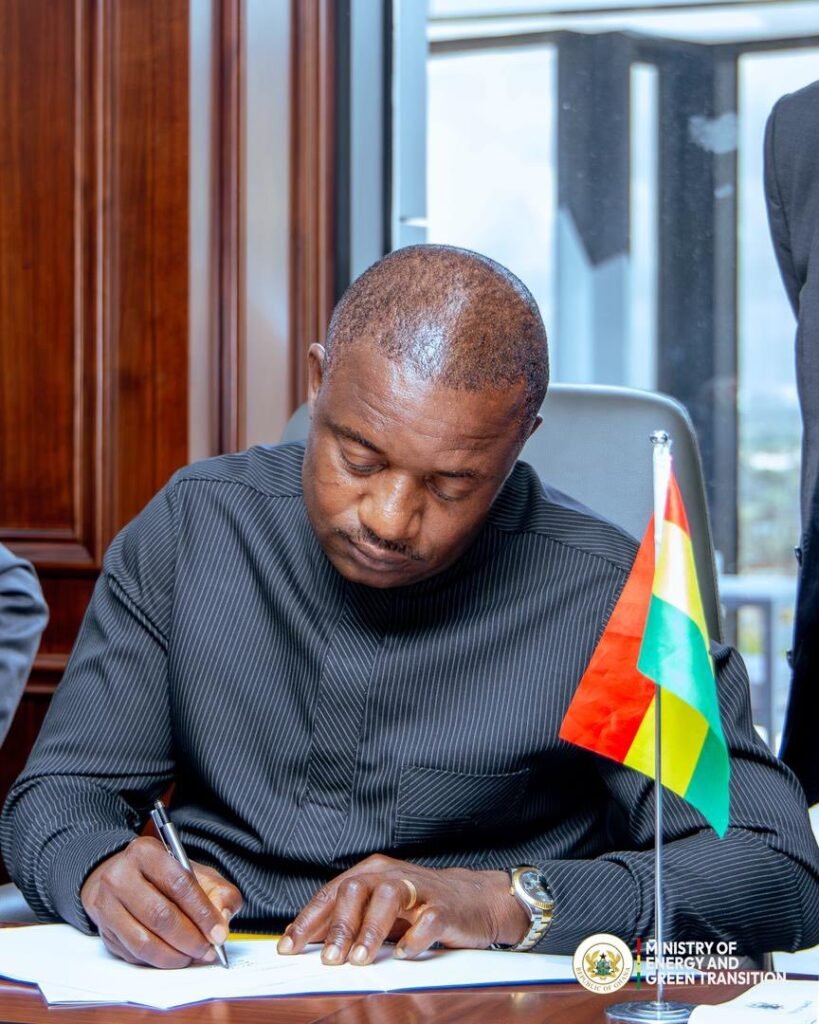
Furthermore, integrating high-capacity sub-transmission infrastructure aligns cleanly with the mandate of the newly expanded Ministry for Energy and Green Transition.
Modernized, efficient grids are vital for minimizing transmission drops, which directly reduces the carbon footprint associated with wasted energy generation.
As Kumasi transitions into a era of reliable power supply on June 5, the project serves as a blueprint for modernizing other vulnerable municipal grids across the country, ensuring that the entire nation can benefit equitably from a robust and sustainable energy ecosystem.