Ghana has announced a major shift in its rice sector policy with the introduction of an import quota system designed to link rice import privileges directly to domestic production growth.
The initiative forms part of a broader national effort to reduce import dependence and move the country toward full rice self-sufficiency within the next decade.
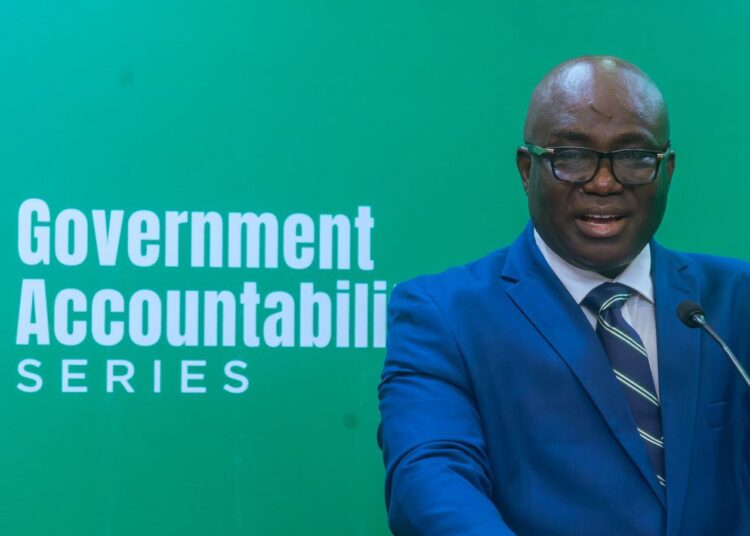
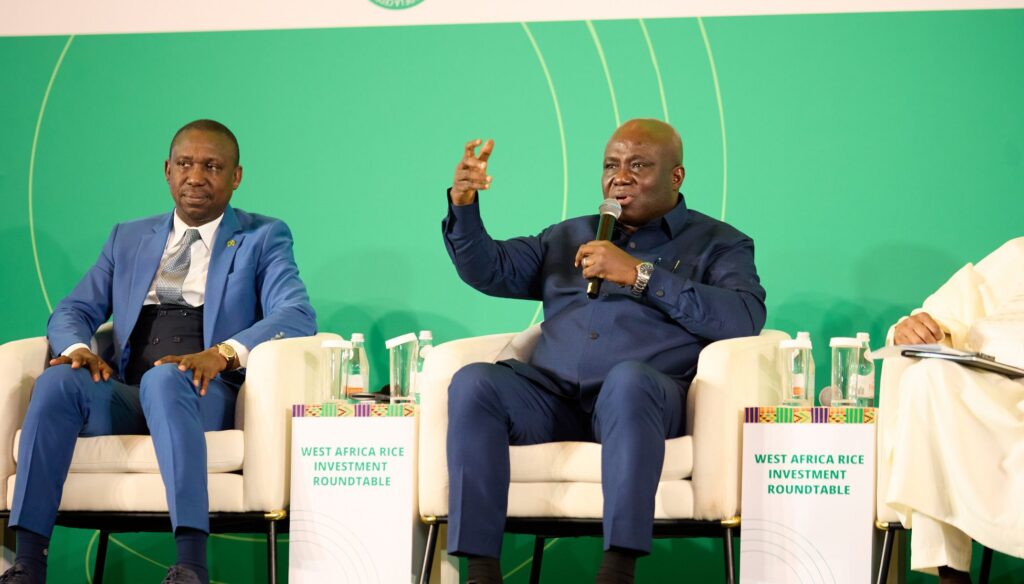
Speaking at the West Africa Rice Investment Roundtable in Accra, Minister for Food and Agriculture Eric Opoku said the policy is intended to create market certainty, attract investment, and strengthen local production capacity without disrupting supply or increasing consumer prices.
He explained that investment in agriculture requires not only access to land and resources but also predictable market conditions that make production financially viable for farmers and investors across the value chain.
“Knowing where to invest is one thing. Creating market certainty that makes investment worthwhile is another”.
Minister for Food and Agriculture Eric Opoku
Import Quota System Linked to Local Production
Under the new framework, rice importers will be required to demonstrate verifiable procurement arrangements and partnerships with Ghanaian rice producers before import permits are granted.

The Minister emphasized that import rights will no longer be automatic but tied to measurable contributions to domestic production. “The government will implement an import quota policy that directly links the privilege of importing rice to the growth of domestic production,” he stated.
According to him, the policy is not designed to increase tariffs or impose import bans. Instead, it seeks to redirect value within the rice import market toward expanding local production capacity.
“We are not raising tariffs that punish consumers. We are not imposing bans that create shortages. We are redirecting the existing value in the rice trade towards building our own productive capacity”.
Minister for Food and Agriculture Eric Opoku
The import share will be gradually reduced over a ten year period, with each reduction dependent on verified progress in domestic production levels.
Pathway to Self Sufficiency and Economic Gains
Government analysis suggests that the policy could help Ghana achieve 100 percent rice self sufficiency within ten years if fully implemented alongside productivity reforms.
The Minister indicated that this transition could save the country approximately 2.1 billion dollars in foreign exchange over the period, while also mobilizing over 400 million dollars in private sector investment.
He further noted that more than 200,000 jobs could be created across farming, processing, logistics, distribution, and related services as domestic production expands.
The country currently imports significant volumes of rice to meet domestic demand, a situation the Minister described as a major drain on foreign exchange and employment opportunities.
“Last year, we consumed roughly 1.7 million tonnes of rice, and we produce around 960,000 tonnes of milled rice domestically,” he said, highlighting a deficit of about 751,000 tonnes and a self sufficiency rate of 56 percent.
He stressed that the gap represents both a challenge and an opportunity for agricultural transformation.
Rice Sector Structure and Productivity Potential
Rice production in Ghana spans three main ecological systems: rain fed lowland areas, inland valleys, and irrigated schemes. The Minister noted that inland valley and rain fed systems account for nearly 90 percent of production, while irrigated farming remains limited but highly productive.
Current national yields average about 3.4 tonnes per hectare. However, experimental and demonstration projects under improved agronomic practices have shown significantly higher yields.
“With improved seed, water, mechanisation and agronomy, six tonnes per hectare is well within reach, especially under irrigation,” the Minister said. He also highlighted inefficiencies in rice milling, noting that Ghana’s milling recovery rate of about 55 percent falls below the global benchmark of 65 percent.
This gap, he said, results in significant losses estimated between 50 million and 90 million dollars annually. These inefficiencies increase production costs and make locally produced rice less competitive compared to cheaper imports.
Inclusive Value Chain Development
The Minister emphasized that the transformation agenda is designed to be inclusive, ensuring that smallholder farmers and women remain central to the growth of the sector.

He noted that nearly 600,000 farming households are currently engaged in rice cultivation, while over 500,000 additional livelihoods depend on activities such as input supply, milling, aggregation, and trading. Women account for about one third of rice farmers and play a dominant role in processing and distribution.
“This model rests on three tiers working together. Commercial farms, out grower networks with guaranteed market access, and smallholder farmers whose productivity we are committed to raising”.
Minister for Food and Agriculture Eric Opoku
He added that the goal is not to concentrate gains among large scale operators but to ensure that smallholders and women are fully integrated into a more efficient and profitable system.
Supporting Measures Under Feed Ghana Programme
The import quota policy is supported by broader interventions under the government’s Feed Ghana programme. These include investments in irrigation expansion, mechanisation services, improved seed systems, fertiliser efficiency, aggregation centres, post harvest infrastructure, and value addition facilities.
Government is also reinforcing its Buy Ghana First policy, requiring public institutions such as schools, hospitals, the military, and prisons to prioritise locally produced rice.
In addition, an inter ministerial task force is being established to address rice smuggling through unauthorized border routes, which continues to undermine domestic producers and distort the market.

The Minister said these complementary measures are essential to ensure that policy reforms translate into real improvements in productivity and competitiveness.
Conclusion: Building a Competitive Rice Economy
The Minister concluded that Ghana’s rice deficit should not be seen solely as an economic burden but as a significant investment opportunity.
He maintained that the new import quota system represents a shift toward a more structured and self sustaining rice economy that links trade policy directly to production outcomes.
With coordinated investments in production, processing, infrastructure, and enforcement, government believes Ghana is positioned to significantly reduce imports while building a competitive domestic rice industry capable of supporting jobs, saving foreign exchange, and strengthening food security.
READ ALSO: Emergency Sub Transmission Infrastructure Upgrades Set to Fix Kumasi Power Outages