The Ashanti Regional Directorate of the Fisheries Commission, operating in a close strategic development partnership with AngloGold Ashanti, has successfully executed an immersive, hands-on technical capacity-building session to transform the operational efficiency of local fish farmers.
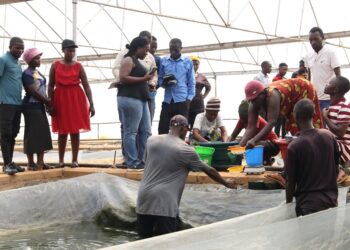
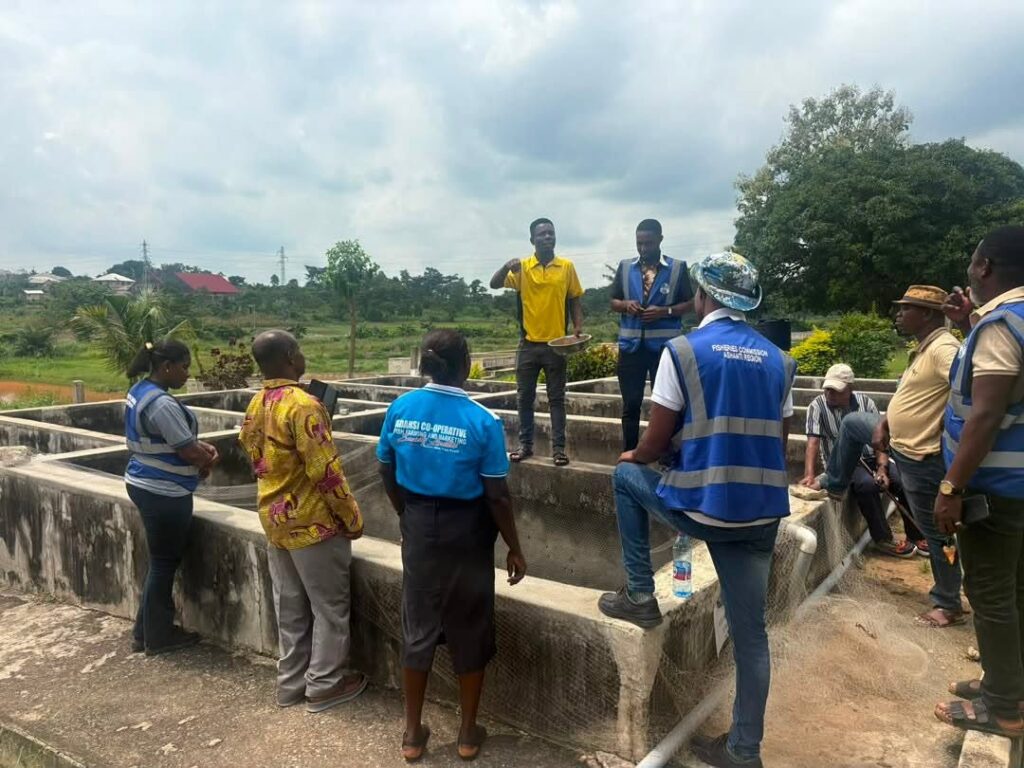
According to the Fisheries Commission, the intensive field exercise, carried out under the definitive framework of Phase Two of the AngloGold Ashanti Aquaculture Project, was hosted at the specialized Pilot Aquaculture Centre (PAC) located at Tano Odumasi.
The field intervention was a critical milestone in transitioning local aquaculture operators from baseline conceptual knowledge into advanced, high-yield commercial production capabilities, thereby strengthening the regional food supply chain and promoting rural economic stability.
“Participants received practical training on pond and tank construction and preparation, water quality monitoring, feeding practices, and other essential farm management techniques, with emphasis on applying good aquaculture practices to enhance productivity”
Fisheries Commission
Representing a structured, step-by-step educational pipeline to bridge the gap between instruction and real-world farm management, a selected cohort of twelve targeted beneficiaries participated in the exercise, with the curriculum engineered to operationalize and cement core competencies that had been introduced during an initial theoretical training phase.
Shifting the instructional focus from abstract modules to direct, hands-on manipulation of live hatchery assets and water management systems at Tano Odumasi, Aquaculture experts successfully provided local operators with the immediate practical skills required to run highly sustainable and biologically safe aquaculture ventures.

Experts from the Ashanti Regional Directorate of the Fisheries Commission demonstrated how proper pond slope engineering, secure embankments, and systematic tank flushing protocols prevent failures and shield vulnerable fish populations from catastrophic environmental contamination.
Beyond physical infrastructure engineering, the training coordinators placed emphasis on the rigorous daily maintenance of optimum water quality metrics.
Local operators were trained to utilize scientific monitoring tools to measure and manage critical chemical and physical indicators, ensuring that parameters such as dissolved oxygen, temperature gradients, and pH balances remain entirely within safe biological thresholds.
These environmental controls were linked to precise feeding practices, teaching beneficiaries how to synchronize feeding volumes with water quality realities, ensuring that expensive commercial feed is utilized with maximum efficiency, preventing the accumulation of hazardous organic waste at the bottom of production ponds, and boosting overall harvest productivity.
Advanced Science and Mechanics
The Fisheries Commission noted that the most advanced segment of the field training program at the PAC was the micro-level biological manipulation of high-value local fish species, as Operators underwent rigorous instruction in the delicate reproductive procedures required for the induced spawning of the African catfish, scientifically known as Clarias gariepinus.
This intensive module required participants to master the selection of mature broodstock, the precise administration of hormonal treatments to trigger ovulation, the subsequent extraction and fertilization of eggs under controlled laboratory conditions, and the careful management of delicate incubation systems to ensure high hatching success rates.

The training program also tackled the sophisticated genetic and hormonal management protocols necessary for the commercial production of all-male Nile tilapia fingerlings, scientifically classified as Oreochromis niloticus.
Cultivating all-male populations is an industry-standard mechanism utilized to prevent unwanted, chaotic reproduction within grow-out ponds, allowing the fish to redirect their metabolic energy entirely toward uniform physical growth.
To achieve this, the Fisheries Commission specialists walked the twelve participants through the detailed, daily operational steps of elite broodstock management, meticulous fry collection schedules, size-based sorting and grading, and the highly disciplined application of specialized hormonal feeding regimes.
Recognizing that high hatchery production numbers are entirely meaningless if the livestock perishes during distribution, the joint state and corporate training team dedicated a comprehensive module to post-hatchery logistics. The curriculum covered the latest industry best practices regarding specialized fingerling packaging, water conditioning, and long-distance transport engineering.
Participants learned how to optimize oxygenation levels within transit containers, manage water temperature to suppress shipping stress, and execute careful stocking density calculations to guarantee high survival rates and preserve premium product quality while transferring delicate fingerlings from central hatcheries to various distribution points.
The session concluded with an interactive forum where beneficiaries engaged further with fisheries experts for detailed clarification on complex breeding and environmental management topics.
The participating operators expressed immense satisfaction with the practical, unhurried nature of the hands-on instruction, noting that the physical execution of these advanced scientific concepts significantly enhanced their operational understanding and built deep personal confidence in their ability to apply the knowledge on their home farms.
To protect and maximize the long-term socioeconomic impact of the AngloGold Ashanti Aquaculture Project, the beneficiaries called upon the organizing bodies to maintain this momentum by establishing a permanent, recurring series of similar practical sessions to support local agricultural sustainability for generations to come.
READ ALSO: Students Survive On Food Banks — President, Ghanaians Students In UK