
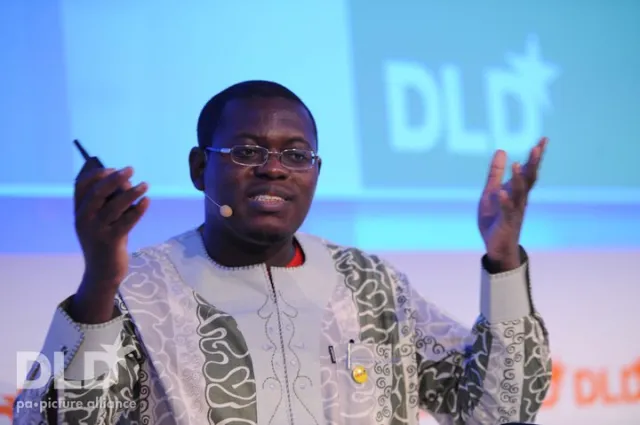
Bright Simons, Honorary Vice President of IMANI Africa and Senior Visiting Fellow at ODI Global, is raising serious questions about the credibility of the 50 million people figure at the heart of Mission 300 – the World Bank and African Development Bank’s flagship electrification initiative, arguing that the number reflects little more than a rebranding of projects that existed long before the programme was conceived.
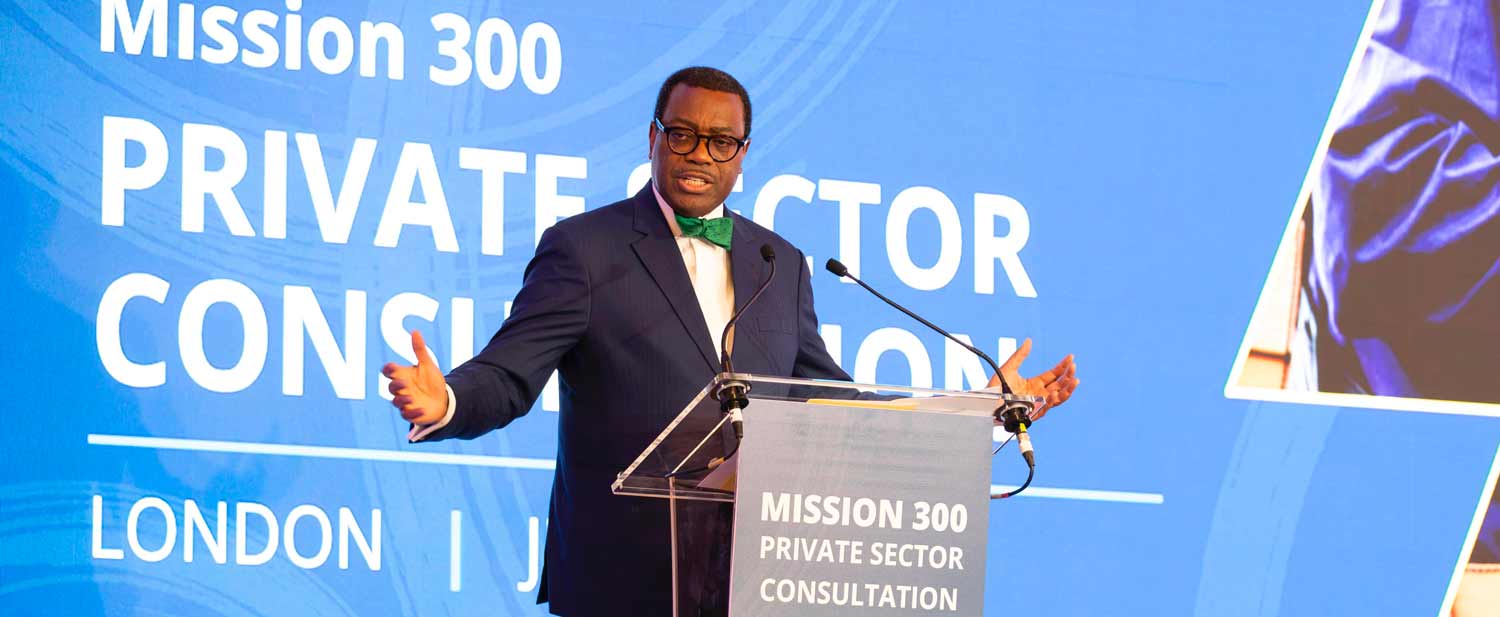
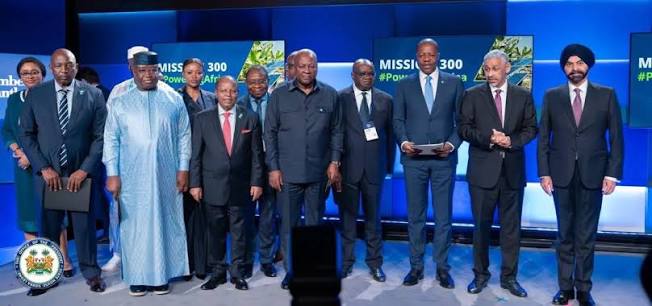
Writing in BusinessDay, Simons investigated the claim that the joint initiative, launched in April 2024, had already reached 50 million beneficiaries across 40 countries in under two years, a milestone the two institutions announced on June 16, 2026, describing it as proof of a new way of doing business and a near doubling of the pace of electricity delivery across the continent.
What he found was troubling.
Mission 300 increasingly resembles a narrative super-platform rather than a resource multiplier, a shell assembling old results under a new brand, much as a start-up might fold existing services into a ‘super app’ to dazzle investors without building anything truly groundbreaking.
Bright Simons, Honorary Vice President, IMANI Africa & Senior Visiting Fellow, ODI Global, writing in BusinessDay
The Numbers Behind The Headline
Rather than accepting the announcement at face value, Simons audited the source code of the tracking tools used by both institutions, downloaded the underlying datasets, reviewed contract awards, and cross-referenced project implementation reports filed with both banks.
On the African Development Bank side, the headline metric “People Connected” was found to be computed by a remarkably simple operation: filter rows marked as delivered and sum a single column. There is no threshold for installed megawatts, no commissioning gate, and no check to confirm whether Mission 300 launched, financed, or had any involvement in the project being counted. A row qualifies simply because it was tagged as delivered somewhere within the broader portfolio.
Applying that same logic to the AfDB’s publicly available data yields 1.31 million people, a figure dramatically short of the 5.2 million the bank reports on its live portal. The headline number cannot be reproduced from the data the bank itself has made openly available.
More damning still, 99.5 percent of the beneficiaries in the auditable dataset come from projects approved before Mission 300’s April 2024 launch. The most recent project approval in the dataset dates to April 2022, two full years before the initiative existed. Showcase projects cited in AfDB materials include Kenya’s Last Mile Connectivity Project, approved in 2014, Sierra Leone’s Bo-Kenema power system, approved in 2016, and the CLSG regional interconnector, approved in 2013- creditable operations that predate Mission 300 by up to a decade.
The live portal currently records zero megawatts of new generation capacity installed, zero kilometres of new transmission lines, and zero kilometres of new distribution lines under Mission 300.
The ‘people connected’ number has, quite literally, no accompanying supporting infrastructure to buttress it.
Bright Simons, writing in BusinessDay
A Counting Window, Not A Causal Test
The World Bank’s methodology, which accounts for the overwhelming bulk of the 50 million figure, the AfDB’s own target is 50 million of the 300 million expected to be connected by 2030, is disclosed with what Simons describes in BusinessDay as disarming candour in the fine print. That candour, however, did not travel into the press release.
The bank’s portal defines “People Connected” as connections made through bank-financed operations active or closed during a reporting window that begins July 1, 2023, nine months before Mission 300 was conceived and ends December 2030. Any project approved in 2016 qualifies in full, provided its connections fall within that window. The metric does not test, at any point, whether Mission 300 caused, accelerated, or contributed to a single one of those connections.
What the World Bank has constructed is a counting window, a very different kind of organism from a causal test. The press release wraps those same heavily caveated figures in the language of transformation, contriving the impression of a genuine electricity delivery revolution. The result is a number that is internally honest and externally misleading at the same time.
Bright Simons, writing in BusinessDay
Tanzania And Nigeria: Where It Gets Most Vivid
The flagship country cases are where the pattern becomes impossible to ignore.
Tanzania’s 7.5 million newly connected people, the centrepiece of the entire announcement, trace back to the Rural Electrification Expansion Programme, known as TREEP, approved in June 2016. By December 2024, TREEP had already hit its target of 1.585 million connections, disbursed over 91 percent of its funds, and electrified more than 12,000 villages. Tanzania’s own National Energy Compact records that the country was already connecting over half a million people annually before Mission 300 was launched. The successor programme, ASCENT, was only declared effective in December 2024. The “five-fold increase in pace” trumpeted in the press release, Simons notes, is not derived from either tracker and is exceedingly difficult to defend against the pre-existing baseline.
Nigeria’s 4.5 million, attributed to private sector-led initiatives, follow the same logic but leave a more revealing paper trail. The programme being credited is DARES – the Distributed Access through Renewable Energy Scale-up programme, the successor to the Nigeria Electrification Project approved in 2018 and operationally active until December 2024. By March 2024, a full month before Mission 300’s launch, that predecessor programme had already recorded over 5.5 million beneficiaries, driven largely by its standalone solar home systems component, which had exceeded one million verified and paid connections.
The genuinely new component of DARES, its Minimum Subsidy Tender for interconnected mini-grids, signed its first developer awards in May 2026, just weeks before the triumphant press release. Under programme rules, developers have twelve months from contract signing to build and commission, followed by six months of verified supply before grant disbursement. The earliest possible verified connection from those awards is mid-to-late 2027. The first performance-based mini-grid grants, signed in mid-2025, targeted approximately 19,000 connections. Thousands, not millions.
The World Bank’s own programme documentation contains an explicit carry-forward window through which companies previously funded under the old Nigeria Electrification Project were migrated into DARES for continued payment. It is not an outside inference; it is a line item in the bank’s own records.
The Stakes Of Getting This Wrong
Simons is measured in how far he takes the charge. Writing in BusinessDay, he does not call the connections fictional. People across Africa are genuinely gaining electricity access, he acknowledges, and the programmes delivering that deserve credit regardless of the label they carry. The 30 National Energy Compacts, the $15 billion in development bank commitments, and the $4.5 billion in co-financing are real institutional achievements that may well accelerate delivery in the years ahead.
But the distinction between a delivery milestone and a branding exercise, he argues, carries consequences that go well beyond optics.
If the world accepts that a two-year-old initiative has electrified 50 million Africans, the pressure to mobilise the genuinely additional capital needed for the remaining 250 million will quietly dissipate. Why build new power plants when you can rebadge old solar lanterns? Why fight for transmission corridors when a spreadsheet formula will do?
Bright Simons, Honorary Vice President, IMANI Africa & Senior Visiting Fellow, ODI Global, writing in BusinessDay
Africa’s electrification deficit still stands at more than 600 million people. Four years remain before the 2030 deadline. Whether Mission 300 becomes the transformative programme it presents itself as – or the most sophisticated accounting exercise in the history of development finance-depends entirely on whether the remaining 250 million connections represent power plants, transmission substations, and distribution networks that would not have been built without it.
On the evidence assembled so far, Simons says that the question remains entirely open.
READ ALSO: Kasapreko Stock Surge Could Spark IPO Revival Wave in Ghana- Market Analyst