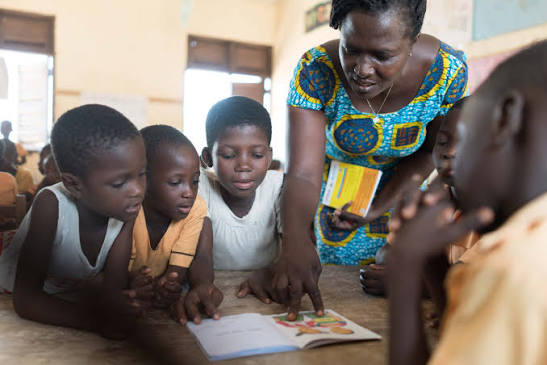
A new report has revealed that nearly 34 percent of districts in Ghana, representing 89 out of 261 districts, are experiencing acute teacher shortages at the primary level, with an average pupil-teacher ratio exceeding 40 to 1.
The findings come from the Teachers for All Ghana Report, launched by the Ministry of Education with support from UNICEF and the UK Foreign, Commonwealth and Development Office.
The report paints a picture of a system that has made meaningful progress in recent years while still grappling with structural inefficiencies that leave many schools without enough teachers to function effectively.
Progress Made, But Gaps Persist
According to the report, Ghana has strengthened its teacher management systems through data driven and evidence based measures. Recent policy actions have promoted more informed teacher deployment and introduced clearer guidance on licensing, registration and promotion under national minimum standards.
Reforms in pre-service education have also raised the minimum qualifications required to enter the teaching profession, alongside efforts to establish more holistic teaching standards.
A new data management system is also being developed to bring all teacher deployment information into a single central platform, a move expected to support better decision-making across national, regional and school levels.

Despite these gains, the report notes that inefficiencies in human resource planning continue to create mismatches between teacher demand and supply. Teacher allocation remains highly centralized, resulting in shortages in some schools, grade levels and subjects, while others experience oversupply.
The report also points to a gap in language matching, noting that many teachers are deployed to classrooms where they do not speak or read the official language of instruction or the language spoken by their students.
Pupil-Teacher Ratios Vary Sharply Across Levels
The national average pupil-teacher ratio at the basic education level stands at 32 to 1, a figure broadly aligned with both international and national benchmarks for effective classroom instruction.
However, this average masks significant variation across education levels. At the kindergarten level, the ratio rises to 40 to 1, and at the primary level it stands at 37 to 1, both falling short of the national target of 35 to 1.
By contrast, the report finds that junior high schools maintain a considerably smaller average class size of 20 students per teacher, comfortably exceeding the national goal of 30 to 1 for that level.
The report cautions that even accounting for revised teacher qualification standards, the proportion of qualified teachers per pupil remains uneven, pointing to persistent disparities in access to qualified instruction across different levels of the education system.
Rural Schools Bear the Heaviest Burden
The report identifies a clear urban-rural divide in teacher distribution. While pupil-teacher ratios in rural and urban schools appear relatively similar at the national level, at 33 to 1 and 29 to 1 respectively, this gap widens considerably when accounting for teacher qualifications.
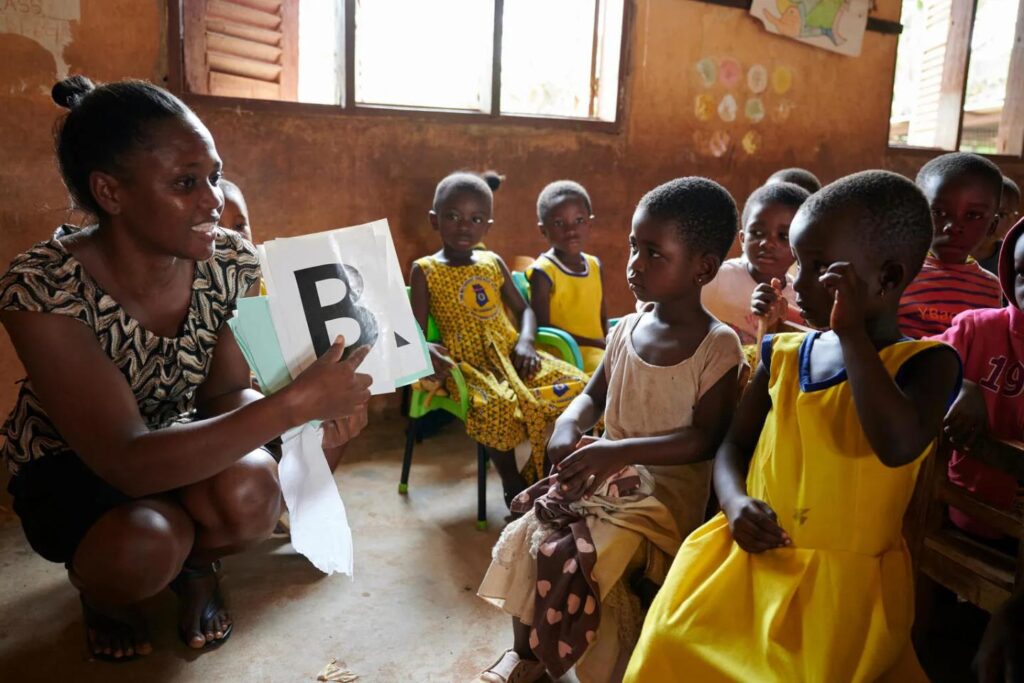
The pupil-qualified teacher ratio stands at 67 to 1 in rural schools compared to 43 to 1 in urban schools, suggesting that children in urban areas generally benefit from better learning conditions.
The report also highlights a gender disparity, noting that the share of women teachers in rural schools is 34 percentage points lower than in urban schools at the primary level, and 23 percentage points lower at the junior high school level.
Women teachers are further underrepresented in science, technology, engineering and mathematics subjects at the junior high school level, a gap that disproportionately affects rural schools.
Two Distinct Forms of Shortage Identified
The findings distinguish between two separate types of teacher shortages that require different policy responses. Some schools struggle with large class sizes, while others lack enough teachers to cover specific grades or subjects altogether.
The report notes that around 21 percent of public primary schools in Ghana do not have enough teachers to facilitate single-grade instruction, even though their overall pupil-teacher ratios would not classify them as experiencing shortages.
The report further finds that inequity in teacher distribution is concentrated more within districts than between them, with most districts showing wide variation in pupil-teacher ratios among their own schools. Many districts also show low coherence, meaning teacher allocation frequently fails to correlate with actual learner enrolment numbers.
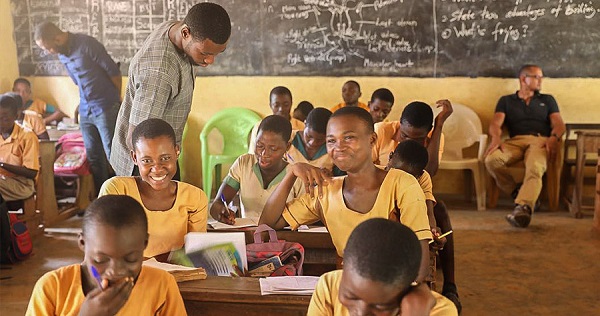
Central and Greater Accra Regions Among Most Affected
According to the report, the most disadvantaged districts in terms of efficiency and equity in teacher deployment are concentrated in the Central and Greater Accra regions.
About 20 percent of all districts fail to meet both international and national standards for coherence in teacher deployment and pupil-teacher ratios at the primary level, a gap the report says demands immediate government support and action.
The report links these disparities directly to learning outcomes, citing data showing that larger class sizes are negatively associated with learner performance in both the second grade of primary school and the third year of junior high school.
Recommendations for Reform
The report outlines several policy recommendations to address these gaps. It calls for greater use of localized, district-level data to target teacher deployment where shortages are most severe, leveraging the forthcoming Ghana Education Services Management and Information System to improve subject and language matching.
It also recommends prioritizing recruitment and retention incentives for rural areas, including effective implementation of the government’s Deprived Area Allowance, alongside investment in infrastructure such as electricity and sanitation to support teachers working in remote locations.
Additional recommendations include addressing barriers specific to women teachers, encouraging within-district transfers to equalize learning conditions faster, and promoting localized recruitment to improve retention rates among rural teachers.
The report’s authors stress that while these measures will not resolve Ghana’s teacher distribution challenges overnight, targeted and sustained implementation could significantly narrow the gaps that continue to shape unequal learning conditions across the country’s schools.