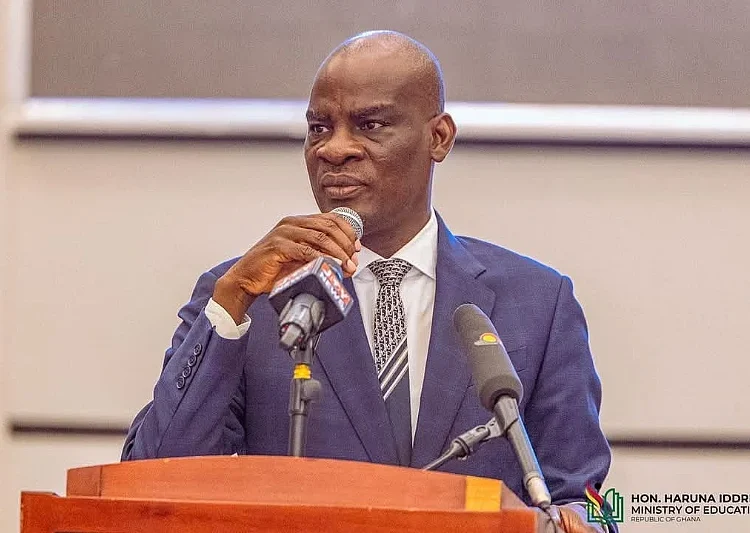
Education Minister, Hon. Haruna Iddrisu has called for increased investment in Technical and Vocational Education and Training (TVET), proposing the establishment of a dedicated national fund to ensure sustainable financing for skills development as young people across the country continue to seek relevant training for employment and entrepreneurship.
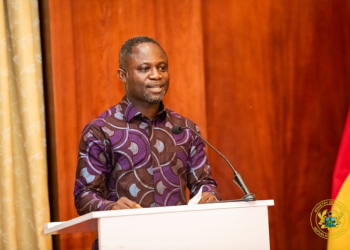
The Minister’s call was made at a TVET Stakeholders Engagement Dialogue held in Accra, with his address delivered on his behalf by his Technical Adviser, Prof George Oduro, who read the Minister’s full speech to participants at the event.
Citing the 2026 Global Education Monitoring Report, themed “Access and Equity: Countdown to 2030,” the Minister’s speech noted that approximately 27 percent of post-secondary students worldwide are now pursuing TVET programmes, a figure he said reflects the increasingly central role technical and vocational training is playing in global education systems.
According to the Minister, this growing global participation underscores the importance of strengthening TVET systems to adequately prepare young people for a rapidly changing world of work, one increasingly shaped by shifting industry demands and evolving employment patterns.
“The report indicates that the share of post-secondary students pursuing TVET programmes has risen to about 27 percent, showing the growing global importance of TVET.”
Hon. Haruna Iddrisu

Countdown to 2030 Adds Urgency to Reform
The Minister’s address further situated Ghana’s TVET ambitions within the broader global context of the Sustainable Development Goals, noting that the 2026 Global Education Monitoring Report serves as a reminder that the world is now in its final stretch toward assessing progress on the 2030 targets.
For TVET specifically, the report’s message was described as unambiguous, countries must substantially increase the number of youth and adults equipped with relevant skills for employment, decent work and entrepreneurship.
Call For a Dedicated TVET Fund
Central to the Minister’s address was a direct appeal for government to dedicate specific resources toward technical and vocational education, ensuring that TVET is financed not as an afterthought, but as a strategic investment in jobs, industrialisation, productivity and national competitiveness.
He argued that by establishing a dedicated fund of this nature, Ghana would join a group of forward-looking countries that have already recognised the necessity of sustainable, ring-fenced financing mechanisms for skills development, rather than relying on ad hoc or inconsistent budgetary allocations.

“A dedicated TVET fund will therefore provide the sustainable financing needed to develop the skills that Ghana’s economy requires,”
Hon. Haruna Iddrisu
Skills Investment Framed As A National Imperative
The Minister was emphatic in tying Ghana’s broader economic ambitions directly to its investment in skills training, presenting the matter in stark, repetitive terms to underscore its urgency.
According to the address, if Ghana wants jobs, it must invest in skills; if it wants industry, it must invest in skills; if it wants productivity, it must invest in skills; and if it wants Ghanaian enterprises to compete on a wider stage, it must invest in skills.
“If we want jobs, we must invest in skills, if we want industry, we must invest in skills, if we want productivity, we must invest in skills,”
The dialogue in Accra brought together various TVET stakeholders to deliberate on how best to strengthen the sector’s financing and relevance going forward.

With the Minister’s proposal for a dedicated TVET fund now formally placed before stakeholders, attention is likely to turn toward how such a fund might be structured, resourced and implemented, as government continues to position technical and vocational training as a central pillar of its broader economic and employment strategy.
READ MORE: CTVET Calls for Stronger Industry Collaboration to Boost TVET