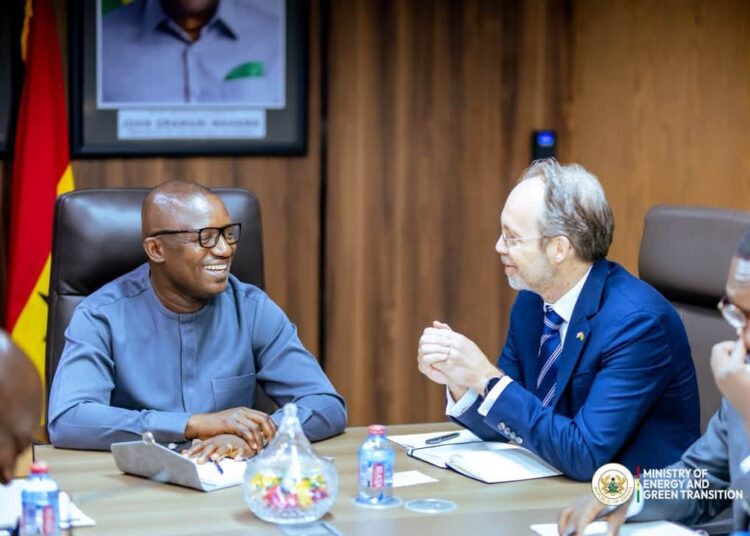
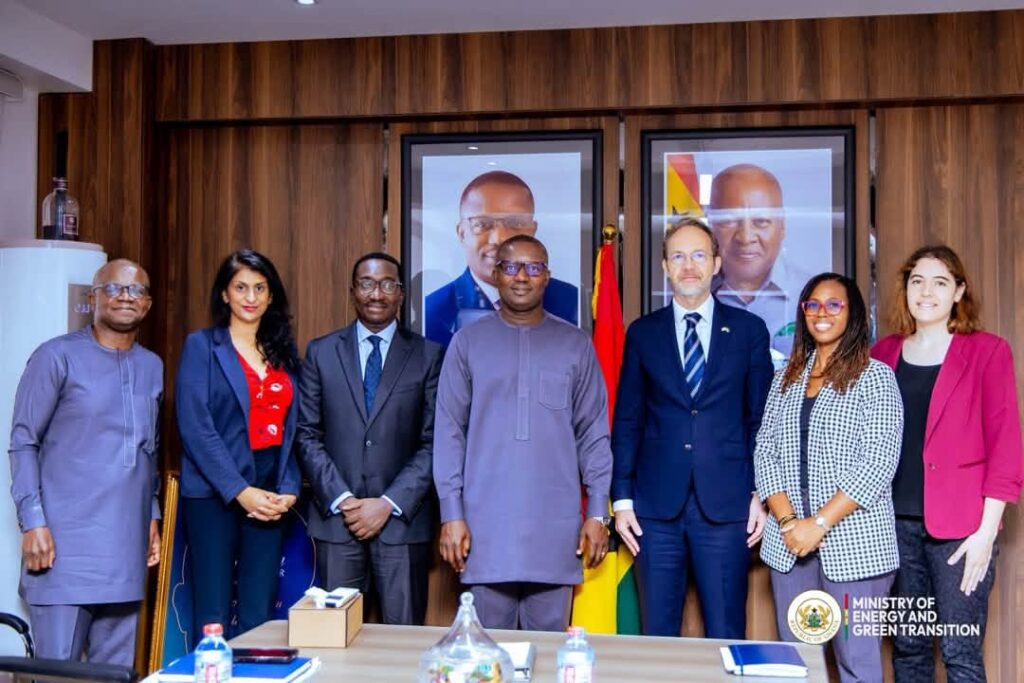
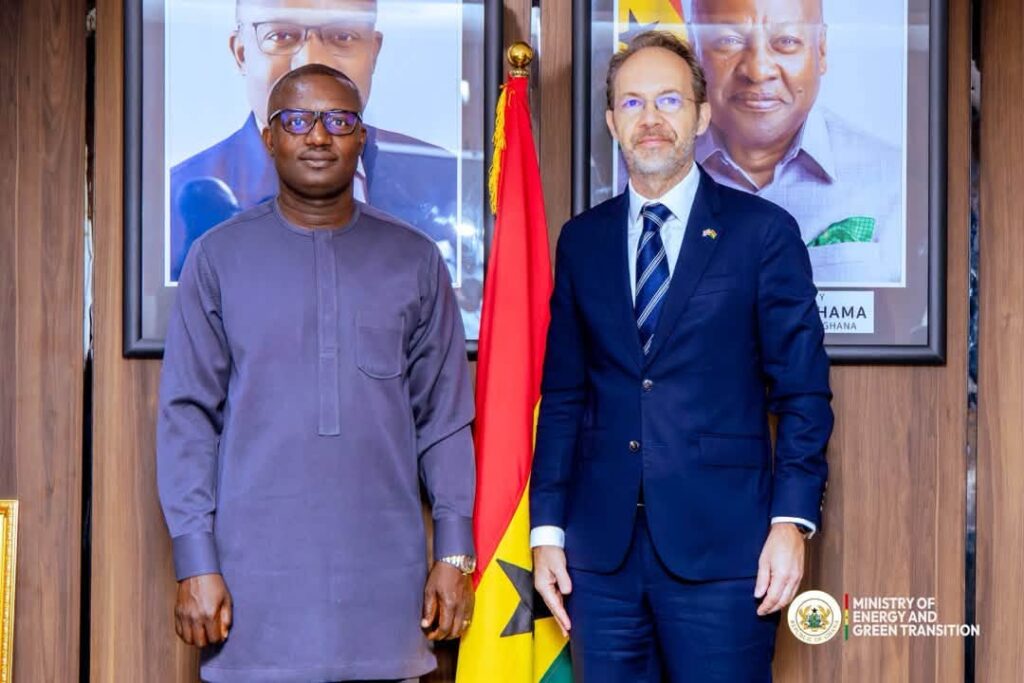
Ghana has renewed efforts to strengthen energy cooperation with the United Kingdom following high-level discussions between the Minister for Energy and Green Transition, Dr John Abdulai Jinapor, and the British High Commissioner to Ghana, H.E. Christian Rogg, on reforms aimed at improving electricity supply, expanding renewable energy deployment and attracting investment into the country’s energy sector.
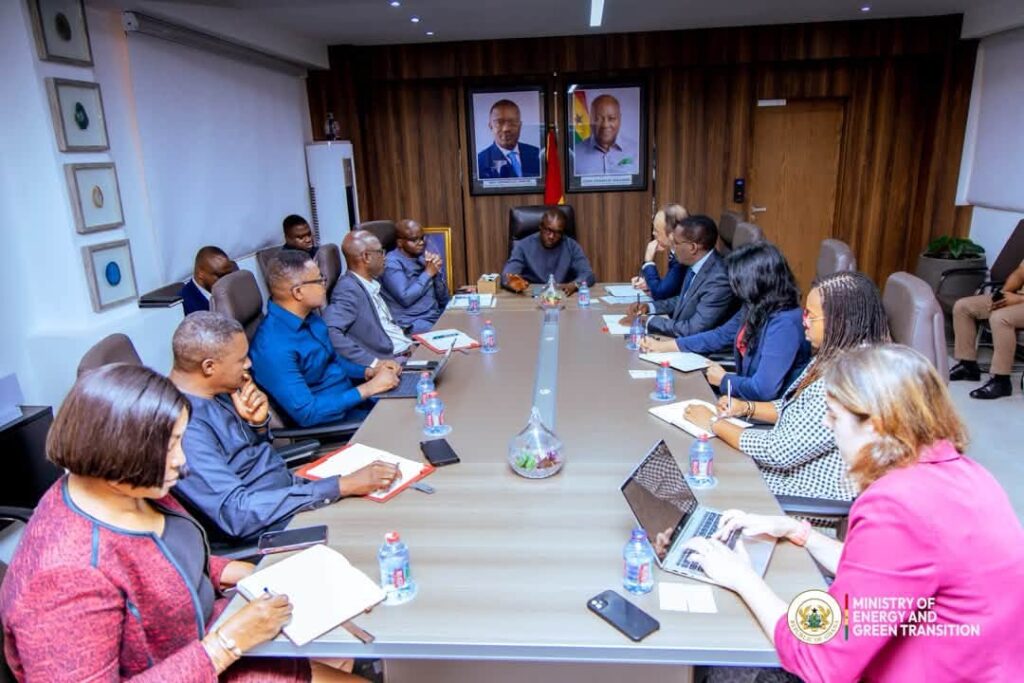
The meeting, held in Accra, focused on ongoing reforms in the electricity distribution sector, efforts to reverse declining crude oil production, expansion of the national transmission grid and opportunities for financing and technical collaboration.
It also reaffirmed the growing role of international partnerships in supporting Ghana’s ambition to build a more reliable, sustainable and investment-friendly energy sector.
The engagement comes at a time when Ghana is pursuing sweeping reforms across the energy value chain, including measures to restore the financial health of the electricity sector, accelerate renewable energy adoption and strengthen upstream petroleum production.
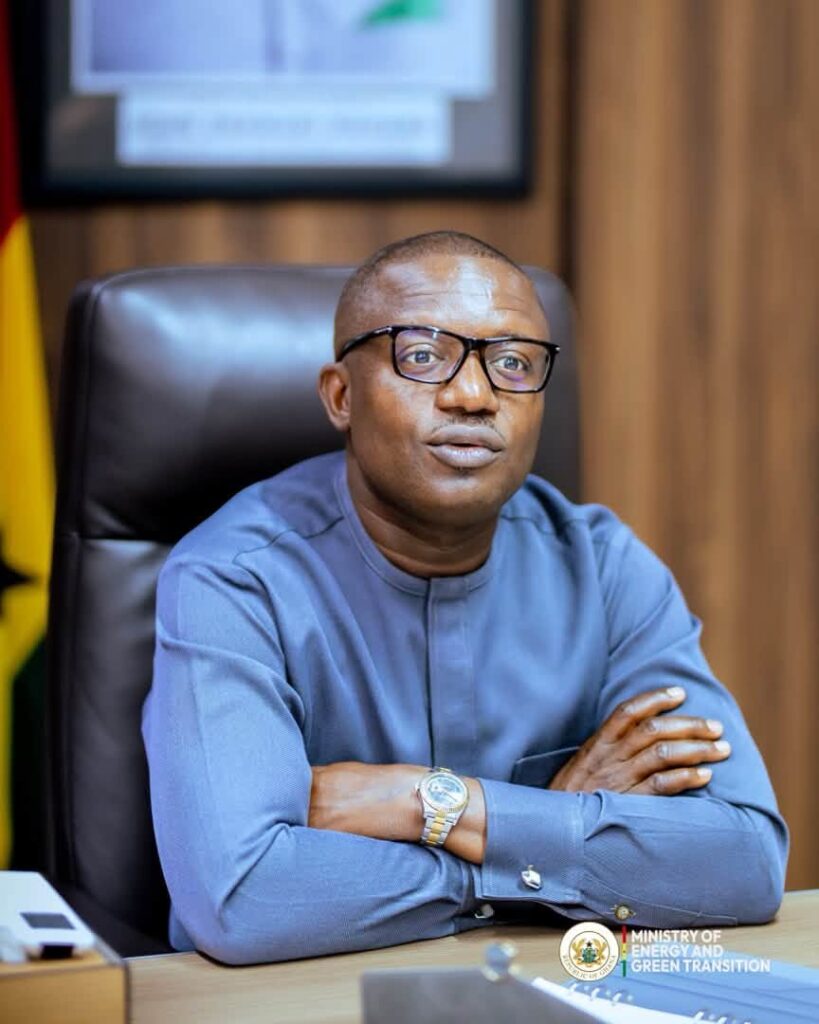
The discussions also reflect the government’s strategy of leveraging development partners and private sector investment to support the country’s broader energy transition agenda.
Discussions centre on reforms and investment
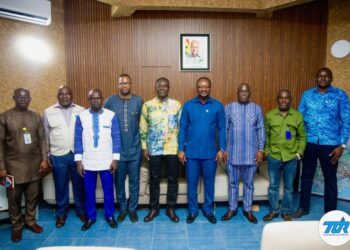
Receiving the British delegation, led by High Commissioner Christian Rogg, Dr Jinapor outlined key reforms introduced since the current administration assumed office, highlighting progress made across both the electricity and petroleum sectors.
According to the Minister, discussions covered reforms in electricity distribution, ongoing grid expansion projects and efforts to halt the decline in Ghana’s crude oil production while identifying areas where financing and technical expertise could support future projects.
We discussed the reforms we have undertaken since assuming office, including reforms in the electricity distribution sector, ongoing grid expansion works, and the progress we have made in arresting the decline in oil production. We also explored our priority projects and opportunities for financing and technical cooperation.
Dr John Abdulai Jinapor, Minister for Energy and Green Transition
The meeting follows a series of government engagements with international investors and development partners aimed at mobilising capital for critical energy infrastructure while improving operational efficiency across the sector.
Recent discussions with global energy companies, including ENI, have similarly focused on sustaining upstream investment and increasing domestic gas production to support electricity generation and strengthen energy security.
Renewable energy remains a priority
A significant portion of the discussions focused on Ghana’s renewable energy agenda, which government considers central to achieving its energy transition objectives while improving access to affordable electricity.
Dr Jinapor highlighted several flagship initiatives being rolled out to accelerate renewable energy deployment across the country.
These include the establishment of the Renewable Energy and Green Transition Fund, expansion of solar installations at strategic public facilities, deployment of solar-powered irrigation systems to support agriculture, installation of solar streetlights, promotion of rooftop solar for households and policies designed to encourage the growth of electric vehicle charging infrastructure.
“I highlighted our aggressive renewable energy expansion drive, including the establishment of the Renewable Energy and Green Transition Fund, solar deployment at critical installations, solar-powered irrigation pumps, solar streetlights, solar for homes, and our recent policies to promote EV charging infrastructure”.
Dr John Abdulai Jinapor, Minister for Energy and Green Transition
The initiatives complement broader government plans to reduce electricity costs, diversify the country’s energy mix and improve energy access while supporting climate commitments.
Earlier this month, government announced plans to develop large-scale solar-hydropower projects with battery storage to provide lower-cost electricity for industries operating under the 24-Hour Economy programme, further reinforcing renewable energy as a central pillar of Ghana’s industrialisation strategy.
UK signals continued support
For its part, the United Kingdom reiterated its commitment to supporting Ghana’s energy transformation through both public and private sector partnerships.
High Commissioner Christian Rogg expressed the UK’s readiness to collaborate with Ghana on priority energy projects, including initiatives requiring technical expertise, financing and private sector participation.
“The United Kingdom’s commitment to supporting Ghana’s energy sector remains strong, and the British Government and UK companies are ready to partner with us in delivering these initiatives”.
Dr John Abdulai Jinapor said, conveying the assurances given by High Commissioner Christian Rogg during the meeting.
The UK has historically partnered Ghana in areas including renewable energy development, climate resilience, governance and infrastructure financing. Continued collaboration could provide additional opportunities for technology transfer and investment as Ghana expands its clean energy programmes.
Partnerships increasingly central to energy transition
The latest engagement underscores the growing importance of international partnerships in Ghana’s evolving energy landscape. While government continues implementing domestic reforms, achieving ambitious targets in renewable energy deployment, grid modernisation and petroleum sector recovery will require significant investment and technical support.
Strengthening bilateral cooperation with countries such as the United Kingdom could therefore play a crucial role in bridging financing gaps while introducing new technologies and expertise into the sector.
The discussions also come against the backdrop of increasing global interest in Africa’s energy transition, where governments are seeking to balance continued investment in hydrocarbons with accelerated deployment of renewable energy technologies.
For Ghana, maintaining that balance remains particularly important. The country continues to rely on petroleum revenues and domestic natural gas for fiscal stability and electricity generation, even as it expands investment in cleaner energy solutions.
By pursuing reforms across both conventional and renewable energy sectors while deepening international cooperation, government hopes to build a more resilient energy system capable of supporting industrial growth, improving energy security and attracting long-term investment.
The meeting with the British High Commission therefore reflects more than diplomatic engagement. It signals continued efforts to position Ghana as an attractive destination for energy investment while strengthening partnerships that can help deliver the country’s long-term energy transition and economic transformation objectives.
READ ALSO: AG to Publish Constitutional Review Position Paper Next Week