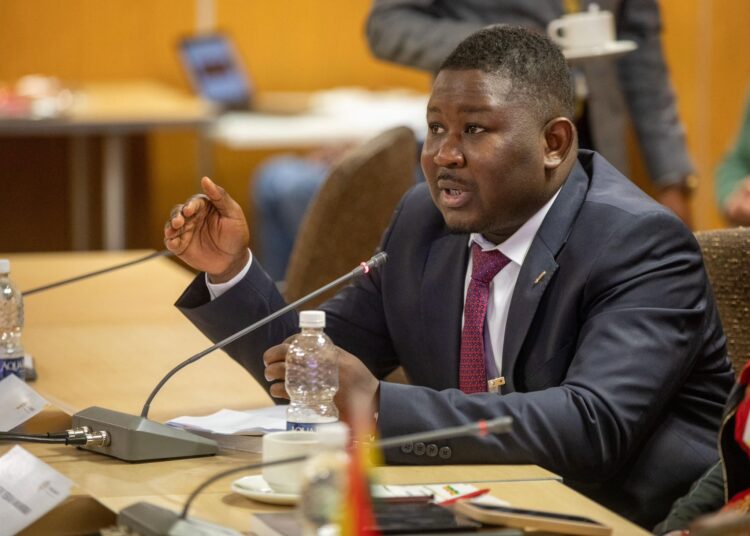
The Member of Parliament for Sagnarigu and Member of Parliament’s Finance Committee, Honourable Atta Issah has argued that Ghana’s economic recovery should be assessed through recognised macroeconomic indicators, insisting that improvements already recorded demonstrate the country is moving in the right direction. He explained that governance remains a continuous process whose ultimate goal is to improve the welfare of citizens over time, adding that no administration can resolve every challenge within a single year.
Beginning his assessment of the Mid-Year Budget Review, Honourable Issah acknowledged that many Ghanaians continue to experience financial hardship. Nevertheless, the Sagnarigu MP pointed out that prevailing economic conditions compare more favourably with those recorded in 2024, describing the current trajectory as evidence that the government’s reset agenda has begun yielding measurable outcomes.
He outlined that evaluating a national budget requires careful examination of households, businesses and industries through internationally accepted economic indicators. According to the Finance Committee member, institutions including the International Monetary Fund, the World Bank, the African Development Bank and Ghana’s Ministry of Finance rely on established benchmarks when measuring household welfare.

Referencing inflation, the legislator rejected suggestions that a lower inflation rate means prices of every commodity should decline simultaneously. He clarified that inflation measures the weighted average movement of thousands of goods and services, making it possible for individual products to record significant price increases while the overall inflation rate continues to ease.
“Let’s be honest, whatever the circumstances of this country are today, it’s better than it was in 2024. This cannot be disputed.”
Honourable Atta Issah
Additionally, Honourable Issah urged the public to distinguish between isolated price movements and the broader inflation trend. From his perspective, interpreting the performance of one commodity as proof that inflation has failed creates a misleading impression of how economic indicators operate.
Referencing recent international assessments, the Sagnarigu MP disclosed that Ghana’s multidimensional poverty index has declined from 24.9 percent in the third quarter of 2024 to 21.9 percent during the corresponding period in 2025. He indicated that the figures translate into nearly 950,000 people moving out of multidimensional poverty, describing the development as a significant measure of improving household welfare.
Addressing questions about living standards, the Finance Committee member acknowledged that economic recovery does not immediately transform every family’s circumstances. Even so, the MP emphasised that the country’s current direction demonstrates gradual progress which requires sustained implementation over the government’s four year mandate.
Business Recovery Depends On Stable Economy And Lower Inflation
The Sagnarigu MP argued that Ghana’s improving macroeconomic environment is creating favourable conditions for businesses, insisting that lower inflation and declining interest rates are translating into real savings for both importers and consumers. During discussions on the Mid-Year Budget Review, the Finance Committee member contended that government policies should be evaluated through their impact on economic stability and private sector growth.

Referencing developments within the business community, Honourable Atta Issah explained that imported inflation has fallen significantly since the current administration assumed office. According to the MP, Ghana imported more than GH¢28 billion worth of food products in 2025, making lower import related costs an important benefit for businesses that depend on foreign supplies.
The Sagnarigu MP further illustrated how declining inflation reduces the pace at which prices increase, allowing consumers to retain greater purchasing power over time. In his view, slower price growth enables businesses to operate within a more predictable environment while households experience gradual relief from rising living costs.
“Growth and stability is an essential prerequisite for job creation. Every sign you can measure in governance is better today than it was in 2024. The economy was not doing well, that is why you went to the IMF.”
Honourable Atta Issah
On financial conditions, Honourable Issah highlighted reductions in the policy rate, the Ghana Reference Rate and average commercial bank lending rates as indicators of improving access to finance. The Finance Committee member also pointed to increased private sector credit, arguing that stronger access to capital provides businesses with greater opportunities to expand production and investment.
Additionally, the legislator submitted that government does not directly place money into the pockets of citizens. Instead, he explained that public policy succeeds when it creates stable economic conditions that encourage investment, support enterprise and generate employment across different sectors of the economy.
Against this backdrop, Honourable Issah praised developments within the banking industry, citing improved performance among local financial institutions. He argued that sound management of the financial sector has strengthened confidence in the economy while providing businesses with a more reliable operating environment.
He also referenced Ghana’s relationship with the International Monetary Fund and the country’s economic recovery programme. According to the Sagnarigu MP, internationally recognised institutions including the IMF, the World Bank, the African Development Bank and the Ministry of Finance rely on accepted welfare indicators when assessing economic performance, making those benchmarks essential for objective analysis.
READ ALSO: IOM Warns Hundreds of Thousands Trapped in Global Online Scam Networks