The battle over FIFA’s proposed FIFA Forward Enterprise (FFE) has quickly evolved from a commercial proposal into one of the most significant political confrontations in modern football governance. What was initially presented by FIFA President Gianni Infantino as a consultation on commercial restructuring is now threatening to divide the global football community along confederation lines.
FFE seeks to commercialize and manage FIFA-owned competitions through a new corporate structure that would allow private investment into football’s most valuable assets, including the FIFA World Cup. FIFA insists the move is intended to unlock greater commercial value, generate additional revenue and ultimately return more money to its member associations.
However, critics view the proposal differently. To them, the commercialization of the World Cup represents an unprecedented shift in football governance, one that could permanently alter how the game’s biggest competitions are controlled. The concern is not merely about investment, but about allowing outside financial interests to influence tournaments that have traditionally belonged collectively to FIFA’s 211 member associations.
Those fears intensified dramatically when UEFA’s 55 member associations unanimously rejected the proposal on Thursday, July 30 after an emergency meeting was called.
The European governing body went even further by announcing that none of its members would participate in FIFA competitions should ownership interests in the World Cup and other FIFA tournaments be transferred to private investors.
Only two days after FIFA issued a September 19 deadline for member associations to decide whether they support the proposal, opposition widened further. CONCACAF, representing North America, Central America and the Caribbean, also rejected the plans, making it the second confederation to publicly oppose FIFA’s initiative.

The emergence of two united confederations opposing the proposal has significantly altered the political landscape surrounding the FIFA Forward Enterprise. What initially appeared to be a straightforward consultation has now become a numbers game capable of determining the future of world football.
With the deadline approaching, attention is rapidly shifting away from Europe and North America toward the remaining confederations, particularly Africa, where CAF’s eventual position may determine whether FIFA secures the backing it needs or faces one of the biggest political defeats in its history.
The Mathematics Explained
Football politics often comes down to simple arithmetic.
FIFA currently has 211 member associations. A simple majority therefore requires 106 member associations to move in support or against a motion.
UEFA consists of 55 members while CONCACAF has 41, giving the two confederations a combined total of 96 if they remain united against the proposal.
That leaves them exactly ten votes short of the majority required to block the proposal.
Coincidentally, CONMEBOL, South America’s governing body, has precisely ten member associations.
Should all ten South American nations side with UEFA and CONCACAF, opposition to the FFE proposal would immediately reach 106 votes, enough to establish a simple majority.
This mathematical reality places enormous strategic importance on South America. Never has a confederation with only ten members potentially held so much influence over the future direction of world football.
At the same time, if CONMEBOL backs FIFA, the focus immediately shifts toward Africa and Asia, where the largest remaining voting blocs reside.
CAF Holds More Than Votes, It Holds Influence
Although South America’s ten votes may mathematically complete a majority, Africa’s position remains equally significant for broader political reasons.
CAF represents 54 member associations, making it the second-largest confederation after UEFA. A united African position would send an unmistakable message about the continent’s vision for football governance.
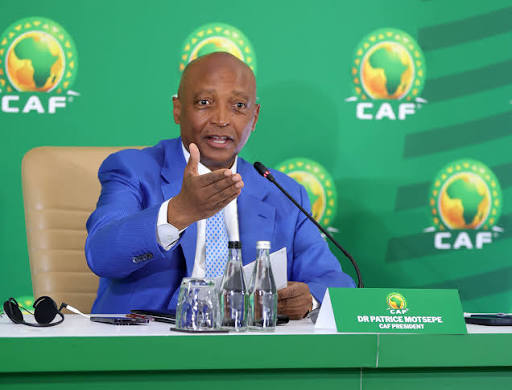
Much speculation has centred on CAF’s relationship with FIFA President Gianni Infantino. During his presidency, Africa has benefited from increased financial support, expanded World Cup representation and larger FIFA development programmes. Those developments have naturally fuelled assumptions that CAF may support FIFA’s latest proposal.
Yet the situation is more nuanced than many observers suggest.
Many African football associations continue to struggle with inadequate infrastructure, poor stadium facilities, limited commercial opportunities and financial constraints. For these associations, additional FIFA funding could transform football development.
Reports surrounding the proposal indicate that around $40 million could become available to each member association through the commercial restructuring. For numerous African federations, that level of funding could finance training centres, youth academies, stadium renovations, women’s football programmes and grassroots initiatives that otherwise remain unattainable.
Viewed purely from a developmental perspective, the financial incentive is substantial.
However, accepting immediate financial benefits also raises longer-term questions. Once ownership stakes in football’s flagship competitions are transferred to private investors, reversing such decisions may prove impossible.
CAF’s decision may therefore become a choice between immediate financial opportunity and preserving long-term institutional control over the sport.
Football’s Future Versus Financial Opportunity
The central argument surrounding the FFE proposal is not whether football should generate more money. Virtually everyone agrees that increasing revenue benefits the global game.
The disagreement concerns how that revenue should be generated.
UEFA argues that the World Cup is more than a commercial asset. It is football’s most important global competition and should never become an investment vehicle for private shareholders seeking financial returns.
Its concern is that commercial investors naturally expect profits, potentially influencing decisions surrounding tournament expansion, scheduling, broadcasting, sponsorship and competition formats.
Supporters of the proposal counter that modern football already operates within a highly commercial environment. Broadcast rights generate billions and corporate sponsorship drives tournament revenues.
Private companies already organize numerous commercial aspects of football competitions. From that perspective, FFE merely represents the next logical evolution in football’s commercial growth.
The opposing view, however, is that there remains a fundamental distinction between selling sponsorship rights and selling ownership interests.
One involves commercial partnerships.
The other potentially changes who ultimately benefits from football’s most valuable assets.
That distinction explains why UEFA has adopted such a firm position.
September 19 Could Become a Defining Moment
The coming weeks promise intense political lobbying across every confederation.
FIFA will attempt to convince undecided Confederations and associations that the proposal represents an unprecedented opportunity to increase football investment worldwide.
UEFA is equally likely to campaign vigorously against any move it believes compromises football’s independence.
CONCACAF has already aligned itself with Europe’s position, strengthening the credibility of the opposition.
Attention will now turn to CONMEBOL, CAF, AFC and OFC, whose collective decisions will shape the outcome.
For Africa, the dilemma extends beyond voting for or against FIFA.
CAF must determine whether the promise of significant financial investment outweighs concerns about private ownership of football’s most prestigious competitions.
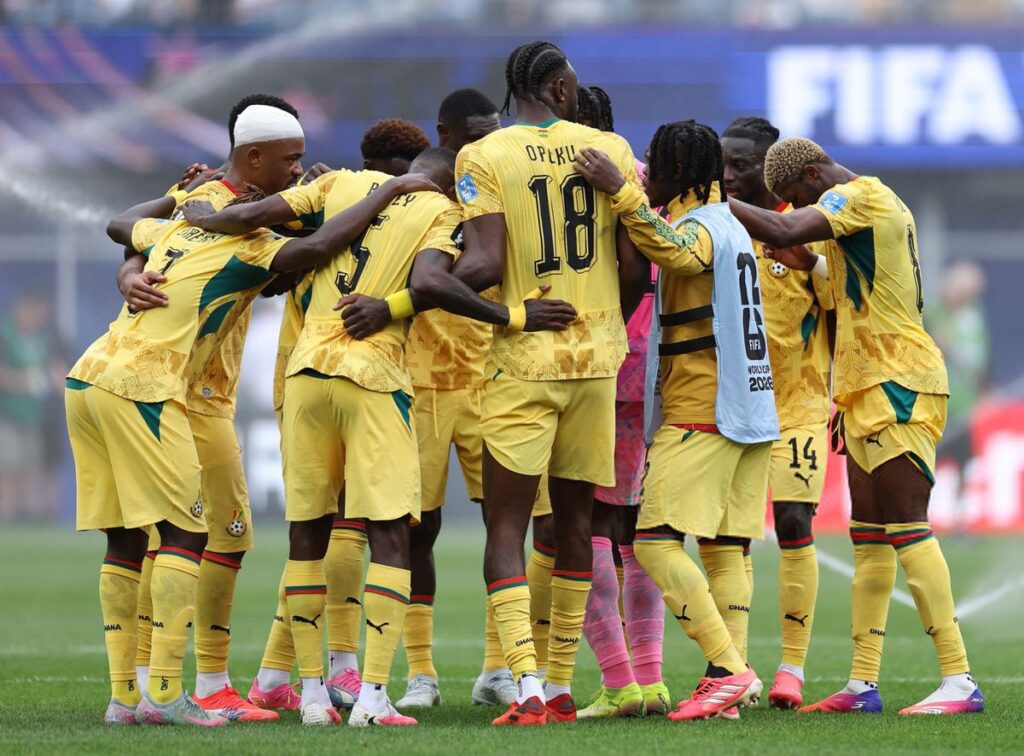
The continent’s infrastructure needs are undeniable, and additional funding could accelerate development across many of CAF’s member associations. Yet some will also ask whether short-term financial gains justify supporting a structural change whose long-term consequences remain uncertain.
Ultimately, the debate surrounding FIFA Forward Enterprise has become a test of football governance rather than merely commercial strategy. It asks whether football’s future should continue to be controlled solely by its member associations or whether private capital should be allowed to acquire a stake in the sport’s greatest competitions.
When the rest of FIFA’s members make their decisions after the September 19 deadline, they will not simply be deciding the fate of one proposal. They will be determining who shapes the future of the World Cup, how football’s wealth is controlled, and whether commercial opportunity should take precedence over institutional ownership.
Whatever the outcome, the decision is likely to be remembered as one of the most consequential in FIFA’s modern history.
READ ALSO: Mahama Government Backs Five-Year Presidential Term Reform