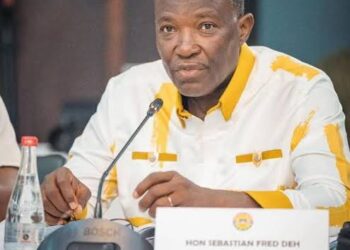
Parliamentary Affairs Analyst, Clement Akoloh has advocated for the constitutional amendment to extend Ghana’s presidential term from four to five years, arguing that the additional year would allow governments to implement their development agenda more effectively. He observed that the current four-year tenure places considerable pressure on incoming administrations, leaving limited time to translate campaign promises into measurable outcomes before attention shifts to another election cycle.
Discussing the Constitutional Review Committee’s recommendation, Mr Akoloh explained that the proposal deserves careful national consideration because governing extends beyond winning elections. According to the Parliamentary Affairs Analyst, a newly elected administration often spends its first year assembling ministers, appointing public officials and establishing the structures required to begin implementing policies.

From his perspective, the final year of every presidential term naturally becomes dominated by preparations for another election. As a result, governments effectively operate within a much shorter window than the Constitution formally provides, reducing the period available for sustained policy implementation.
“The first year actually is spent in putting up your government, and then the last year is also spent in trying to build up reelection or to help the party come back to power. So essentially, you have only about two years to do anything.”
Clement Akoloh
Furthermore, Mr Akoloh noted that administrative efficiency depends on the amount of uninterrupted time available to a government. The Parliamentary Affairs Analyst therefore argued that extending the constitutional term could improve policy continuity and provide administrations with greater opportunity to fulfil their electoral mandate.
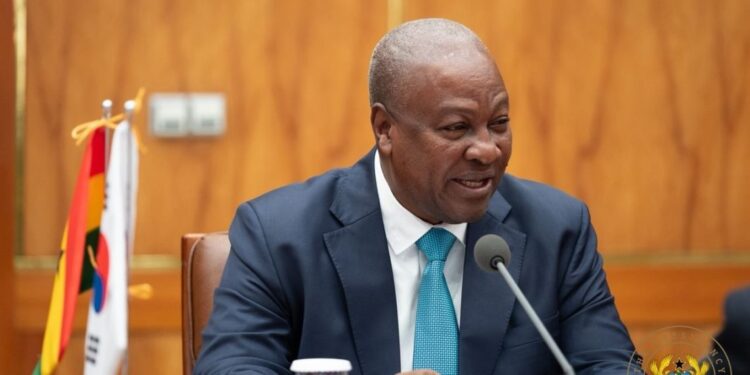
Analysing recent governance trends, Mr Akoloh pointed to President John Dramani Mahama’s return to office as an example of how prior experience can accelerate decision making. He explained that familiarity with government operations enables returning leaders to settle into office more quickly because they already possess practical knowledge of appointments, policy direction and administrative procedures.
Additionally, the Parliamentary Affairs Analyst emphasised that such experience cannot automatically be expected from every incoming president. A first time leader, he remarked, faces a steeper learning curve while simultaneously carrying the responsibility of forming a government and implementing campaign commitments within a limited constitutional timeframe.

Against this backdrop, Mr Akoloh contended that the recommendation for a five-year presidential term should be assessed from the standpoint of governance efficiency instead of partisan advantage. Consideration, he argued, should centre on whether the proposal strengthens democratic administration and improves the delivery of public services.
Moreover, he observed that constitutional reforms often require long term national consensus because their effects extend well beyond one political administration. For that reason, the Parliamentary Affairs Analyst encouraged stakeholders to examine the proposal through broad constitutional principles instead of immediate political calculations.
Longer Parliamentary Tenure Could Strengthen Legislative Representation
Continuing his assessment of the Constitutional Review Committee’s proposals, Parliamentary Clement Akoloh advanced the case for extending the tenure of Members of Parliament from four to five years. He argued that an additional year would give legislators more time to understand parliamentary procedures, settle into their roles and deliver on the expectations of their constituents.
According to Mr Akoloh, Parliament presents a unique working environment that requires newly elected members to acquire specialised legislative knowledge before they can perform at their full potential. The Parliamentary Affairs Analyst explained that regardless of an individual’s professional background, the transition into parliamentary work demands time, orientation and practical experience.
Furthermore, he observed that many first term legislators spend a considerable period learning the procedures, conventions and responsibilities associated with lawmaking and parliamentary oversight. An extended mandate, he suggested, would provide greater continuity and allow MPs to focus more effectively on legislation, constituency development and executive accountability.
“When you come to Parliament, it is like you are coming to a new school altogether. You are coming to learn all together, and it is so difficult for them to keep up the pace.”
Clement Akoloh
Mr Akoloh welcomed the recommendation to lengthen the tenure of Members of Parliament, describing it as an opportunity to improve legislative performance. From his perspective, the additional year would help lawmakers establish themselves more firmly before attention inevitably shifts towards another general election.
Additionally, the Parliamentary Affairs Analyst urged policymakers to approach constitutional reforms through national consensus instead of partisan calculations. He argued that every Ghanaian with the competence and vision to contribute to local governance should have the opportunity to participate in the democratic process.

Turning to district level governance, Mr Akoloh supported wider citizen participation in local elections. He suggested that individuals seeking to serve their communities should be allowed to contest based on merit and the quality of their proposals instead of limiting opportunities through restrictive political arrangements.
Discussing another recommendation of the Constitutional Review Committee, the Parliamentary Affairs Analyst welcomed the proposal to increase the number of parliamentary seats from 276 to 300. Even so, he proposed an alternative method for filling the additional 24 seats to improve representation among groups that remain underrepresented in Parliament.
In particular, Mr Akoloh recommended that political parties nominate women to fill half of the new seats while reserving the remaining positions for persons with disabilities through a competitive party-based process. Such an arrangement, he argued, would strengthen inclusivity while ensuring the additional seats contribute directly to balanced national representation.
Moreover, the Parliamentary Affairs Analyst explained that expanding Parliament should serve a clear democratic purpose beyond increasing the number of legislators. The focus, he argued, should remain on creating a legislature that better represents the diversity of Ghanaian society while strengthening participation in national decision making.
READ ALSO: More Than 20,000 Cambodians Still Displaced After Thailand Clashes, UN Expert Warns