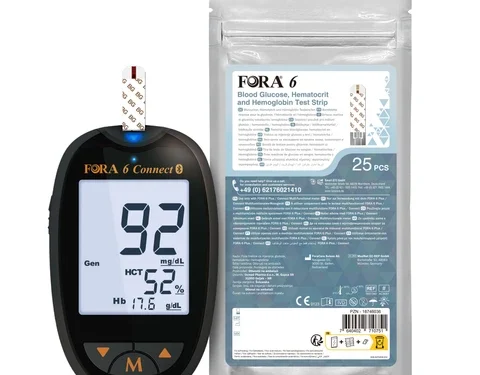
Health advocates in Ghana are pushing for a fundamental shift in the country’s approach to healthcare, from a system built primarily around treatment to one centred on prevention and early detection, as Élevé HealthWatch, in partnership with ForaCare, launches the Fora6 Connect device to help close gaps in diagnosis of Non- Communicable Diseases.
The launch comes amid growing concern that Ghana’s health delivery system remains heavily skewed toward curative care, leaving prevention and health promotion trailing far behind despite mounting evidence of their importance in tackling the country’s rising burden of non-communicable diseases.
Speaking on the state of Ghana’s health priorities,Chief Executive Officer of Élevé HealthWatch, Nana Abena Gyenfuah Ababio offered a pointed critique of how the country’s health delivery system has historically been structured, arguing that the balance between treatment and prevention has been fundamentally skewed for years.
“In this country, we have built our health delivery system around treatment, curative, and we have relegated prevention and promotion to the background. But if you want a health system properly so called, it is not sick care, it is not treatment. Sick care and treatment should be a subset of a health system.”
Chief Executive Officer of Aleve Health Watch, Nana Abena Gyenfuah Ababio
This framing challenges a long-standing assumption embedded in how healthcare resources and public attention have traditionally been allocated in Ghana, suggesting that meaningful reform will require treating prevention not as a secondary add-on, but as the foundation upon which the rest of the health system should be built.
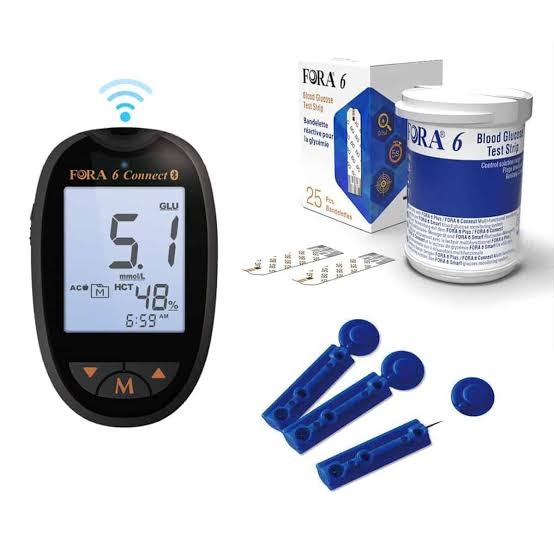
To help address delays in diagnosis that often allow treatable conditions to progress unchecked, Élevé HealthWatch has partnered with ForaCare to introduce the Fora 6 Connect, a handheld device capable of performing multiple health tests and delivering results within minutes.

The device’s speed and portability position it as a potential tool for expanding access to basic diagnostic testing beyond traditional clinical settings, particularly in communities where access to laboratory services remains limited.
CEO Highlights the Device’s Role in NCD Management
Chief Executive Officer ofÉlevé HealthWatch, Nana Abena Gyenfuah Ababio, explained that the device is specifically designed to support the early detection and management of non-communicable diseases, a category of illness that continues to claim a growing share of lives both in Ghana and globally.
She noted that the urgency behind the device’s launch is underscored by global health data pointing to the scale of the non-communicable disease burden worldwide.
“non-communicable diseases are on the rise. When you look at the global statistics, according to WHO statistics, about 45 to 50 percent of people die of NCDs.”
Chief Executive Officer of Aleve Health Watch, Nana Abena Gyenfuah Ababio
According to Mad. Ababio, the core value of the Fora 6 Connect lies in its ability to consolidate six essential health tests into a single, portable device, streamlining what would otherwise require multiple separate visits or specialised equipment. While she did not detail each specific test included in the device’s functionality, she emphasised that despite their basic nature, these tests carry significant diagnostic value, particularly for detecting the kinds of underlying conditions that often go unnoticed until they become advanced non-communicable diseases.
Push Toward Community-Level Screening
Beyond the device itself, Ababio framed the ForaSix Connect launch as part of a broader agenda to promote preventive healthcare and encourage more Ghanaians to seek regular screening at accessible points of care.
This emphasis on decentralised, community-level access reflects a recognition that meaningful progress on non-communicable disease prevention will require screening tools and services to reach beyond major hospitals and into the smaller health facilities that serve most Ghanaians on a daily basis, including Community-based Health Planning and Services (CHPS) compounds situated in more remote areas.
Broader Reckoning With Ghana’s Health Priorities
Taken together, the launch of the Fora6 Connect and the accompanying calls for a shift toward preventive healthcare point to a broader reckoning within Ghana’s health sector over how resources, infrastructure and public attention are allocated.
With non-communicable diseases now accounting for a substantial share of global mortality, advocates argue that continuing to prioritise treatment over prevention leaves the country perpetually responding to illness after it has already taken hold, rather than intercepting it earlier when intervention is often simpler and less costly.

As the Fora6 Connect device begins rolling out, its success will likely depend on how widely it can be distributed across polyclinics, health centres and CHPS compounds, as well as how effectively public messaging can shift long-standing habits around seeking care only after symptoms appear.
For a health system advocates describe as historically built around sick care, the device represents one small but symbolic step toward embedding prevention more firmly into how Ghanaians engage with their own health going forward.
READ MORE: 94.5% of School Projects in Lack Toilet Facilities – Hon. Deh