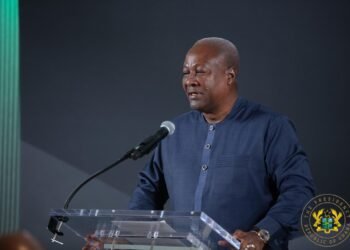
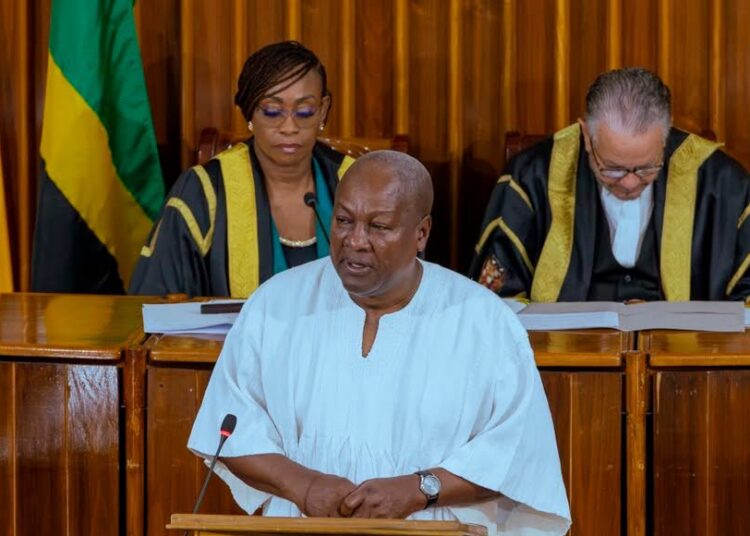
President John Dramani Mahama declared that people of African descent should see themselves as “heirs to greatness” rather than descendants of slavery, addressing the Joint Session of the Jamaican Parliament during the country’s 64th Independence Day celebration.
His remarks paid tribute to Jamaica’s contribution to Pan-African history, honouring Marcus Mosiah Garvey’s influence on Ghana’s founding father, Dr Kwame Nkrumah.
President Mahama opened this portion of his address by urging listeners to view the history of people of African descent through a lens that extends beyond historical injustice, emphasising achievement and resilience instead.
He described this legacy as encompassing civilisations that advanced human knowledge, freedom fighters who challenged oppression, innovators who expanded science and technology, and artists whose creativity enriched global culture.
“While we must never forget the injustices of history, neither must we allow them to imprison us,” he said.
Jamaica’s Profound Contribution to Pan-Africanism
President Mahama singled out Jamaica as one of the most significant contributors to this broader legacy, crediting the nation with producing Marcus Mosiah Garvey, whose call for black pride, self-reliance and African unity awakened the consciousness of millions across Africa and the diaspora.

He traced Garvey’s direct influence on Ghana’s own path to independence through his impact on Nkrumah, who acknowledged in his writings that he drew strength from Garvey’s vision while leading Ghana to independence and championing continental liberation.
President Mahama extended this historical connection beyond Garvey, highlighting the role Caribbean intellectuals played directly within Ghana’s own independence movement, particularly through Trinidadian Pan-Africanist George Padmore, who made Ghana his home and worked alongside Nkrumah in advancing African liberation.
“These towering figures remind us that the freedom of Africa and the Caribbean has always been a shared enterprise,” he said.
Bob Marley’s Global Cultural Influence
Beyond political and intellectual contributions, President Mahama highlighted Jamaica’s cultural impact on the world, singling out musician Bob Marley as a figure whose influence transcended national borders through music that became a universal anthem for freedom, justice and human dignity.
He emphasised that Ghana has always viewed Jamaica’s achievements as belonging to the broader African diaspora rather than to Jamaica alone. “We remain united by a common heritage and an interconnected destiny,” he said.

President Mahama called on both nations to convert their historical and cultural connections into practical cooperation that delivers tangible benefits for their citizens, invoking Nkrumah’s own words to reinforce the enduring relevance of Pan-African unity today.
“The forces that unite us are intrinsic and greater than the superimposed influences that keep us apart,” he said, quoting Nkrumah. He argued that the current generation carries the responsibility of pursuing economic transformation, scientific advancement and technological leadership as the modern extension of earlier liberation struggles.
Emancipating the African Mind
Drawing once more on Bob Marley’s legacy, President Mahama emphasised the importance of psychological liberation as a continuing task for people of African descent worldwide, describing it as demanding confidence in African institutions, belief in African capabilities, and a firm commitment to accountability and excellence.
He closed this portion of his address with a direct appeal regarding identity, declaring that young Africans and members of the diaspora must see themselves not as descendants of slaves but as heirs to greatness and architects of an even greater future. “None but ourselves can free our minds,” he said, echoing Marley’s own words.
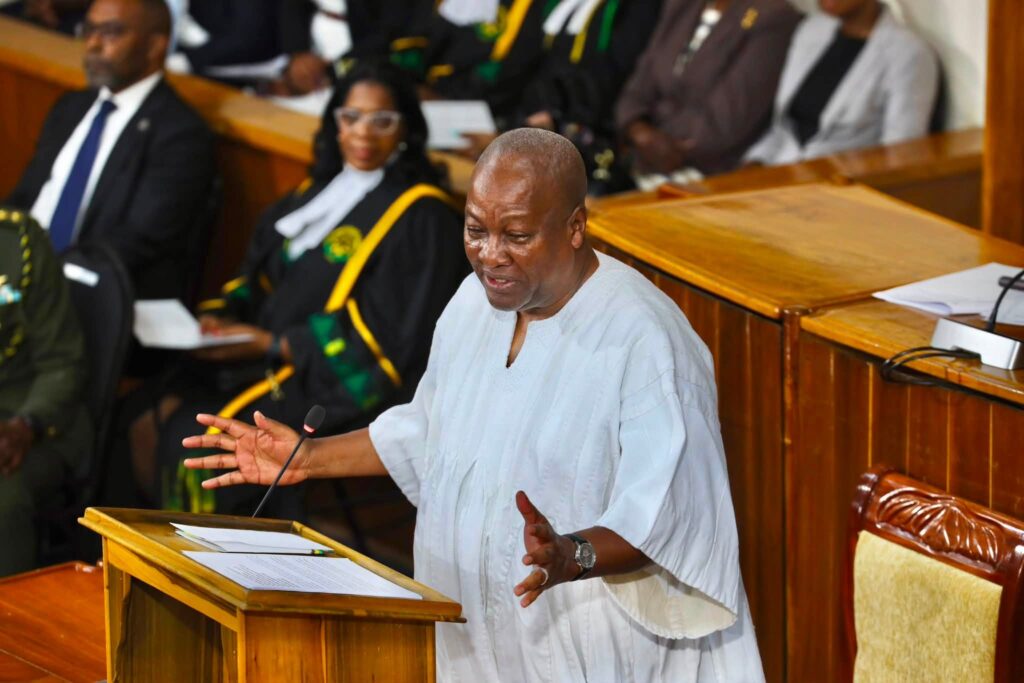
President Mahama’s tribute to Garvey, Padmore and Marley formed a central pillar of his broader address to the Jamaican Parliament, reinforcing the historical and cultural bonds between Ghana and Jamaica while calling for that legacy to translate into practical, forward-looking partnership.
By connecting Jamaica’s most influential historical and cultural figures directly to Ghana’s own independence narrative through Nkrumah’s acknowledged debt to Garvey’s vision, President Mahama positioned the relationship between the two nations as one built on genuine historical interdependence rather than mere diplomatic courtesy.
The President’s closing declaration that young Africans are “heirs to greatness” rather than descendants of enslavement reflects a broader theme running through his Jamaica visit, one that consistently sought to balance acknowledgment of historical injustice with a forward-looking vision centred on achievement, self-determination and shared prosperity between Africa and the Caribbean.
READ ALSO: Mahama Backs Jamaica’s Slavery Petition to King Charles