UNICEF has warned that the ceasefire in Gaza is failing to protect children after nearly 300 were reportedly killed during the 300 days since the truce was announced in October 2025, despite commitments to halt military operations and allow the full flow of humanitarian aid into the war-ravaged enclave.
Accordig to the United Nations children’s agency, the deaths amount to an average of one child every day despite commitments under the ceasefire to suspend military operations and allow the full entry of humanitarian aid. Hundreds more children have reportedly been injured over the same period, many suffering life-changing wounds as violence continues to affect communities across the war-ravaged enclave.
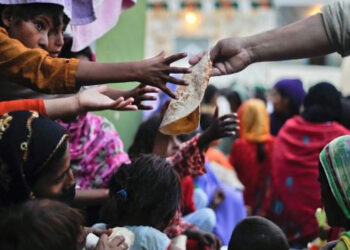
Families remain confined to roughly one-third of the Gaza Strip, where many are living among collapsed buildings, mountains of rubble and accumulated waste after repeated displacement. Overcrowded shelters and damaged infrastructure have left civilians exposed to unsafe drinking water, poor sanitation, disease outbreaks and worsening food insecurity, conditions that humanitarian agencies say continue to threaten the lives of thousands of children.
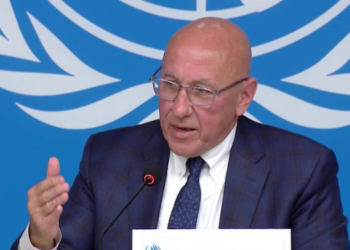
UNICEF Regional Director for the Middle East and North Africa, Edouard Beigbeder stated, “a ceasefire that leaves an average of one child dead each and every day is failing children.”
“With hundreds more children injured, many severely, children in Gaza are still waiting for the end to the violence they were promised.”
Edouard Beigbeder
According to Edouard Beigbeder, the recent diplomatic statements outlining potential next stages in the ceasefire process provided fresh hope that hostilities may eventually come to a stop and that humanitarian efforts could be greatly increased.
“For children in Gaza, the test is simple. Does the killing stop? Does aid reach them at scale? Do hospitals reopen and water flow? Will children return to school safely in September? Children have heard promises before. This time, agreements must translate into action.”
Edouard Beigbeder
The conflict began after Hamas-led attacks on Israel in October 2023, triggering an Israeli military campaign in Gaza that has caused widespread destruction and a prolonged humanitarian emergency. Despite the October 2025 ceasefire agreement, humanitarian agencies say sporadic military operations and airstrikes have continued, contributing to civilian casualties and preventing a full recovery across the enclave.
According to the UN Office for the Coordination of Humanitarian Affairs (OCHA), Gazan health authorities have reported that 1,209 people have been killed and 3,943 injured since the ceasefire was announced on 10 October 2025.
OCHA also noted that ongoing military activity near the so-called “Yellow Line,” together with strikes elsewhere in Gaza, continues to disrupt civilian life, damage shelters, trigger fresh displacement and restrict access to life-saving services.
The humanitarian situation remains particularly severe for children, who face multiple and overlapping risks. UNICEF warned that acute malnutrition, disease, limited access to healthcare, unsafe water supplies and damaged sanitation systems continue to endanger young lives across the territory.
Healthcare workers operating in Gaza have also reported growing pressure on maternity and neonatal services. According to UNICEF, exhausted and malnourished mothers continue arriving at health facilities carrying severely undernourished children, while hospitals struggle with shortages of medicine, equipment and functioning incubators.
Aid Efforts Intensify as UN Urges Lasting Protection for Gaza’s Children

While security conditions and constraints continue to impede large-scale aid, United Nations agencies and their partners are expanding relief activities wherever access permits as humanitarian needs continue to rise.
UNICEF spokesperson Louise Wateridge described the increasingly desperate conditions confronting newborn babies, many of whom are beginning life in hospitals that remain only partially operational after months of conflict.
“There’s not enough incubators and in some cases [health workers are] saying they see two or even three babies sharing a single machine. In Gaza, children only days old are already fighting to stay alive, born into partially functioning hospitals lacking equipment and medicine.”
Louise Wateridge
She added, “this is what the world has chosen to tolerate. The killing must stop, aid has to enter at scale and children must be protected. The world calls it a ceasefire but families in Gaza are still burying their children.”
The humanitarian crisis has also affected critical medical infrastructure. The World Health Organization (WHO) reported that attacks on a medical storage facility near Al-Aqsa Hospital in Deir al-Balah last weekend destroyed essential medical supplies, including items previously delivered by the UN agency.
Despite these challenges, aid organisations continue to deliver assistance where possible. OCHA said humanitarian partners upgraded approximately 3,000 makeshift shelters in Gaza City during the past week while distributing emergency shelter materials and household supplies to around 9,000 families.
In order to bolster temporary shelters before winter conditions return, the organization emphasised that increasing humanitarian aid will necessitate the prompt entry of necessary building supplies like wood, ropes, tools, and extra solar lights.
UNICEF has also concentrated on using education to help kids restore a feeling of normalcy. In preparation for the upcoming academic year, which is scheduled to start in around two weeks, the organization sent more than 600 pallets of school bags, leisure kits, and soap into Gaza on Tuesday.
More than 250,000 preschoolers and school-age children are presently receiving help from education partners through summer learning programs designed to restore routines, repair learning losses, and offer psychosocial support following months of conflict and relocation.
Even as these efforts continue, UNICEF maintains that humanitarian aid is insufficient to address Gaza’s dilemma, despite the ongoing efforts. By protecting civilians, providing safe, quick, and unhindered humanitarian access throughout the Strip, and defending children’s access to healthcare, education, food, and clean water, UNICEF is calling on all parties to completely adhere to international humanitarian and human rights law.
READ ALSO: Transport Unions Announce No Fare Increase After Mahama’s Diesel Cut