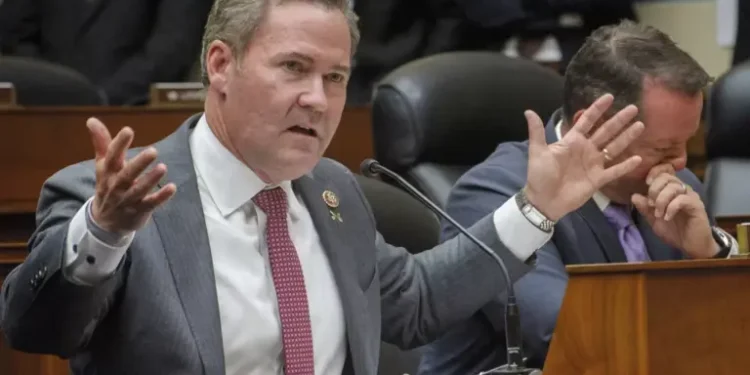
US Ambassador to the United Nations, Mike Waltz has said that economic pressure led by Treasury Secretary Scott Bessent is putting increasing strain on Iran, arguing that Tehran is seeking access to frozen funds as the conflict between the two countries continues.
Waltz said in an interview that Bessent’s economic measures were having a significant impact on Iran’s economy, claiming that Iranian representatives repeatedly raise the issue of financial assistance during negotiations with US officials.
“When Iran is coming to the table with our negotiators, they are talking about cash, cash, cash. Because they’ll absorb the bombings. I say this jokingly but seriously as well – the Iranians are more afraid of Secretary Bessent than they are of [Defense] Secretary Hegseth right now.”
Mike Waltz
Waltz’s comments highlight the Trump administration’s emphasis on economic pressure as part of its strategy toward Tehran. He argued that Iranian leaders are particularly concerned about the condition of the country’s economy, including the falling value of its currency and rising inflation.
The US envoy claimed that Iran’s leadership was less concerned about its military or the wider population than it was about the economic consequences of the conflict.
“They are constantly asking for access to cash, access to their assets that we have frozen … that’s the squeeze. That, coupled with the blockade, that’s what’s going to eventually get the Iranians to move.”
Mike Waltz
His remarks come as the Trump administration continues to apply pressure on Tehran while uncertainty surrounds the prospects for direct negotiations between the two countries. President Donald Trump has described the US position as only “semi-negotiating” with Iran, suggesting that Washington intends to allow economic pressure to increase before making further concessions.
Iran, however, has maintained that there are currently no direct negotiations between Tehran and Washington. Iranian Foreign Minister Abbas Araghchi said, “there are no direct talks with the US,” Araghchi said, while acknowledging that “intermediaries are still trying to create the grounds for negotiation.”
The disagreement over negotiations comes alongside a standoff over the Strait of Hormuz, a strategically important waterway through which a significant amount of global energy supplies passes. Araghchi said that Iran would not reopen the strait until Washington meets Tehran’s demands, including lifting the naval blockade.

He also said talks between Iran and Oman concerning the waterway had reached their “final stages.” However, he maintained that reopening the Strait of Hormuz remained conditional on the United States addressing Iran’s demands. The position indicates that the waterway remains a major point of contention between the two sides, with both economic and security considerations influencing the wider negotiations.
For Washington, reopening the strait would ease pressure on global energy and commodity markets, while Tehran has sought to use the waterway as leverage in negotiations over the conflict.
US Lawmaker Calls for End to War
While the Trump administration continues to defend economic pressure on Iran, Democratic Senator Chris Murphy has taken a sharply different position, arguing that the continuation of the conflict is weakening the United States while strengthening Tehran.
Murphy said that the US President had “lost this war” and called for an end to the fighting and the reopening of the Strait of Hormuz. The Senator said that he would support even what he described as a “bad deal” if it could bring the conflict to an end and restore access through the strategic waterway.
“The war needs to end because every day that the war continues, America gets weaker, Iran gets stronger, and people here in the United States get s****** as prices go up and up and up.”
Chris Murphy
Murphy’s comments reflect concerns over the economic consequences of the conflict for Americans, particularly as disruption around the Strait of Hormuz affects energy and other commodity prices. The Senator also said he would oppose further funding for the continuation of the war but would support replenishing US military ammunition and other supplies once the conflict ends.
His position contrasts with the administration’s argument that continued economic pressure can force Tehran to make concessions at the negotiating table.
The competing positions underline the uncertainty surrounding diplomatic efforts between Washington and Tehran. The United States says economic pressure is weakening Iran’s ability to sustain the conflict, while Iranian officials have denied direct negotiations and linked the reopening of the Strait of Hormuz to the removal of the US naval blockade and other demands.
Waltz’s comments suggest Washington believes financial pressure could eventually bring Iran back to negotiations on terms more favourable to the United States. Iran, meanwhile, has signalled that it will continue to use the Strait of Hormuz and other economic issues as leverage while intermediaries work to establish conditions for renewed negotiations.With the conflict continuing and the strategic waterway remaining closed, the economic consequences are likely to remain central to the dispute.
READ ALSO: Todd Blanche Confirmed As Attorney General