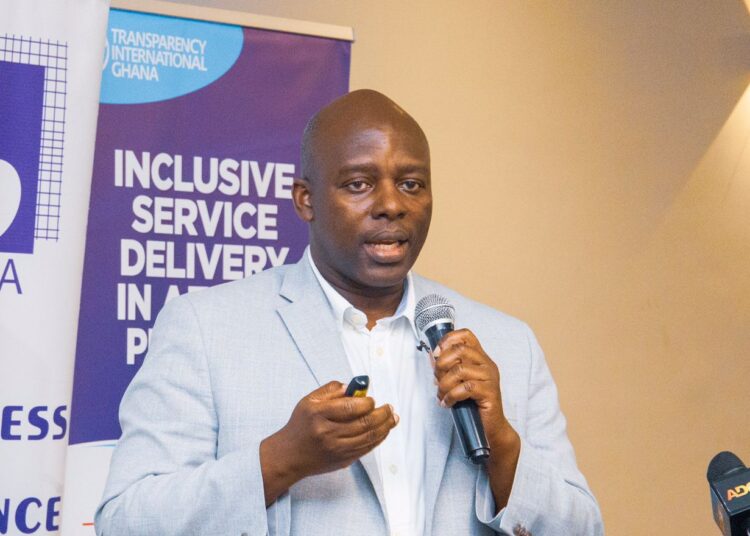
Political scientist Dr. John Osae-Kwapong has argued that Ghanaians judge the Office of the Special Prosecutor by a single test the Office cannot control, since it is the courts and not the prosecutor who convict. He made the case in an exclusive interview with The Vaultz News following the Supreme Court’s decision upholding the Office of the Special Prosecutor Act, 2017 (Act 959).
Dr Osae-Kwapong, a Democracy and Development Fellow at CDD-Ghana and Project Director of The Democracy Project, said the public wants to see accused persons found guilty and jailed, and that the yardstick is not a bad one.
He argued, however, that asset recovery and deterrence also count as anti-corruption results, and that regular public updates from the Special Prosecutor are what keep public support behind an office politicians could otherwise dismantle.
A settled question and an unsettled standard
Dr Osae-Kwapong drew a line between what the court has resolved and what remains open. “The question of constitutionality is settled. But how you measure the success of the Office of the Special Prosecutor has always been a challenging matter,” he said.
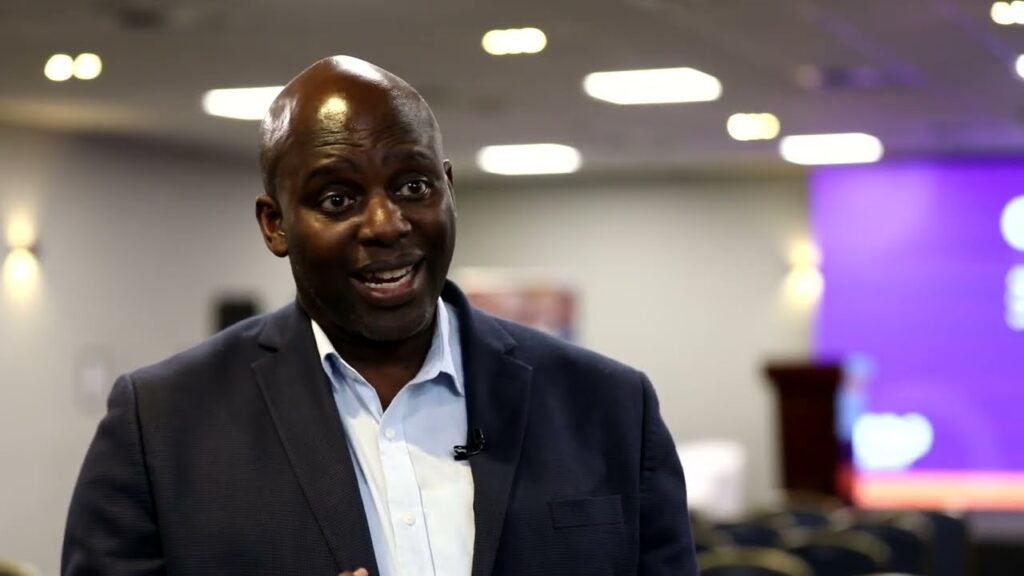
He described the expectation the public brings to the Office in plain terms. “When the public hears of the Office, they expect it to hold people accountable for alleged acts of corruption,” he said, adding that the national conversation reduces to a single test.
“Was the person accused of corruption found guilty, and if they were found guilty, did they go to jail? That really does seem to be the expectation,” he said.
Why convictions are not the only measure
He declined to dismiss that standard, treating it as legitimate rather than naive. “Whether people are going to jail is not a bad indicator by which to judge how well a Special Prosecutor is doing,” he said.
His argument is that the indicator is incomplete. “But there are other ways of doing anti-corruption work that may not always end with somebody going to jail,” he said.
Recovery of stolen funds heads that list, and he framed it in terms of what the state actually loses. “If somebody allegedly steals a million cedis from the national purse and the work of the Office recovers all or most of it, that is a good thing,” he said.
The second alternative measure is the hardest to demonstrate, and he acknowledged the difficulty while insisting on its value. “And if the mere presence of the Office becomes a deterrent, so that people are afraid to engage in acts of corruption, that too is a good thing to have, although it would be difficult to measure,” he said.
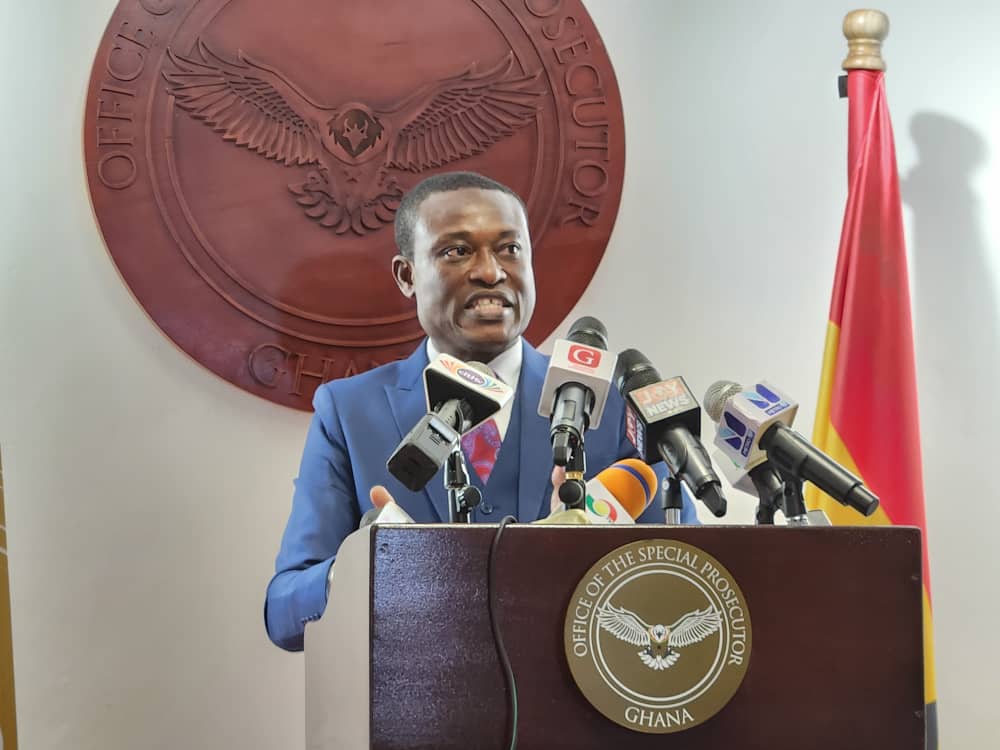
The problem is structural. Corruption prevented leaves no record, no charge sheet and no recovered sum, which means the Office’s most valuable output would be invisible in any assessment built on cases.
Regular updates keep the Office alive
Asked what the Office should do to build and hold public trust, Dr Osae-Kwapong pointed to communication rather than prosecution. “Regular updates from the Special Prosecutor are one way of staying in sync with the public and keeping public support behind the Office. Those steps would help keep the public generally supportive of the work of the Office,” he said.
He then explained why that support is not merely desirable. Public backing is the practical protection an office of this kind has against political interference. “That matters, because if the public turns against such an office, it becomes far easier for politicians who want to kill it to do so, since there would be no public support standing in the way,” he said.
The reasoning connects directly to a concern he has raised elsewhere, that a body created by statute can be dissolved by the same Parliament, and that the barrier to repeal is political rather than legal. The gap between expectation and capacity turns on a division of labour Dr Osae-Kwapong said the public does not fully appreciate.
“There is something else we need to understand. It is not the Special Prosecutor who convicts. He or she simply brings you to court and leaves it to a court of competent jurisdiction to decide whether enough evidence has been brought to convict you or not”.
Dr. John Osae-Kwapong, Democracy and Development Fellow, CDD-Ghana, and Project Director, the Democracy Project
That distinction runs to the heart of how the system works. A prosecutor controls the decision to charge and the quality of the case assembled. Everything after that belongs to a judge, and a case lost is not automatically a case badly built.

The public education the work demands
Dr Osae-Kwapong closed by identifying the gap as an educational task rather than a communications failure. “That, for me, is part of the anti-corruption work that requires a great deal of public education. Yes, I can charge you, and I can do my best to ensure that you are held accountable for an act of corruption. But it is still up to the courts to complete that process,” he said.
The observation carries weight in a country where high-profile prosecutions have collapsed at trial and where acquittals draw public anger directed at prosecutors rather than at the evidence.
For the Office of the Special Prosecutor, the implication is that its standing rests on two things it must manage separately. It must build cases strong enough to survive court, and it must explain to the public where its own responsibility ends and the judiciary’s begins.
READ ALSO: Ghana’s Refining Ambition Meets the Reality of Global Oil Markets