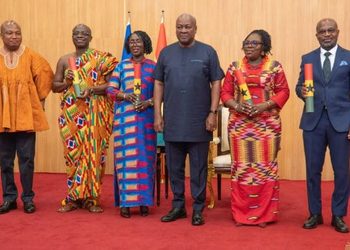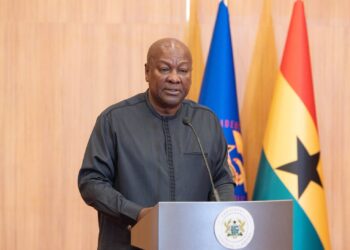
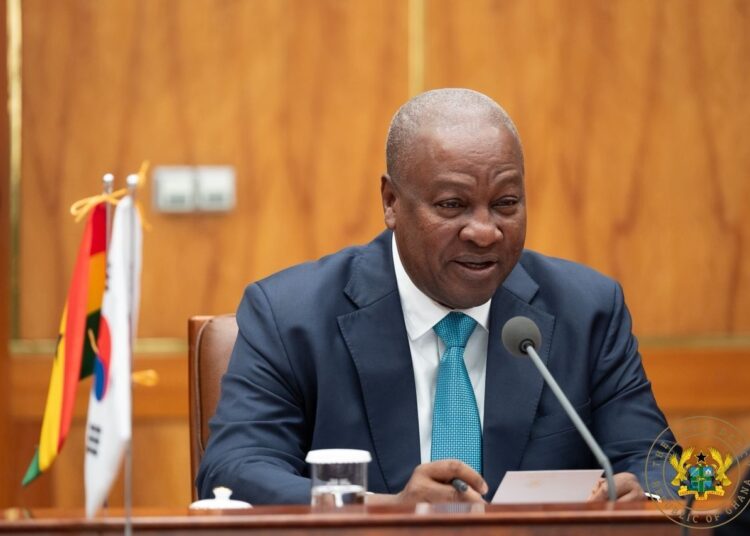
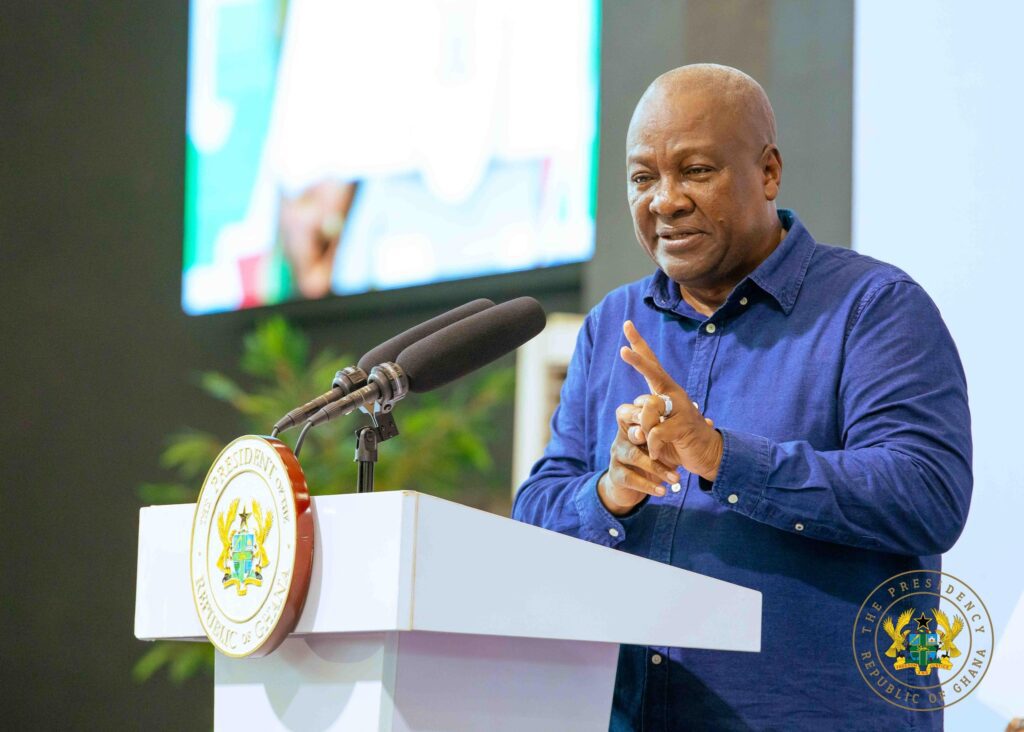
President John Dramani Mahama has announced that the proposed amendments to the entrenched provisions of the 1992 Constitution will be put to a referendum alongside next year’s District Assembly elections. He made the disclosure at a Citizen Engagement in Bolgatanga as part of his Resetting Ghana Tour of the Upper East Region.
The President said he will shortly inaugurate a Constitutional Review Implementation Committee to reconcile the government’s position paper with the report of the Constitution Review Committee, then sort the resulting proposals into entrenched and non-entrenched clauses.
Non-entrenched amendments will pass through Parliament by vote, while entrenched clauses must clear a referendum requiring a turnout of at least 40 percent of registered voters and approval by 75 percent of those who cast ballots.
A committee to synthesise two documents
President Mahama set out the first step in a process that has moved slowly since the Constitution Review Committee submitted its report. The Committee’s task is reconciliation rather than fresh consultation. “And their work is to take the government position paper and the CRC report and synthesise the two,” he said.
That mandate touches directly on a question raised since the position paper appeared. The government accepted some recommendations outright, accepted others in principle and declined the rest, and the treatment of the rejected proposals will depend on how the Committee reads its instruction to synthesise.
Two routes for two categories of clause
The President explained the division that will govern how each amendment travels. “And then they will divide it into two segments, non-entrenched clauses and entrenched clauses,” he said.
The lighter route runs through the legislature. “Non-entrenched clauses, we just need parliamentary approval. So those will put before Parliament and we will vote and pass them,” he said.
Non-entrenched provisions can be amended by Act of Parliament, subject to the procedural requirements the Constitution sets out. The heavier route belongs to the entrenched articles, which the framers placed beyond ordinary legislative reach.
The referendum thresholds
President Mahama stated the numerical test that entrenched amendments must satisfy. “Entrenched clauses require that we conduct a referendum. And at least 40% of registered voters must vote, and 75% of them must say yes,” he said.

Those figures come from Article 290 of the Constitution, and they are demanding by design. A double threshold of turnout and approval means a proposal can win an overwhelming majority of votes cast and still fail if too few voters appear.
Ghana has held one such referendum since 1992, on the creation of new regions in December 2018. An earlier attempt to amend Article 55(3) to permit partisan district assembly elections was withdrawn in December 2019 before voting, after the government concluded the proposal would not attract the required support.
A referendum on election day
The President then made the announcement that changes the timetable for the entire review. “And so we want to add that to the District Assembly’s election next year. So next year, apart from voting for your Assembly members, you will also be required to vote on the Constitutional Amendment,” he said.
Pairing the two exercises addresses the turnout problem directly. District assembly elections have historically drawn modest participation, but they bring voters to polling stations across every constituency in the country, which is more than a standalone referendum could reliably achieve.
The arrangement also carries a risk that runs the other way. A referendum question attached to a local ballot competes for attention with candidates voters know personally, and the 40 percent threshold applies to registered voters rather than to those who turn out for the assembly contest.

What happens after the vote
President Mahama described the sequence that follows a successful referendum. “And if we vote and it passes, then we will implement the entrenched clauses, amendments to the entrenched clauses. So that’s to do with governance,” he said.
The formulation ties implementation to the outcome rather than to the calendar. Entrenched amendments that fail at the referendum stage cannot be revived through Parliament, which means the government has one opportunity to carry them and must decide which proposals are worth putting to voters.
The proposals are awaiting a route
The position paper the Committee will work from accepts extending the presidential term from four to five years, with a matching extension for Parliament. It accepts in principle a lower minimum age for presidential candidates, settling on thirty-five rather than the thirty the Committee recommended.
It proposes a ceiling of sixty Ministers of State and caps Parliament at three hundred members, of whom two hundred and seventy-six would be elected in constituencies and twenty-four through proportional representation covering women, persons with disabilities and the youth.
It also accepts removing the bar on dual citizens by birth contesting parliamentary elections. Rather than run separate referendums for the human rights provisions in Chapter Five, the government proposes a comprehensive and justiciable Human Rights Act under Article 33(5).
Which of these reach voters, and which pass through Parliament, now depends on the sorting exercise the Implementation Committee will carry out once the President inaugurates it.
READ ALSO: War-Ravaged Darfur Puts Pregnant Women at Risk, UNFPA Warns