The Bank of Ghana (BoG) has intensified its push for digital finance and open banking as it seeks to close an estimated US$4.8 billion annual financing gap confronting small and medium-sized enterprises (SMEs).
The central bank says Ghana has already built a sophisticated digital payments ecosystem, but the progress has not translated into equally accessible credit for businesses. It believes the next major opportunity lies in transforming digital transaction records into credible credit information that lenders can use to assess businesses.
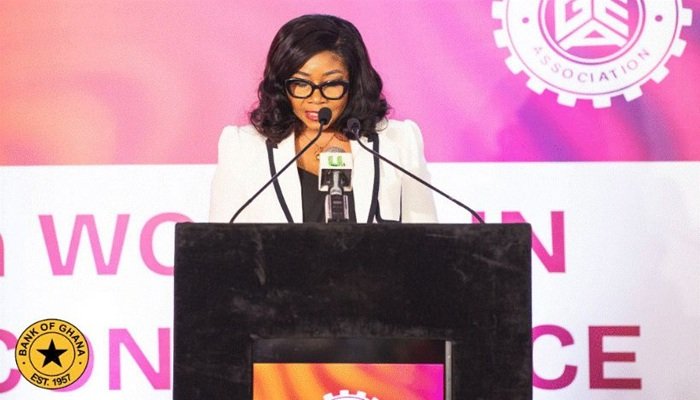
Second Deputy Governor of the Bank of Ghana, Matilda Asante-Asiedu, made the remarks at the National ICT Week celebration at the University of Ghana, where she delivered the third Distinguished Digital Finance Lecture.
She argued that Ghana must now move beyond simply making payments faster and focus on using digital financial data to improve access to productive financing.
“We have built extraordinary payment rails, but we have not yet built equally extraordinary credit rails,” she said.
Digital payments growing, but credit remains difficult
According to Ms Asante-Asiedu, the contrast between Ghana’s digital payments growth and SME access to financing has become increasingly difficult to ignore.
She noted that an SME can receive payments for goods and services within seconds through digital payment platforms, yet the same business could spend months trying to secure working capital from a financial institution.
For the BoG, this represents a major missed opportunity.
“The disconnect between transaction data and credit access, in my view, is the single largest unrealized opportunity in this room,” she said.
The central bank believes the extensive financial data generated through digital transactions could provide lenders with valuable insights into the operations and financial health of small businesses.
Rather than relying almost exclusively on conventional documentation and physical collateral, lenders could use transaction patterns to establish whether an enterprise generates consistent income and has the capacity to repay loans.
Transaction records could become new credit passports
Ms Asante-Asiedu highlighted mobile money records as a potentially powerful source of alternative credit information.
She explained that such records can reveal the volume and frequency of transactions, merchant activity, income patterns and changes in business performance.
“This is not just background information. It is a credit record. We have simply not built the habit of reading it as such.”
Matilda Asante-Asiedu
The approach could significantly alter how financial institutions assess SMEs, particularly businesses that lack substantial fixed assets.
Many small enterprises struggle to access formal credit because they cannot provide traditional collateral such as land or buildings. Yet these businesses may have strong transaction histories, confirmed purchase orders, export contracts or long-term service agreements.
The BoG believes these assets can potentially provide lenders with verifiable evidence of future income if appropriate legal and regulatory frameworks are established.
Ghana’s digital payment boom creates opportunity
Ghana’s existing digital financial infrastructure provides a strong foundation for this transformation.
Ms Asante-Asiedu disclosed that mobile money platforms processed about 954 million transactions valued at approximately GH¢493 billion in June 2026 alone.
The country also has about 84.6 million registered mobile money accounts. However, only 26.4 million of these accounts were active, with more than one million registered agents supporting the ecosystem.
The scale of these transactions demonstrates the enormous amount of financial information generated every month.
The challenge, according to the BoG, is ensuring that this information can be responsibly and securely converted into financial opportunities for businesses.
If transaction histories can be incorporated into credit assessments, SMEs could potentially gain access to financing based on their actual business activity rather than solely on the value of their physical assets.
BoG backs open banking and open finance
The central bank is therefore advancing open banking and open finance frameworks as part of its broader strategy to deepen financial inclusion and expand access to credit.
Open banking can allow customers and businesses to securely share financial information with authorised third-party providers, potentially giving lenders a more comprehensive view of a borrower’s financial behaviour.
For the BoG, however, the success of open banking should not be measured simply by the number of APIs created or financial institutions connected to digital platforms.
Ms Asante-Asiedu stressed that the real test should be whether the system ultimately enables more businesses to obtain affordable financing.
“The measure of success…should be how much credit” reaches businesses through the use of transaction data, she said.
That approach places SME financing at the centre of Ghana’s digital finance agenda.

Regulatory challenges remain
Despite the potential benefits, the BoG acknowledges that several obstacles must be addressed before digital lending can achieve its full potential.
Regulatory fragmentation, cybersecurity risks, data governance concerns and inadequate digital infrastructure could limit the effectiveness of digital finance initiatives if they are not properly managed.
The protection of financial data will also be critical as more institutions gain access to sensitive transaction information.
The BoG therefore intends to work with other financial regulators and stakeholders to strengthen coordination and establish an environment where innovation can expand without compromising financial stability or consumer protection.
A potential turning point for Ghanaian SMEs
The push for data-driven lending could represent a significant turning point for Ghana’s SME sector.
For years, access to finance has remained one of the major constraints facing small businesses. The BoG’s latest position suggests that the solution may increasingly lie not only in increasing the amount of money available to lenders, but also in changing how borrowers are assessed.
With billions of cedis already flowing through digital payment channels, Ghana possesses a potentially valuable source of real-time business intelligence.
The challenge now is to transform that data into responsible, affordable and accessible credit.
If successfully implemented, open banking could help bridge the gap between Ghana’s rapidly expanding digital payment infrastructure and the financing needs of thousands of businesses seeking capital to expand, hire workers and increase production.
The next phase of Ghana’s digital finance revolution is therefore no longer simply about moving money faster. It is about using financial data to ensure that more businesses can gain access to the capital they need to grow.
READ ALSO: Ghana International Horticulture Expo 2026 Set to Boost Agricultural Self-Reliance