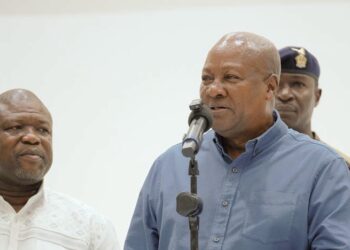
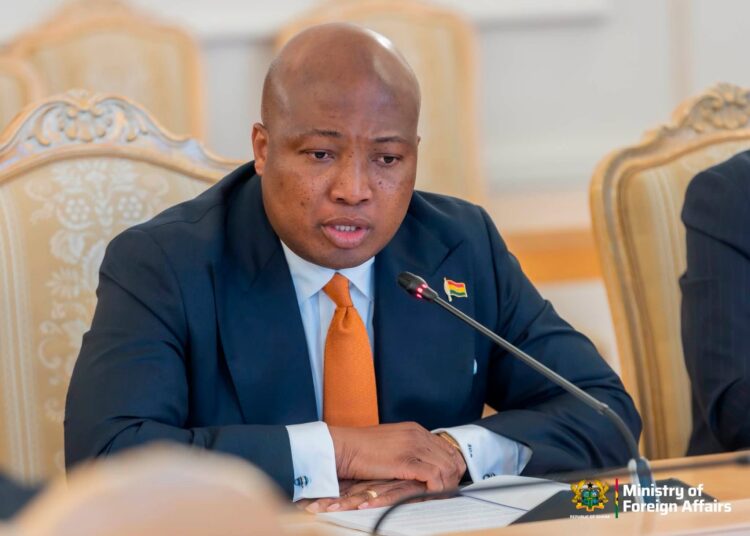
Ghana’s Foreign Affairs Minister Samuel Okudzeto Ablakwa has demanded a new world order that changes how Africa is financed, represented and treated at the United Nations.
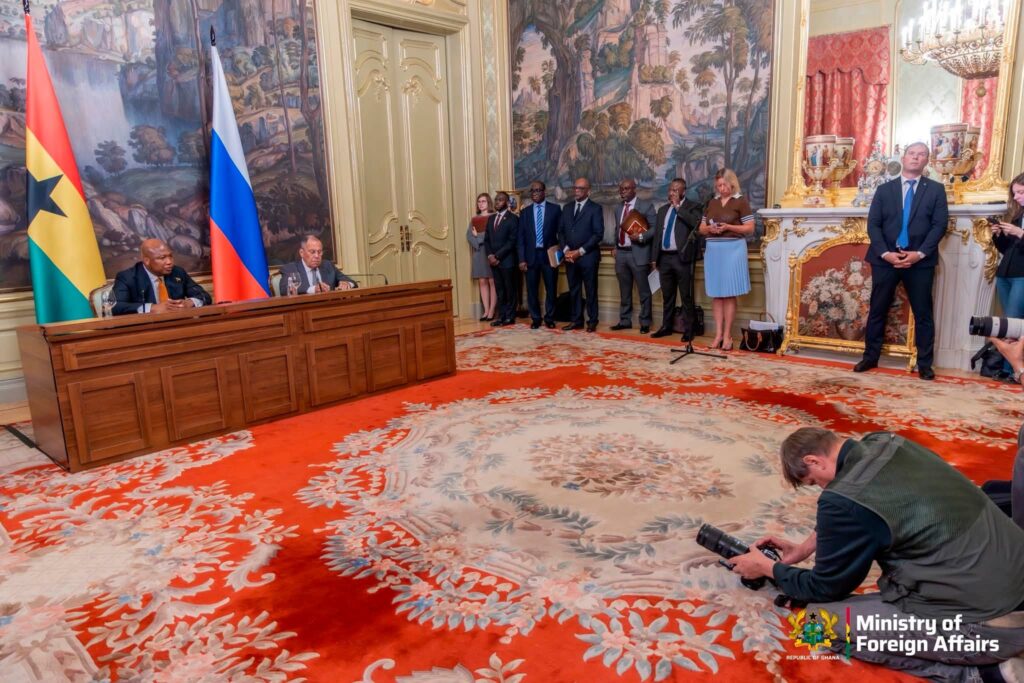
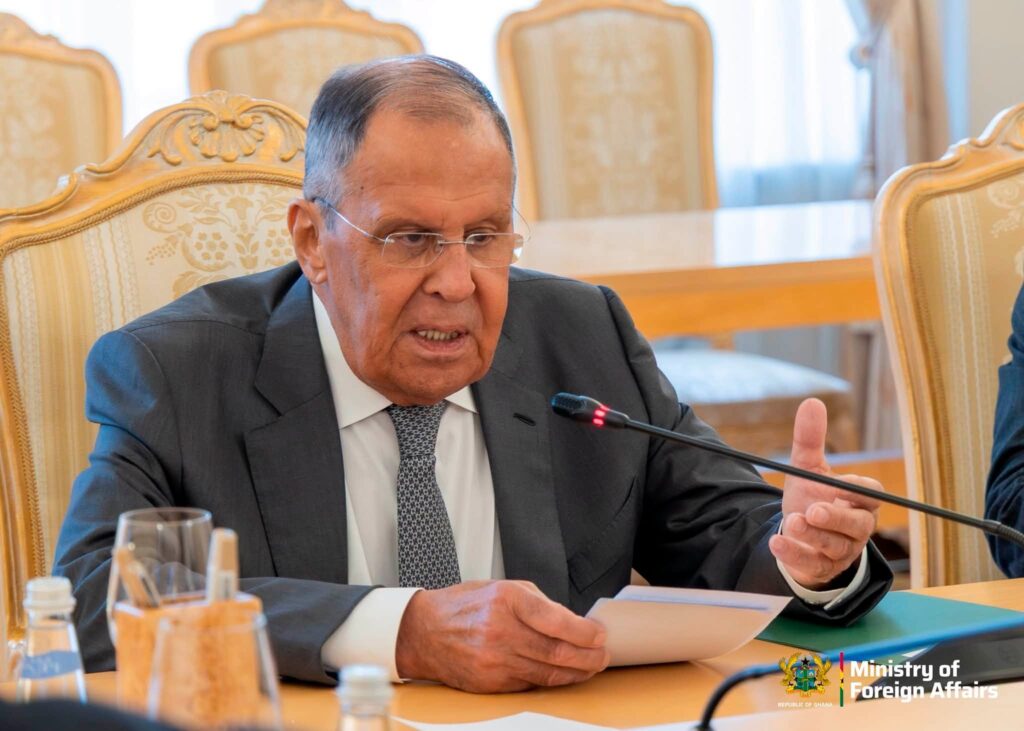
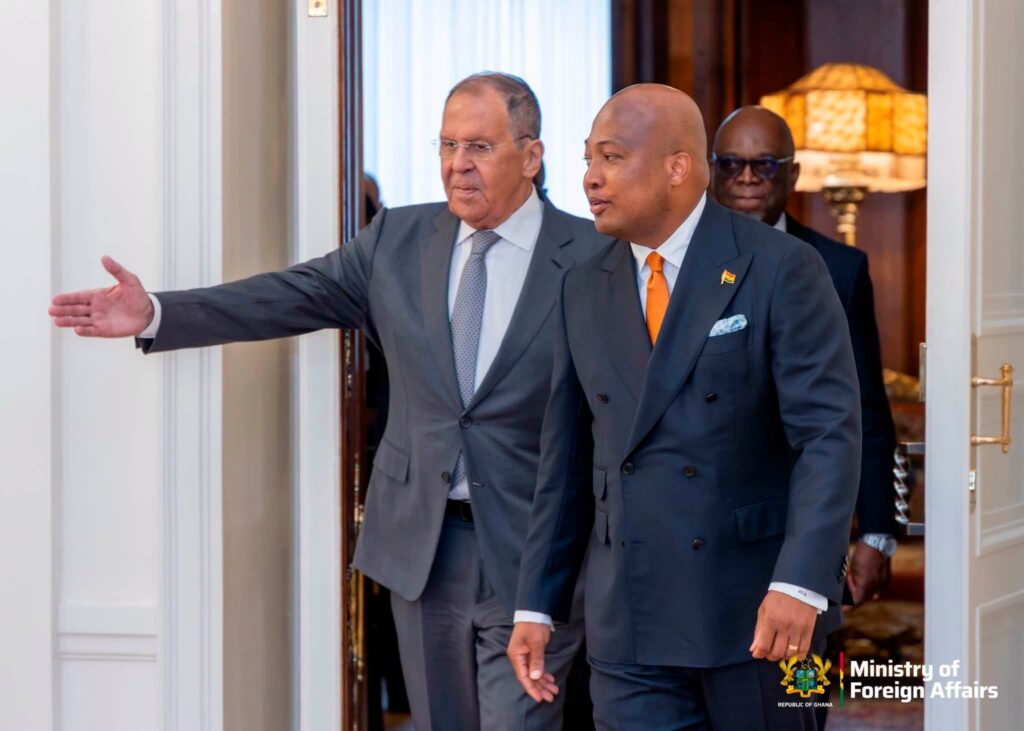
He spoke at a joint press engagement with his Russian counterpart during a three-day visit, where he announced that Sergey Lavrov has confirmed attendance at a summit on restitution that President John Dramani Mahama hosts in September.
The Minister linked the return of looted artefacts to reform of the international financial architecture, a permanent African seat on the Security Council, and the right of African countries to add value to their own resources.
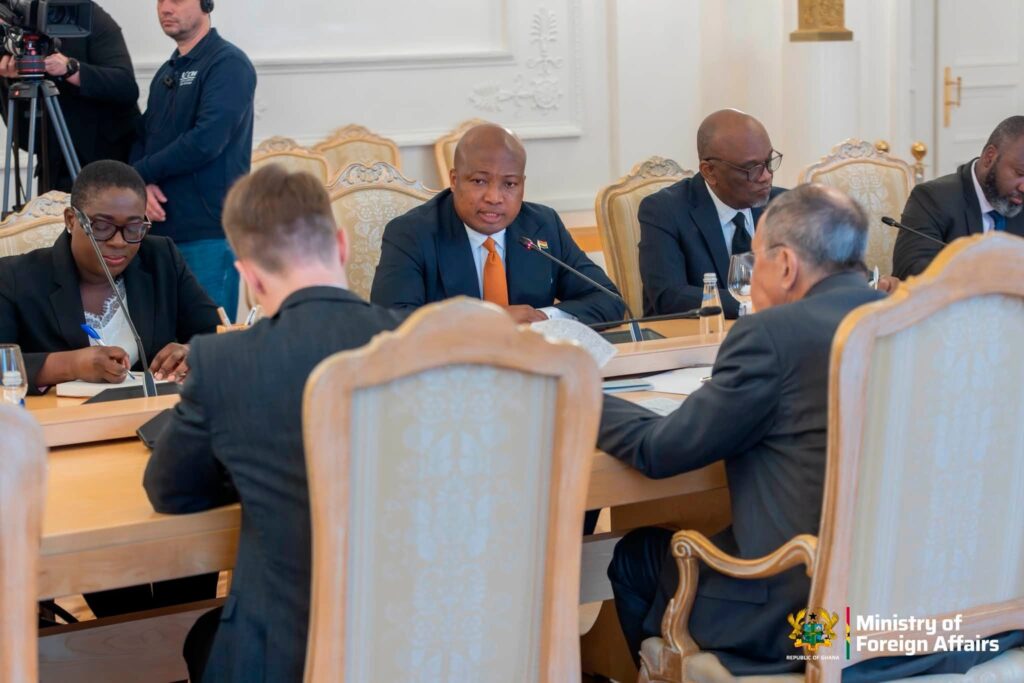
He was equally clear about what the campaign does not seek, telling the engagement that Ghana wants support for causes rather than payments to leaders. Ablakwa presented the September gathering, and Lavrov’s commitment to it, as evidence that the campaign is gaining ground.
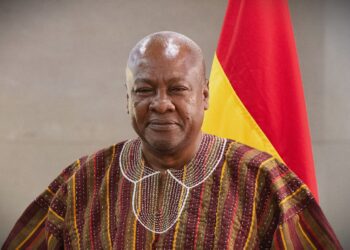
“That is why, in September, President Mahama is hosting this important summit on restitution on the margins of the 81st Session of the United Nations General Assembly. We have invited Foreign Minister Lavrov to join us. He has confirmed that he will be participating, and it is very important that we keep the momentum”.
Ghana’s Foreign Affairs Minister Samuel Okudzeto Ablakwa
A summit convened on the margins of the General Assembly places the question before an audience of foreign ministers who would not otherwise gather for it. Russian participation adds a permanent member of the Security Council to the platform.
Artefacts taken from the palaces of chiefs
The Minister grounded the demand in what the missing objects mean to the communities they came from. “These are emblems and symbols of our culture, of our traditions, and of our chieftaincy institutions. Some of them were looted from the palaces of our chiefs, and that is so important to us. It is about our identity. It is about who we are,” he said.
He then widened the frame across the continent’s historic states. “From Egypt all the way to the Kingdom of the Ashanti, the Malian Empire, the Songhai Empire, and the Benin Empire, these artifacts continue to be in the possession of wrongful hands. We expect these artifacts to be returned,” he said.
European museums, he added, continue to profit from looted items, increasing gate fees each year and benefiting from what they took from the continent.
A financial system he says is rigged
Ablakwa moved from artefacts to money, treating the two as parts of one agenda.
“The international financial system is rigged against the Global South. High risk, high interest, high capital, which is very expensive, continues to militate against the development of Africa. We cannot continue with this world order, and that is why we are demanding that the global financial architecture changes”.
Ghana’s Foreign Affairs Minister Samuel Okudzeto Ablakwa
He put part of the blame on how African economies are assessed by those who price their debt. “If you look at the sovereign rating agencies and how they treat African economies, the kind of reports they produce and how they make it risky to invest in Africa, that is what leads to the high interest rates,” he said.
The consequence, in his account, arrives in national budgets. “You are seeing a lot of African countries spending sometimes 40 percent or 50 percent of all national revenue just on servicing debts and interest payments. How can you develop? How can you catch up in this rigged world order with this kind of arrangement?” he said.
No African seat at the Security Council
The Minister turned to United Nations reform, setting what Africa contributes against what it receives. “The large continent of Africa, with 54 UN member states, cannot have even just one seat at the Security Council when we are always in the top 10 contributing nations,” he said.
He pressed the point through the soldiers from African states sent into United Nations operations. “We have thousands of our soldiers risking their lives on a daily basis in various theatres of conflict, putting themselves in harm’s way to ensure that there is global peace and security, and yet we do not have a voice at the UN Security Council,” he said.
Ablakwa addressed a criticism that has followed Ghana’s reparations campaign for years. “We are not saying, ‘Give African leaders financial payments.’ We are not interested in the money of the West. We are saying, support our call for reparations,” he said.
He commended the Archbishop of Canterbury for announcing £100 million to support young African entrepreneurs and investment in start-ups, describing it as the kind of arrangement Ghana wants to see.
“African leaders are not asking for money to line our pockets. That is not what we are asking for,” he said. Debt forgiveness, the financial architecture and United Nations reform all belong in the same conversation, he added.
An end to exporting raw materials
The final strand concerned control over resources. Ablakwa said Ghana no longer wants to export raw materials, and commended Russia for declaring support for a new economic paradigm in which African countries would not be at the mercy of exploitation.
“We want to add value to our own resources, industrialise, build factories, and then you can partner with us in a win-win arrangement,” he said. He named cocoa, gold, bauxite, oil and gas among the commodities where Ghana holds no pricing power, and said the country cannot continue under an order in which it does not determine the prices of what it owns.
Ablakwa closed by placing the agenda in a line running from 1957. “Nkrumah talked about political liberation, which we won in 1957 when we were the first African country to win independence. But he reminded us that that is not the end of the journey. We need economic emancipation, economic liberation, and that is the next frontier,” he said.
That, in his account, is the battle President Mahama is now leading, and the one the whole reparatory justice agenda is meant to win.