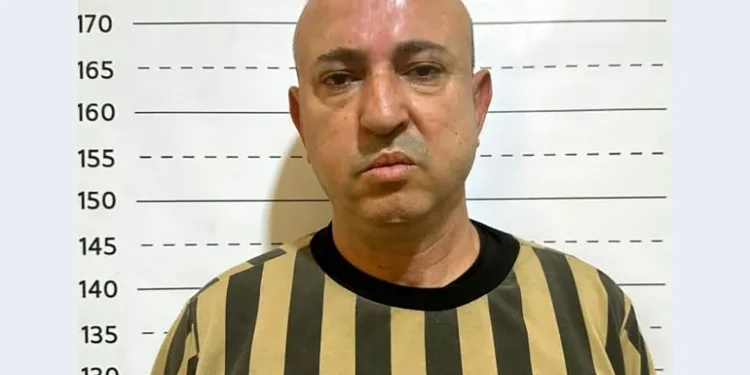
Wassim al-Assad, a cousin of ousted Syrian President Bashar al-Assad, has been sentenced to death after a Syrian court convicted him of murder, torture and other crimes committed during the country’s nearly 14-year conflict.
The Fourth Criminal Court in Damascus issued the sentence, finding Wassim al-Assad guilty of multiple murders, including killings involving torture and brutality. Judge Fakhr al-Din al-Aryan said that the crimes were classified as crimes against humanity and war crimes.
Court footage showed Wassim al-Assad inside the defendants’ cage as judges read out the verdict and sentence.The ruling forms part of Syria’s broader efforts to pursue accountability for alleged abuses committed during the rule of the Assad family and the country’s long-running civil war.
Judge al-Aryan said that the court had established that an armed group linked to Wassim al-Assad had abducted and killed Syrians.The charges against him included establishing and leading pro-regime paramilitary groups from the early stages of the conflict in 2011. Prosecutors also accused him of taking part in military operations targeting civilian areas in Eastern Ghouta, including the town of al-Mleiha, where numerous civilians were killed.
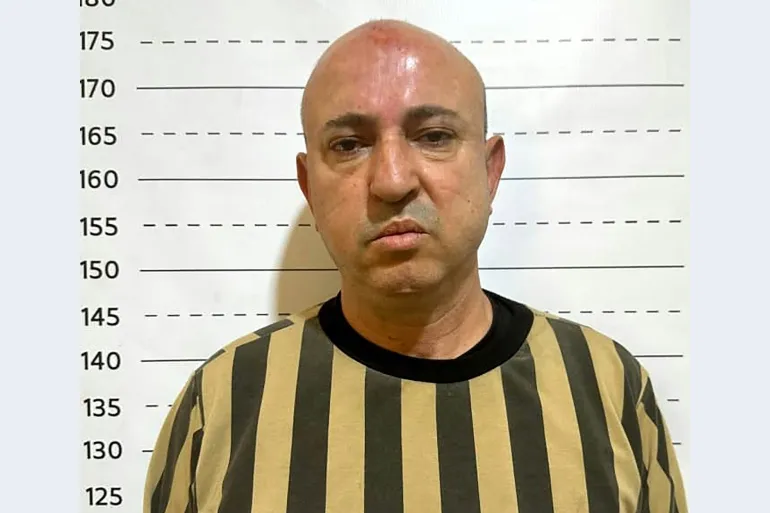
The court concluded that the evidence was sufficient to establish his responsibility for multiple murders and acts of torture.Judge al-Aryan described the offences as involving “murder accompanied by torture and brutality,” categorising them as crimes against humanity and war crimes. Alongside the death sentence, the court ordered the confiscation of Wassim al-Assad’s assets.
Acquittal On Drug-trafficking Allegations
However, the court did not convict him on drug-trafficking charges, reportedly ruling that there was insufficient evidence to establish his direct involvement in the trade. Wassim al-Assad has for years been associated with allegations surrounding the production and smuggling of Captagon, an amphetamine-like stimulant that became a major source of illicit trade in the region during Syria’s former regime.
He was accused of helping oversee the production and movement of the drug to neighbouring countries during Bashar al-Assad’s rule. The allegations contributed to sanctions imposed on him by the United States and European governments.
Despite those allegations, the Damascus court’s decision to acquit him on drug-trafficking charges means the death sentence is based on the murder, torture and other crimes for which he was convicted. Wassim al-Assad was arrested in June 2025 after returning to Syria from Lebanon. His detention marked one of the significant steps taken by the authorities against members and associates of the former ruling establishment following the collapse of the Assad government.
The verdict comes as Syria attempts to establish a framework for transitional justice following the end of the Assad family’s decades-long rule. The country’s war began in 2011 after protests against Bashar al-Assad’s government developed into a prolonged armed conflict involving Syrian government forces, opposition groups and numerous foreign actors.
The conflict resulted in widespread destruction and the displacement of millions of Syrians, while rights groups documented allegations of killings, torture, forced disappearances and other abuses by various parties.The transitional authorities have pledged to investigate abuses committed during the conflict and pursue individuals accused of serious crimes.
The prosecution of members of the Assad family and figures associated with the former government is therefore likely to remain a significant part of that process. The death sentence against Wassim al-Assad follows similar rulings against Bashar al-Assad and his brother Maher al-Assad.
The former President and his brother were sentenced in absentia a week earlier after being convicted in connection with crimes committed during the conflict.Both men remain outside Syria. They fled to Russia following the collapse of Bashar al-Assad’s government in December 2024. Because they remain in exile, the sentences against them cannot currently be carried out unless they are returned to Syrian custody.
Wassim al-Assad’s case differs because he was arrested and tried in Syria, allowing the court to hear evidence directly and issue a verdict in his presence. The latest ruling is likely to attract further attention because of the severity of the punishment and the broader question of how Syria’s transitional authorities will handle individuals accused of abuses under the previous government.
The case is part of a wider and still developing effort to address accountability in post-Assad Syria. As authorities continue prosecuting individuals linked to the former regime, questions remain over how trials will be conducted, how evidence will be assessed and how the country will balance demands for justice with due process.
For victims and families affected by the conflict, the proceedings represent an attempt to establish responsibility for abuses committed over more than a decade of war.
READ ALSO: Ablakwa Secures Visa Waiver, Doubled Scholarships, and Defence Ratification in Russia