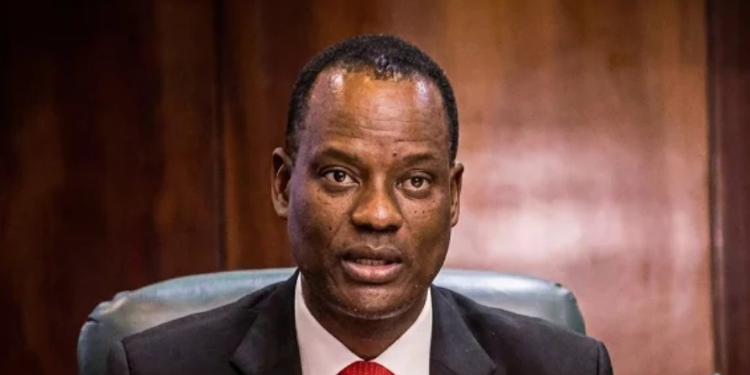
Nigeria’s sweeping economic reforms under President Bola Tinubu have helped stabilise the country’s public finances, strengthen foreign reserves and restore investor confidence, according to Nigeria’s Finance Minister Taiwo Oyedele, although the government acknowledges that millions of households continue to bear the heavy cost of the changes.
According to Finance Minister Taiwo Oyedele, the reforms introduced since Tinubu assumed office in 2023, particularly the removal of the petrol subsidy and the unification of the foreign exchange market, had generated ₦15.8 trillion in savings for the Federation between June 2023 and December 2025.
Presenting the government’s “Nigeria’s Reform Scorecard,” the Finance Minister indicated that the reforms had created fiscal space, strengthened Nigeria’s external position and addressed distortions that had accumulated under the previous economic system.
He stressed, however, that the government was not presenting the figures as a declaration of victory, arguing that the assessment was intended to show both the benefits of the reforms and the costs Nigerians had endured.
According to the Finance Minister, the ₦15.8 trillion generated through subsidy reforms included ₦5.4 trillion that accrued to the Federal Government and ₦10.4 trillion distributed among state and local governments.
The additional resources came as Nigeria attempted to rebuild government finances following years of fiscal pressure, dwindling oil revenues, heavy borrowing and a costly petrol subsidy regime.
According to Oyedele, the government also recorded ₦3.1 trillion in incremental independent revenue, largely from remittances by government-owned entities, while another ₦11.9 trillion came through additional borrowing.
Together, these measures provided the Federal Government with ₦20.4 trillion in incremental resources, which contributed to ₦30.64 trillion in additional expenditure during the period.
A significant portion of that spending went towards wages and public-sector obligations. According to Oyedele, ₦9.39 trillion was used for wage adjustments, minimum wage increases and allowances for public servants.
Another ₦9.37 trillion went towards servicing external debt, while ₦6.5 trillion was directed to strategic infrastructure.
The figures underline the difficult trade-offs created by Tinubu’s reforms. While the government has argued that subsidy removal and foreign exchange reform were necessary to prevent deeper fiscal and economic distortions, their immediate effect has been a sharp increase in the cost of living.
Petrol prices, which stood at approximately ₦185 per litre when Tinubu took office, have risen to between ₦1,100 and ₦1,400 per litre. At the same time, the Monetary Policy Rate has increased from 18.5% in May 2023 to 26.5%, raising borrowing costs for businesses and consumers.
“A scorecard that only lists wins is not a scorecard, it is a campaign leaflet, and we did not come here to give you one.”
Taiwo Oyedele
The Minister argued that the reforms had prevented potentially worse outcomes, including an even more severe petrol shortage and a widening foreign exchange crisis.
He indicated that, the government’s assessment suggested that without the reforms, petrol could eventually have traded above ₦3,000 per litre on the black market.
The foreign exchange reforms, meanwhile, have significantly reduced the difference between Nigeria’s official and parallel exchange rates. Oyedele said the gap, which had exceeded 60% before the reforms, had been reduced to below 5%.
Without the unification of the foreign exchange market, he noted, the premium could have risen above 150%.
The reforms have also been credited with strengthening Nigeria’s external position. Gross foreign reserves have risen from approximately $35 billion to $52.5 billion, while net reserves have increased from around $3 billion to $34.8 billion.
Nigeria’s Economic Gains Face Test as Living Costs Remain High
Despite improvements in several macroeconomic indicators, Nigeria’s economic recovery remains uneven, with growth still below the level needed to generate broad-based improvements in household welfare.
The economy expanded by 3.89% year-on-year in the first quarter of 2026, according to the government’s figures, compared with 4.07% in the final quarter of 2025.
Inflation has also eased from its earlier highs. Oyedele revealed that, the headline inflation fell to 15.91% in June 2026 from 22.41% in May 2023, while food inflation declined from 24.82% to 17.52%.
However, the moderation in inflation does not necessarily mean that prices have returned to previous levels. For households that have experienced a sharp increase in food, transport, energy and housing costs, slower price growth can still leave the overall cost of living significantly higher than before.
That tension lies at the heart of the government’s next phase of economic policy.
Oyedele stated that the administration recognised that stronger reserves, improved fiscal balances and investor confidence would have limited meaning if ordinary Nigerians did not eventually experience tangible improvements in their living standards.
The government therefore plans to focus the next phase of its reforms on converting macroeconomic improvements into more direct household support.
READ ALSO: Minister of Education Calls for Greater Focus on Foundational Learning