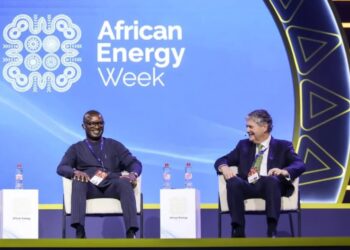
Bright Simons, Vice President and Policy Analyst at IMANI Africa, has cautioned that gold trading and refining are fundamentally low-margin ventures, warning that public expectations surrounding the financial returns of state-backed aggregators like the Ghana Gold Board (GoldBod) must remain grounded.
He emphasized that even during global commodity price surges, primary producers and miners retain the vast majority of economic upside.
Consequently, trading intermediaries face inherent commercial limits, making it virtually impossible to sustain high profitability or consistently avoid substantial operational losses without exceptional technological edge or human resource capabilities.
“In all these, we shouldn’t forget that both gold trading and gold refining are extremely low margin businesses. Even during a price boom, the miners and producers tend to keep most of the upside. Unless you have some crazy technological and/or human resource edge, you can’t really make money in either or sustainably avoid large losses.”
Bright Simons, Vice President and Policy Analyst at IMANI Africa
Bright Simons highlighted that recent international media coverage regarding the agency’s transition from central bank funding to state fiscal support risks being misunderstood.

He noted that key stakeholders, including government officials, fully anticipated the operational trade-offs associated with state gold purchasing schemes.
When the Bank of Ghana (BoG) directly financed GoldBod’s licensed aggregators to purchase gold from small-scale miners, the transaction flow operated smoothly because the central bank maintains money-printing capacity when emergency funding is required.
However, that model forced the central bank to absorb significant downside costs, culminating in reported trading, exchange rate, and sterilisation losses on its balance sheet.
Now that the Ministry of Finance has taken over primary funding obligations, GoldBod is bound to standard treasury cashflow cycles.
While policymakers hope GoldBod can manage state capital injections as a revolving fund to bypass civil service cash constraints, Simons cautioned that the long-term viability of this strategy remains unproven and will only become clear by next year.
Central Bank Dynamics And Operational Friction
The structural shift in funding arrangements has triggered significant institutional friction between GoldBod and the Bank of Ghana.
According to Bright Simons, GoldBod is aggressively seeking end-to-end operational independence to manage its trading portfolio, a move that clashes directly with the central bank’s mandate to maintain tight control over foreign exchange (FX) flows.

This institutional divergence raises difficult questions about the viability of stopgap financing mechanisms, such as short-term liquidity loans from the central bank to GoldBod.
Given the massive capital volumes required to aggregate artisanal gold and the extended duration of global trade cycles, reliance on central bank credit facilities introduces ongoing administrative friction between the two bodies.
Furthermore, transferring GoldBod’s funding burden to the central government subjects the state gold aggregator to broader macroeconomic pressures.
Unlike central bank balance sheets, which can absorb liquidity shocks through monetary operations, public treasury disbursements are tied to national revenue collection schedules. If tax revenues lag or competing public expenditures take precedence, GoldBod risks experiencing cash delays that directly impair its capacity to pay licensed buyers on time.
Downstream Volatility And Treasury Constraints
The realities outlined by the IMANI Vice President present clear operational risks to GoldBod’s core directive of formalizing small-scale gold exports and bolstering national reserves.
Operating in a ultra-thin margin environment means that even minor fluctuations in spot prices, foreign exchange spreads, or local aggregation costs can completely erase thin operating surpluses. Without direct financial backstopping from the monetary authority, GoldBod must execute its purchases with razor-thin efficiency to prevent structural losses.

Should treasury disbursements stall during periods of national cashflow constraints, local aggregators may face severe working capital shortages.
Any liquidity bottleneck at the official buying level naturally incentivizes artisanal miners to redirect their gold supply to informal or illicit trading channels, effectively undermining the state’s primary goal of reducing smuggling.
Policy Imperatives For Long-Term Sustainability
To navigate these structural hurdles, energy and mineral policy analysts argue that GoldBod must refine its trading operations to build genuine commercial resilience.
Relying indefinitely on state fiscal injections without establishing robust, self-sustaining cash reserves leaves the institution vulnerable to regular treasury shortfalls.

Ultimately, Simons stresses that managing public expectations is as critical as managing financial risk. State-backed precious mineral aggregators cannot rely on global price rallies alone to guarantee profitability.
The ultimate test for GoldBod over the coming year will be whether it can deploy cutting-edge trading strategies, enforce rigorous fiscal discipline, and establish clear operational boundaries with the Bank of Ghana to remain viable without adding long-term debt to the public purse.
READ ALSO: Xabi Alonso’s Chelsea Tenure Begins With a Win in Five-Goal Thriller