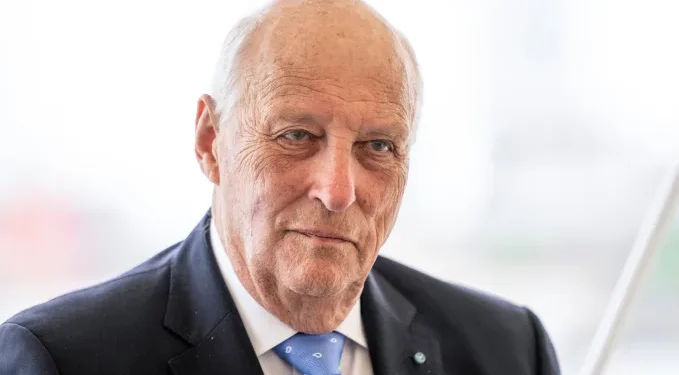
Norway’s King Harald V, Europe’s oldest reigning monarch, has died at the age of 89 after 35 years on the throne, bringing an end to a reign marked by decades of public service and periods of declining health.
The Royal House of Norway announced that the King died on Friday shortly after 6:35 a.m. He is survived by his wife of 57 years, Queen Sonja, their two children and five grandchildren.
Harald’s death follows a significant deterioration in his health in recent days. The royal family said in mid-August that he had been admitted to hospital for treatment for “fluid accumulation in the body” linked to a blood disorder. He later developed a bacterial infection.
King Harald ascended the Norwegian throne in 1991 at the age of 53, succeeding his father, King Olav V. During his 35-year reign, he became a familiar and widely respected figure in Norwegian public life, carrying out largely ceremonial duties while representing the continuity of the country’s constitutional monarchy.
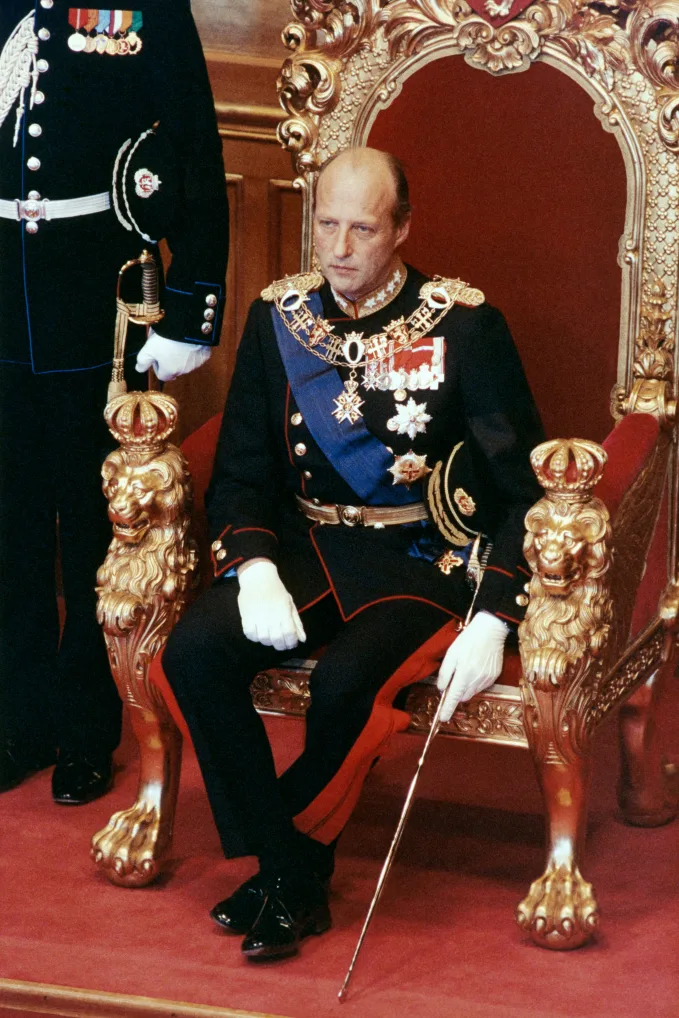
Born on February 21, 1937, Harald was the youngest of three children and the only son of Crown Prince Olav and Crown Princess Märtha. At the time of his birth, Norway’s constitution allowed only male heirs to inherit the throne, making Harald the direct successor.
Harald dated Sonja Haraldsen for nine years before being granted permission to marry her. King Olav V reportedly initially opposed the marriage because Sonja was not from an aristocratic or royal family. Following consultations with the Norwegian Parliament, however, permission was eventually granted. The couple married in 1968 and went on to have two children: Princess Märtha Louise, born in 1971, and Crown Prince Haakon, born two years later.
Constitutional reforms introduced in 1990 later changed Norway’s succession rules to allow the eldest child, regardless of gender, to inherit the throne. However, in 2022, his daughter, Princess Märtha Louise, stepped back from official royal duties. At the time, Harald thanked her for her years of public service, saying she had carried out her responsibilities with “care, warmth and great commitment.” He decided that she would retain her title as princess despite withdrawing from official duties.
Harald’s reign was increasingly affected by health problems in his later years. He underwent heart surgery twice, most recently in 2020, when doctors replaced an implanted heart valve that had originally been fitted in 2005. During periods when the King was unable to carry out his duties, Crown Prince Haakon served as regent and assumed responsibility for official state functions.
In September 2021, Harald underwent surgery to repair a damaged tendon above his right knee. He was frequently seen using crutches following the procedure. Despite his health difficulties, the King continued to maintain an active schedule.
In 2023, Harald was admitted to hospital with a respiratory infection. Although he required rest after being discharged, he still carried out 275 official engagements during the year. A year later, he was hospitalised while on a private holiday on the Malaysian island of Langkawi. He was treated for an infection and a low heart rate, and later received a pacemaker, according to the Royal House of Norway.
Despite his declining health, Harald continued to perform royal duties until he was no longer physically able to do so.
Harald’s Son Succeeds Him
Harald’s son Haakon now becomes King of Norway, while Harald’s granddaughter, Ingrid Alexandra, becomes heir to the throne.

The death of the King has prompted tributes across Norway.Prime Minister Jonas Gahr Støre said “a whole nation is in mourning,” adding that Norwegians were left with “a deep sense of gratitude for a long life in the service of Norway.”
Although Norway’s Monarch has limited political authority, the sovereign remains an important constitutional and ceremonial figure. The King traditionally presides over meetings of the Council of State on Fridays and formally opens the annual session of the Norwegian Parliament. The Monarch is also required to formally approve legislation and decisions adopted by the Council of State before they can be countersigned by the Prime Minister and enter into force.
King Harald’s death now begins a new chapter for the Norwegian monarchy as Crown Prince Haakon succeeds his father. The transition places the future of the institution in the hands of a new generation, with Haakon assuming the responsibilities of Monarch and Princess Ingrid Alexandra moving into the position of heir apparent.
For many Norwegians, however, the announcement marks the end of an era. After more than three decades on the throne, Harald leaves behind a reign that spanned significant political, social and constitutional changes in Norway. His death is expected to be followed by a period of national mourning as the country prepares for the accession of its new King.
READ ALSO: Countries Express Solidarity After Flash Floods In Nepal and China