
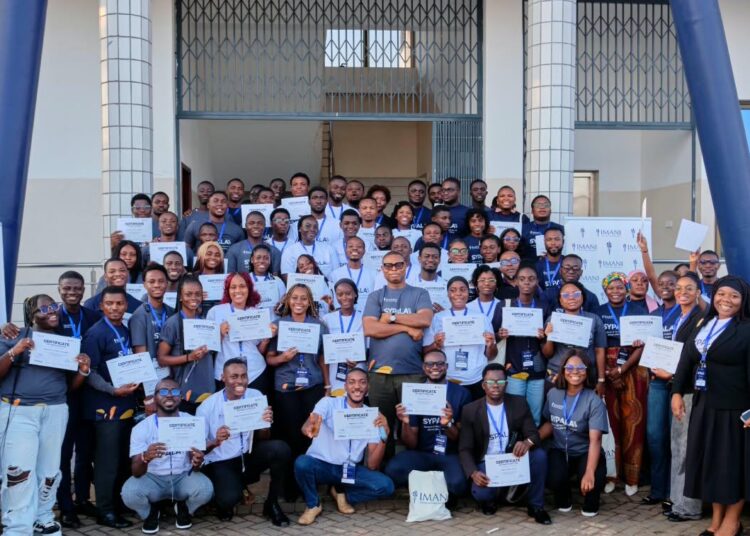
The Students and Young Professionals African Liberty Academy (SYPALA) 2026 closed on Thursday, August 27, with University of Professional Studies, Accra Pro Vice-Chancellor Professor Emmanuel Selase Asamoah urging the 100-member cohort to convert four days of lectures into concrete action, warning them that the certificate they were about to receive marked the beginning of an obligation rather than the end of one.
Speaking on behalf of Vice-Chancellor Professor John Kwaku Mensah Mawutor, who was unable to attend, Asamoah closed out a programme that had run from August 24 to 27 under the theme “Africa’s Ascent: Forging Resilient Economies and Inclusive Governance,” organised by the IMANI Center for Policy and Education in partnership with UPSA.
A Week Built Around Six Thematic Tracks
Professor Asamoah reminded participants of the ground the academy had covered, organising them across several working teams spanning economic diversification, governance and institutions, entrepreneurship and innovation, climate and energy security, geopolitics, and human capital development.
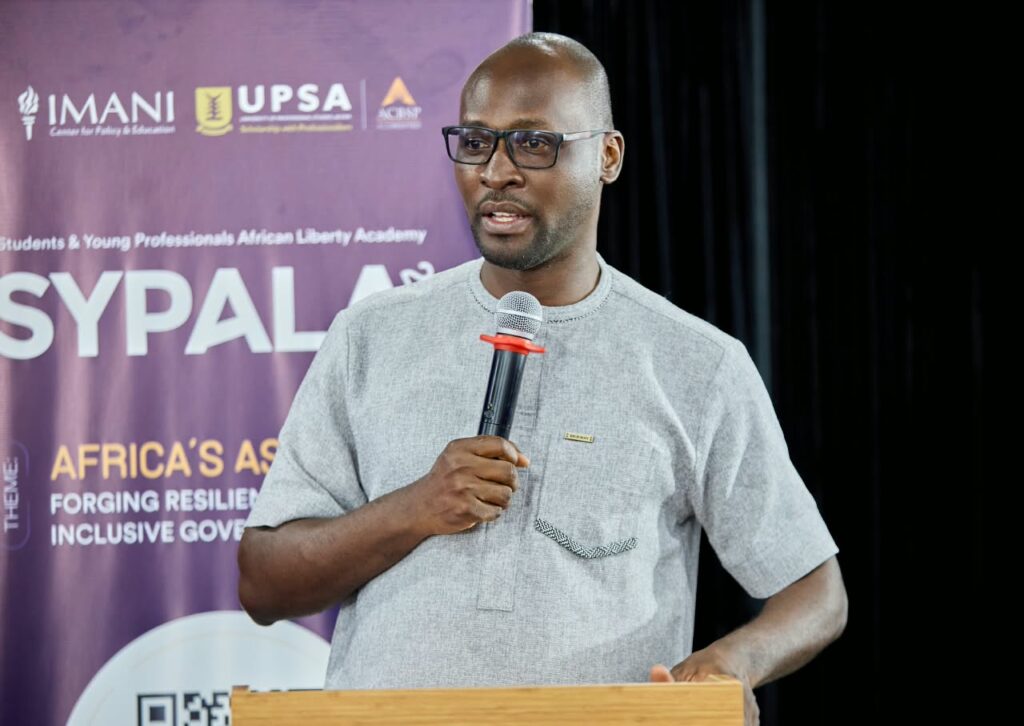
That structure carried through a dense schedule of guest lectures, main sessions, breakout groups and brainstorming exercises that ran across the full four days.
The programme drew on a wide range of speakers over the course of the week. Franklin Cudjoe opened proceedings, identifying policy indiscipline and institutional incompetence as the continent’s central obstacles.
Professor Godfred Bokpin urged participants to build an idea-generating economy rather than one dependent on natural resources, and separately argued for a re-engineering of Africa’s colonial economic inheritance and a shift toward job-rich growth.
The Senior Vice President of the IMANI Centre for Policy and Education, Kofi Bentil, made the case for free markets and limited but effective government, while linking domestic taxation to genuine government accountability.
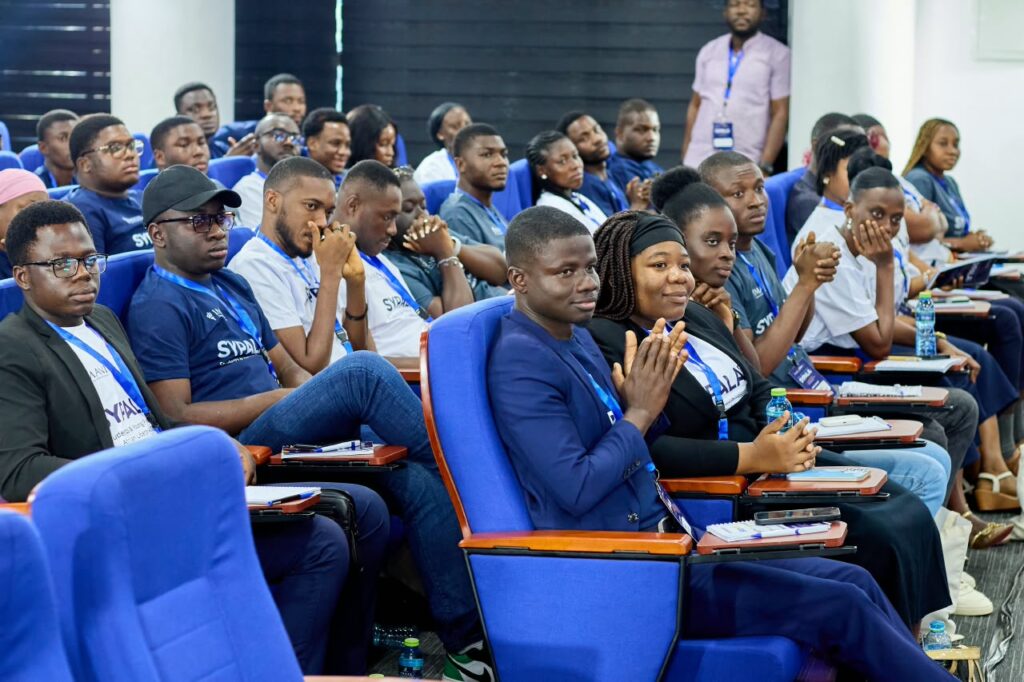
Founder and Executive Director of Mentoring Women Ghana and two-time PPP presidential candidate, Bridget Dzogbenuku called on young Africans to take up leadership immediately rather than wait to be recognised as future leaders, and pressed for 50-50 gender representation in governance alongside economic growth that reaches ordinary people.
Moreover, Mr. Philip Tieku, Chief Executive Officer of Star Oil, detailed how automation, worker welfare reforms and customer-focused digital engagement had driven the company’s growth and leadership in Ghana’s downstream fuel sector.
AUABC Chairperson Kwami Edem Senanu identified weak implementation and limited transparency as persistent obstacles to African Union effectiveness, unveiling a five-question framework for judging continental performance.
Bright Simons challenged the widely cited claim that Africa holds 30 percent of the world’s mineral reserves, warned that the continent lacks the specific minerals its own industrialisation will require, and closed with a call for data-driven exploration and evidence-based policymaking, using Ghana’s gold sector to illustrate how political slogans routinely outrun rigorous analysis.
Political scientist and governance expert Dr John Osae-Kwapong, a Democracy and Development Fellow at the Center for Democratic Development (CDD-Ghana), led a session on “What Is the State of Democracy in Africa?” arguing that young Africans are not abandoning democracy but are demanding it actually deliver on the everyday problems they face, a gap he termed the “democracy test.“
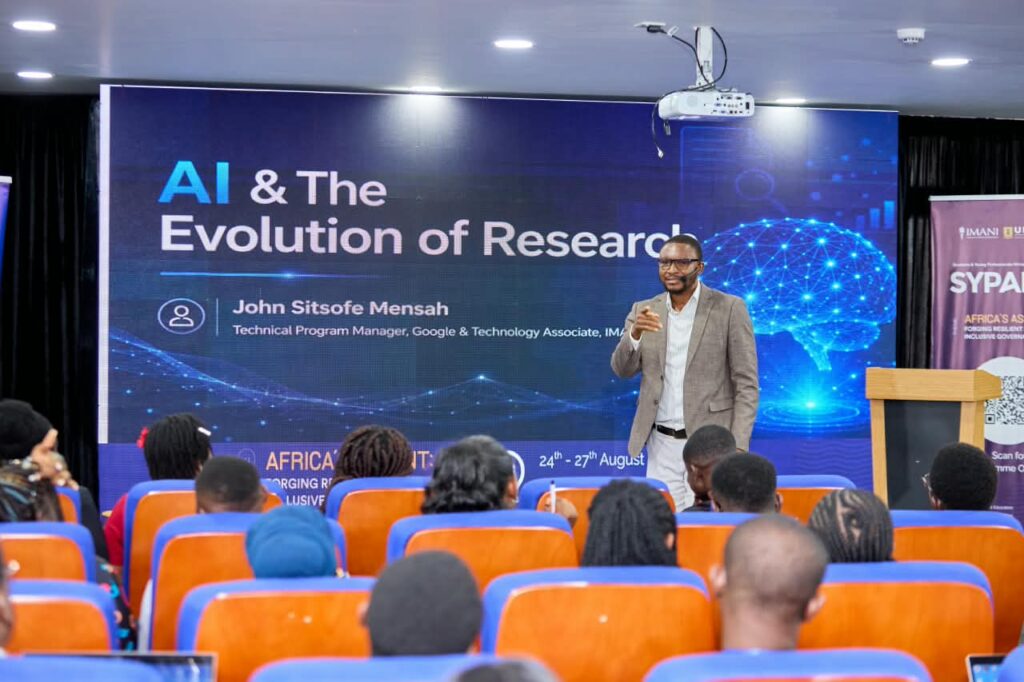
John Sitsofe Mensah of Google addressed artificial intelligence and the evolution of research, Senyo Hosi examined how business and public policy together can drive Africa’s transformation.
Mr Ato Coleman closed the resource-person lineup with a session on leadership, values, and policy priorities, drawing on Sierra Leone’s Ebola response as a case study in what he termed Ubuntu leadership.
Knowledge as the Foundation of Better Decisions
Professor Asamoah opened his remarks by tying the week’s substance to a broader argument about the value of knowledge itself, telling participants that the quality of any decision depends directly on how much a person understands the situation they face.
He illustrated the point with an anecdote about someone who believed simply depositing money in a savings account, without understanding compounding interest or inflation, would be enough to become a billionaire.
“The more you expose yourself to knowledge, the better the quality of decisions you take,” he said, framing the academy’s four days as a deliberate deposit into each participant’s decision-making capacity.
A Working Vocabulary and a Method, Not Just a Certificate
Professor Asamoah was direct about what the cohort was and was not leaving with.
He said participants would carry away a working vocabulary for policy, sufficient to read a budget statement or a regulatory impact assessment and understand what it is actually examining, along with a method for identifying problems, weighing evidence, costing options and naming trade-offs when called upon to explain matters of national importance.
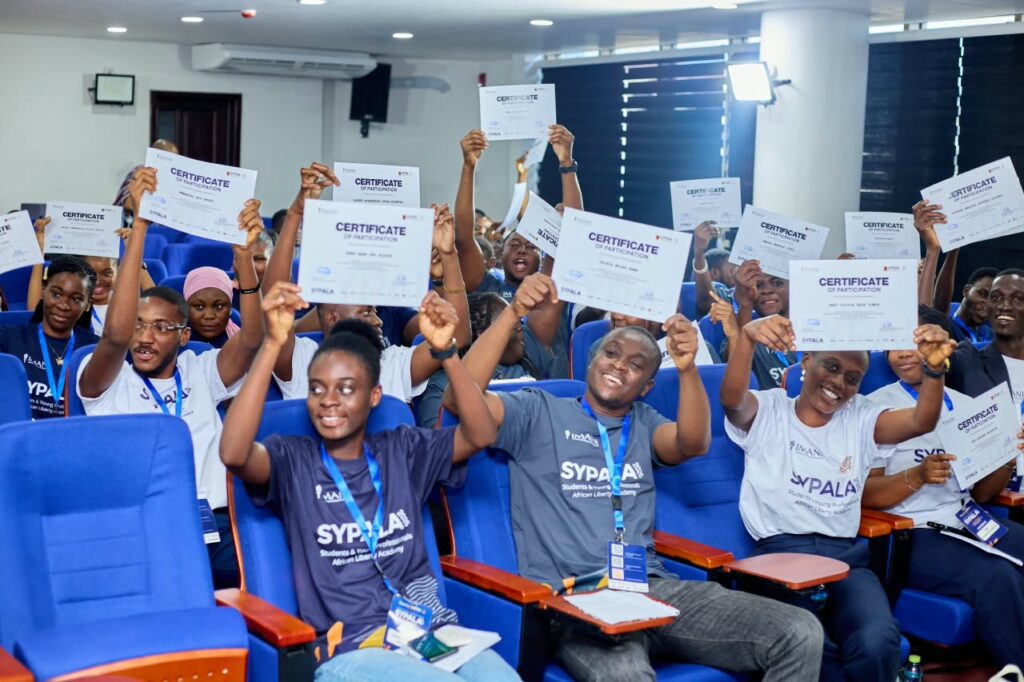
He was equally direct about the certificate itself. “It is not only a record that you were here. It is not the achievement,” he said. “The achievement is what you will do for 12 months that follows the certificate you are given.”
Three Charges: Apply, Network, Guard Your Character
Professor Asamoah closed with three specific instructions. First, he urged participants to apply a single idea from the week within their own departments, associations, workplaces or communities, rather than attempting to act on everything at once.
Second, he called on them to actively sustain the relationships built during the programme, noting that the academy’s alumni network, running since 2007, now exceeds 1,500 people, and warning that professional networks decay quickly without deliberate maintenance.
His third charge concerned ethics. “Talent without character is unstable,” he said. “Ambition without ethics is destructive.”
He urged participants to guard their reputations carefully, including against jokes or minor accusations among peers that can quietly shape how others perceive their character over time, arguing that reputation functions as capital in a way few young professionals fully appreciate until it is damaged.
A Continuing Partnership Beyond the Week
Professor Asamoah confirmed that UPSA’s collaboration with IMANI would continue beyond the closing ceremony through the university’s Center for Public Accountability, with a year-long calendar of public lectures, masterclasses and policy clinics planned, open to IMANI fellows and academy alumni alike.
He thanked Mr Franklin Cudjoe and the wider IMANI team for bringing the 20th edition of the programme to UPSA, and extended appreciation to the university’s support staff, including hostel and hall teams, the University Clinic, security, estates, ICT and the Public Affairs Directorate, for the largely unseen work behind the week’s logistics.
He also addressed the programme’s sponsors and partners directly, framing their investment in terms broader than the event itself. “You funded a week. What you actually funded is a cohort,” he said, urging sponsors to stay engaged with participants going forward through internships, mentorship and continued communication rather than treating their support as concluded once the programme ended.
Cudjoe Closes the Cohort, Certificates Follow
Franklin Cudjoe, Founding President and Chief Executive Officer of the IMANI Centre for Policy and Education, closed the ceremony by congratulating the cohort and urging them to carry forward the values, skills and knowledge gained over the four days into tangible change in their respective fields.
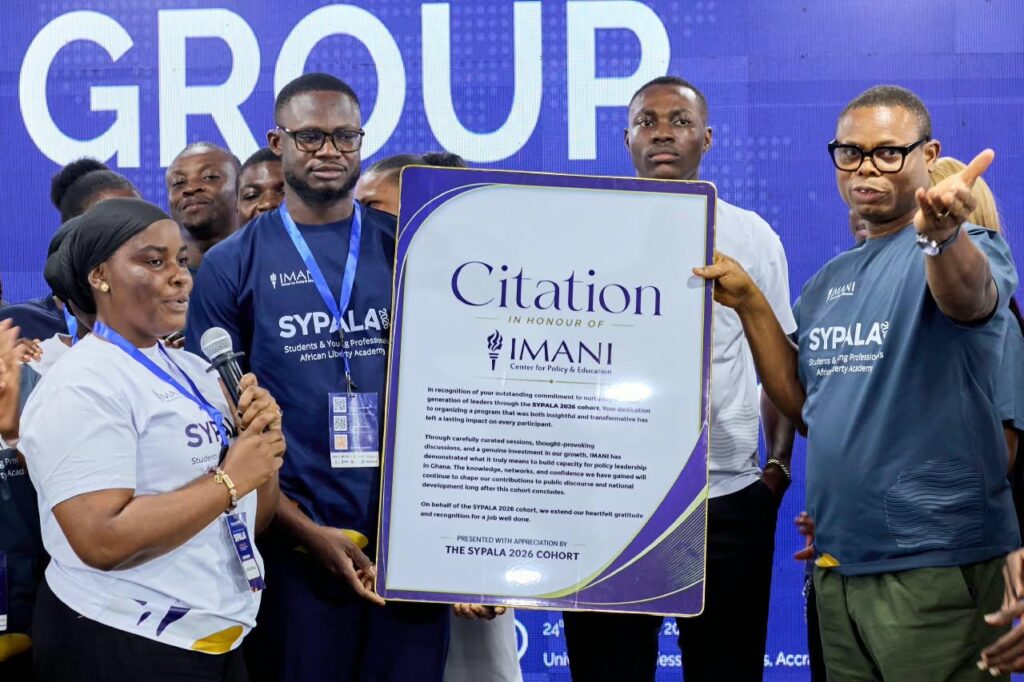
He praised the enthusiasm of this year’s participants and challenged them to translate that energy into concrete action, while thanking his own team at IMANI for their sacrifices in delivering the programme, alongside the event’s sponsors and media partners.
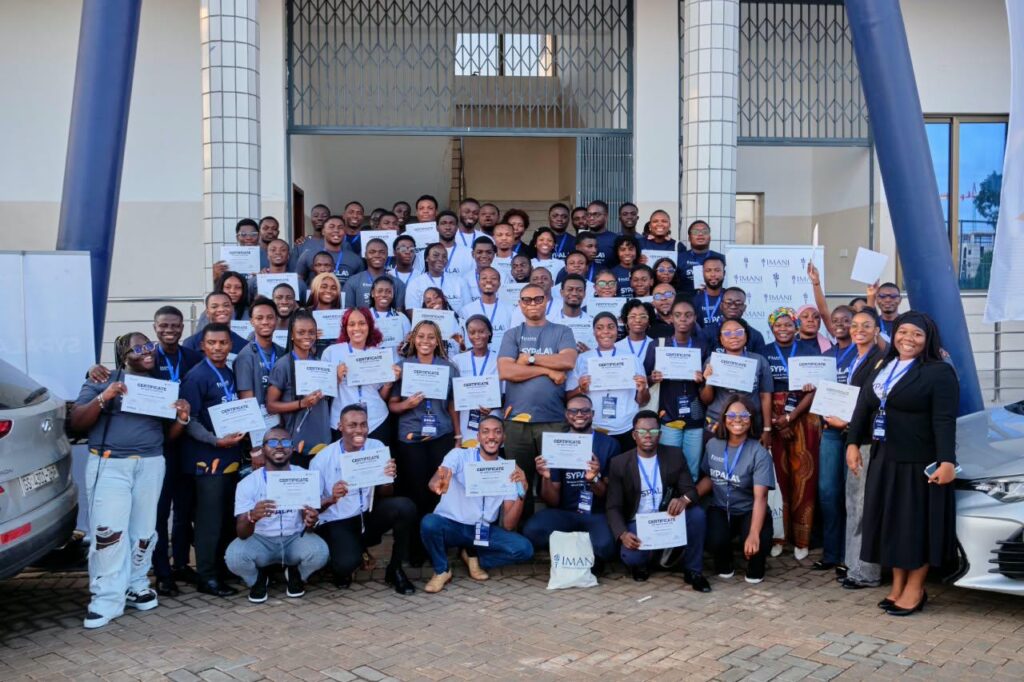
The ceremony closed with the presentation of certificates to all 100 participants, who in turn presented Mr Cudjoe with a Citation of Appreciation on behalf of the cohort.
READ ALSO: UN Committee Urges Tanzania to Halt Maasai Forced Evictions