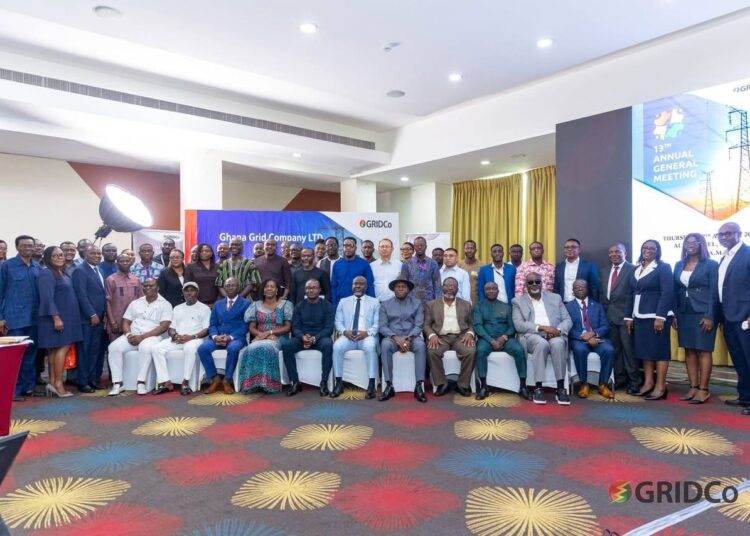
The Ghana Grid Company Limited (GRIDCo) has reported a stronger 2025 performance, combining record electricity transmission with a significant improvement in profitability as the company works to reinforce the network at the centre of Ghana’s power system.
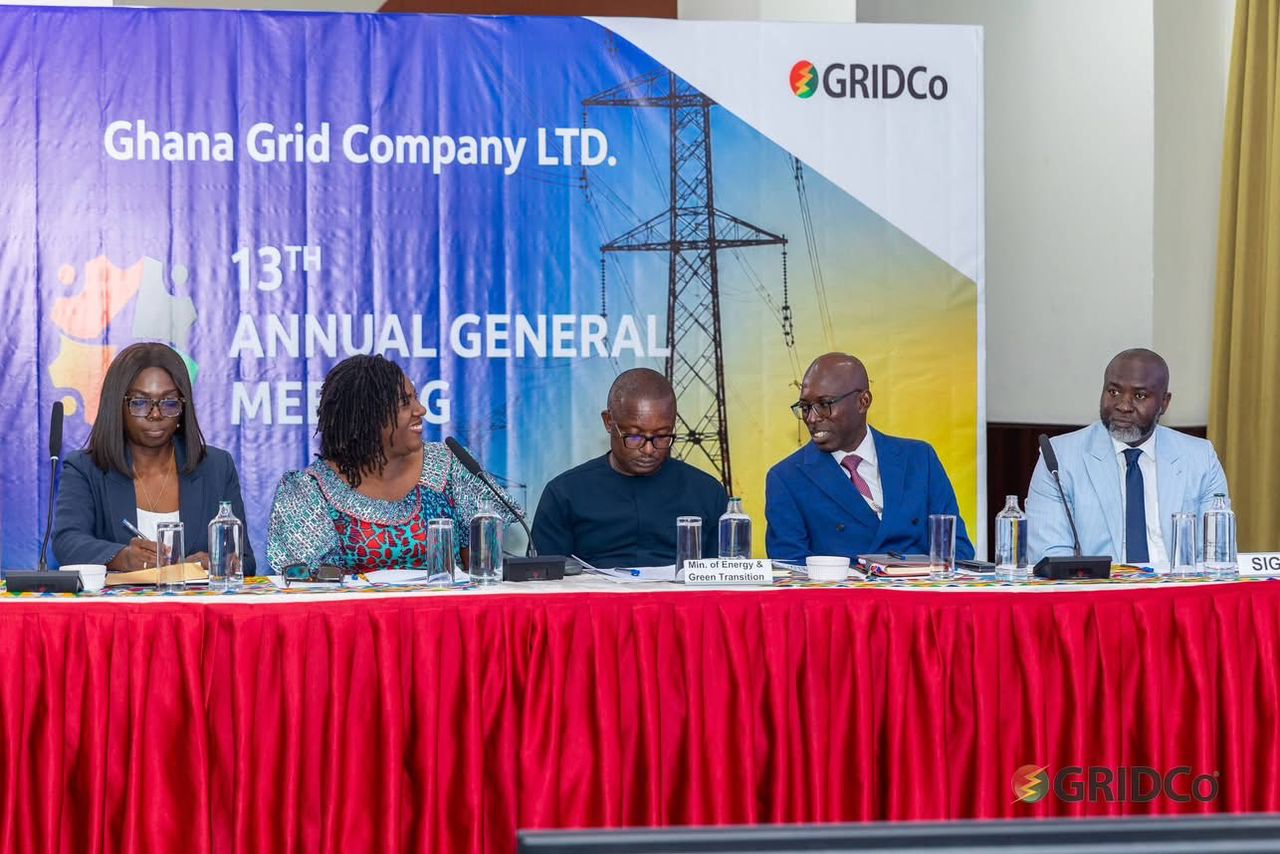
At its 13th Annual General Meeting, GRIDCo reported that it transmitted 25,860 gigawatt-hours (GWh) of electricity during 2025 and recorded GH¢584.46 million in profit after tax, alongside strong reliability and availability across its transmission network.
The performance comes at a critical point for Ghana’s electricity sector, where increased generation capacity must be matched by sufficient transmission infrastructure to move power reliably to distribution companies, large consumers and neighbouring markets.
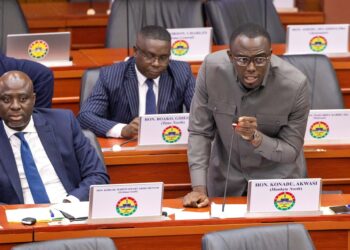
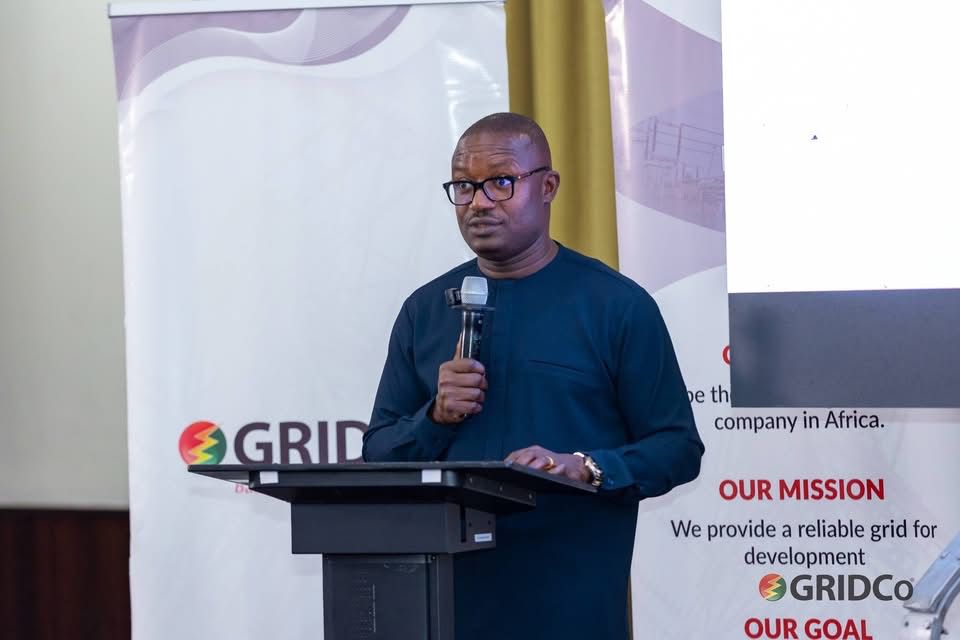
Speaking at the AGM, Minister for Energy and Green Transition Dr. John Abdulai Jinapor commended GRIDCo’s Board, Management and staff for the company’s performance and its response to major disruptions within the power system.
“GRIDCo is a critical part of the country’s electricity system. All electricity generated in Ghana passes through the transmission network before reaching homes, businesses, industries and neighbouring countries.”
Dr. John Abdulai Jinapor, Minister for Energy and Green Transition
Transmission Capacity Becomes Increasingly Strategic
GRIDCo’s role extends beyond simply moving electricity between generation and distribution points.
Its network provides the backbone through which Ghana’s electricity system is balanced, while also supporting cross-border power exchanges within the West African Power Pool.
The record transmission volume therefore points to growing activity across Ghana’s power system, but it also increases the importance of maintaining sufficient network capacity as electricity demand expands.
A stronger generation fleet without corresponding transmission investment could create bottlenecks, constrain available power and undermine efforts to improve electricity reliability.
The government’s emphasis on strengthening both sides of the system is consequently significant.
Dr. Jinapor said government would continue supporting critical transmission investments, including the Eastern Corridor Transmission Backbone, as part of efforts to strengthen energy security.
“A stronger generation mix must be matched by a resilient transmission network.”
Dr. John Abdulai Jinapor, Minister for Energy and Green Transition
For Ghana, the investment requirement is becoming more pressing as the country seeks to expand generation, integrate additional renewable energy and deepen regional electricity trade. Transmission infrastructure will determine how effectively new generation can be absorbed and delivered to areas of demand.
GRIDCo Urged To Move From Response To Prevention
Despite the positive financial and operational results, Dr. Jinapor used the AGM to place greater emphasis on preventing system failures rather than merely responding to them.
He directed GRIDCo to strengthen preventive maintenance, system monitoring, protection coordination and restoration preparedness, while making greater use of technology to improve network reliability.
His comments followed the company’s work to restore power after the Akosombo incident, which he said demonstrated the professionalism of GRIDCo personnel.
“Every fault must generate lessons, and every identified weakness must lead to corrective action.”
Dr. John Abdulai Jinapor
This emphasis is important for a transmission system where a single failure can have consequences well beyond the affected facility.
Weaknesses in protection systems, inadequate maintenance or delays in restoration can potentially escalate into wider disturbances affecting households and productive sectors.
For GRIDCo, the challenge is therefore shifting from maintaining an operational network to building a system capable of anticipating failures, isolating faults quickly and restoring supply with minimal disruption.
Profitability Gives GRIDCo Room For Strategic Investment
The GH¢584.46 million profit after tax also represents an important development for GRIDCo’s financial sustainability.
A financially stronger transmission utility is better positioned to maintain existing infrastructure, invest in modern monitoring systems and support the expansion required by Ghana’s changing generation mix.
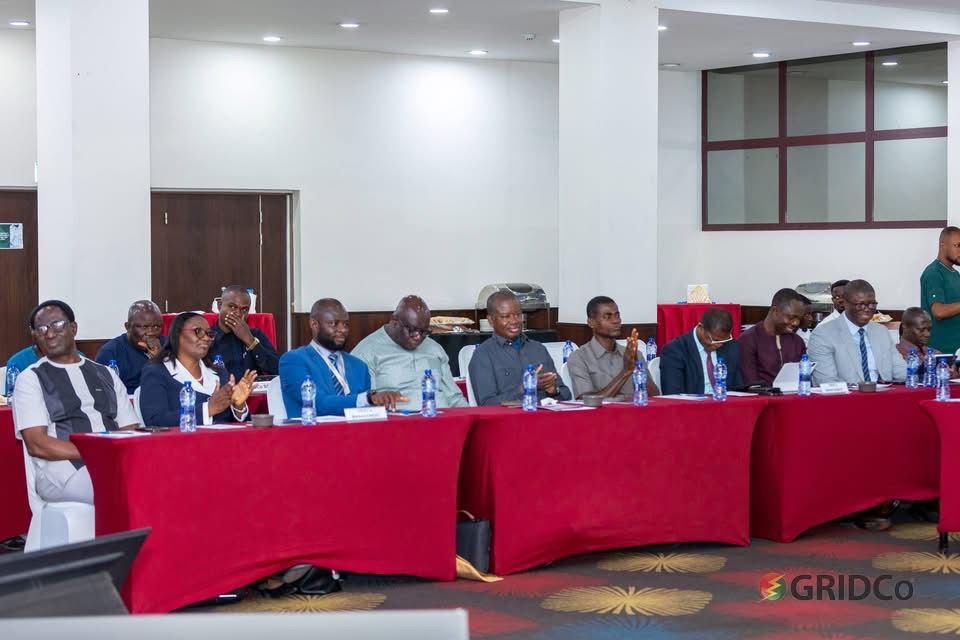
The involvement of the Ministry of Finance, Public Utilities Regulatory Commission (PURC) and State Interests and Governance Authority (SIGA), alongside utilities including the Volta River Authority (VRA), Electricity Company of Ghana (ECG) and Northern Electricity Distribution Company (NEDCo), also underscores the interconnected nature of GRIDCo’s performance.
Transmission reliability ultimately affects every stage of the electricity value chain.
Regional Trade Adds Another Layer To GRIDCo’s Mandate
GRIDCo’s network also has implications beyond Ghana’s domestic electricity supply.
As a participant in regional electricity trading, the company provides infrastructure through which Ghana can exchange power with neighbouring countries.
That makes network availability and reliability important not only for domestic consumers but also for Ghana’s position within the emerging West African electricity market.
Greater regional interconnection could allow countries to access surplus generation from neighbouring systems, improve system flexibility and reduce the need for every country to maintain identical generation resources.
However, the benefits of regional trade depend on the underlying transmission infrastructure being capable of handling increased power flows reliably.
Reliability Must Now Match The Financial Turnaround
The latest performance provides GRIDCo with a stronger platform, but the next test will be whether the financial improvement can be converted into sustained network resilience.
The company is being asked to simultaneously accommodate rising electricity flows, support new generation, facilitate regional trade and prepare the grid for a more diversified energy mix.
That makes preventive maintenance, digital monitoring, protection systems and transmission expansion more than operational priorities; they are fundamental to Ghana’s energy security.
Dr. Jinapor said the government’s objective is to restore GRIDCo’s standing as one of Africa’s most reliable, innovative and financially sustainable transmission utilities.
For Ghana’s energy sector, that objective will ultimately be measured not by transmission volumes or profits alone, but by whether the network can consistently deliver electricity from where it is generated to where it is needed; safely, efficiently and with fewer disruptions.
READ ALSO: BoG Bets on Ratings Upgrade as Economy Strengthens