Ghana’s accelerating infrastructure programme is placing renewed attention on a long-standing weakness in public project delivery: the failure to adequately coordinate road construction with existing electricity, water and other utility networks.
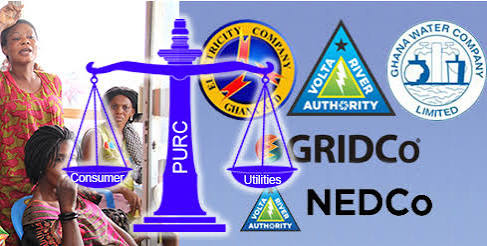
The Public Utilities Regulatory Commission (PURC) is seeking to address the problem by strengthening coordination between the Ministry of Roads and Highways, road contractors and utility service providers under the Government’s Big Push programme.
The proposed approach would require utility providers to make accurate maps of major infrastructure available to contractors before construction and excavation works begin.
The objective is to reduce preventable damage to pipelines, transmission lines, distribution networks and other critical utility assets.
“We’ll require the utility service providers to make available to the contractors all the maps that indicate all major pipelines, including transmission and distribution lines, to the contractors, so that they will use it as a guide in their construction activities.”
Dr Shafic Suleman, Executive Secretary, PURC
Mapping Infrastructure Before Construction
The proposal represents a shift from responding to utility damage after it occurs to identifying and managing the risks before construction starts.
This distinction matters as Ghana increases public infrastructure investment.
A road project can intersect with water pipelines, electricity cables and other networks, particularly where excavation, drainage works and road widening are involved.

When such infrastructure is damaged, the consequences extend beyond the immediate repair.
A burst water pipeline, for example, can interrupt supplies to households and businesses while Ghana Water Limited is required to mobilise personnel, equipment and materials to restore the network.
In some cases, repairs can also require sections of newly constructed roads to be excavated, effectively creating two layers of public expenditure: the original investment in the road and the subsequent expenditure required to repair infrastructure damaged during its construction.
Electricity infrastructure faces similar risks. Damage to underground cables or distribution assets can result in outages, restoration costs and disruption to businesses and other productive activities.
The economic concern is therefore larger than construction inconvenience.
Every avoidable repair consumes resources that could otherwise support network expansion, maintenance, reliability improvements and new connections.
PURC’s proposed mapping framework could also establish a clearer basis for accountability.
Where contractors receive accurate information about the location of utility assets and subsequently damage them through negligent construction, the Commission indicated that responsibility for restoration could be placed on the contractor.
That creates a financial incentive for contractors to undertake proper due diligence before excavation and to adapt construction methods where utility infrastructure presents a risk.
Big Push Faces Coordination Test
The issue becomes increasingly important as the Big Push accelerates infrastructure development across Ghana.
Large-scale public investment can expand productive capacity, improve transport connectivity and stimulate economic activity.
However, the return on those investments depends partly on how well new infrastructure interacts with existing networks.
A road cannot be considered in isolation from the electricity, water and telecommunications infrastructure running alongside or beneath it.

Damage to one network can reduce the economic value created by another.
This makes infrastructure coordination an increasingly important component of value-for-money management.
The challenge is not necessarily the absence of technical capacity to identify utility infrastructure.
It is the institutional coordination required to ensure that information held by different agencies and utility companies reaches contractors at the appropriate stage of a project.
PURC has also encouraged consumers to report water and electricity disruptions associated with construction activities.
Such complaints provide the regulator with a mechanism to identify recurring problems and intervene where responsibility is unclear.
However, consumer complaints are ultimately a reactive tool.
The stronger policy outcome would be to prevent avoidable disruptions before they occur.
For the Big Push, this means project success should not be measured only by kilometres of roads constructed or the number of projects completed.
The quality of coordination between infrastructure systems should also form part of the assessment.
Daboase Expansion Highlights Network Bottlenecks
PURC’s infrastructure concerns extend beyond road construction and into the capacity and resilience of Ghana’s water system.
During the Commission’s visit to the Daboase Water Treatment Plant, attention was drawn to an expansion project expected to increase potable water production for Sekondi-Takoradi and surrounding communities.
The facility has a design capacity of 100,000 cubic metres of potable water per day, equivalent to approximately 22 million gallons.
The additional treatment capacity represents an important investment in water security for the Western Region and is intended to strengthen the system beyond infrastructure that has operated for several decades.
Yet treatment capacity alone does not determine how much water ultimately reaches consumers.
Dr Suleman indicated that Ghana Water Limited had provided assurances that the transmission pipeline connecting Daboase to Sekondi-Takoradi would be expanded during the second phase of the project, alongside additional treatment infrastructure.
The situation illustrates a broader principle in infrastructure economics: expanding capacity at one point in a network does not necessarily translate into equivalent improvements for consumers if another part of the system remains a bottleneck.
A treatment plant may produce substantially more water, but inadequate transmission capacity can prevent that output from being fully utilised.
The same principle applies to electricity. Additional generation without sufficient transmission and distribution capacity can constrain the benefits of new power supply.
Likewise, new electricity connections without adequate upstream capacity can create reliability problems.
Infrastructure investment therefore produces its strongest economic returns when complementary systems are developed in parallel.
Illegal Mining Threatens Water Investments
The sustainability of water infrastructure is also being complicated by environmental degradation, particularly illegal mining.
PURC has raised concerns about the continued pollution of raw water sources feeding treatment facilities.
At Daboase, raw-water turbidity reportedly reached 11,955 NTU on August 14, reflecting severe pollution in the Pra River system.
Highly polluted raw water can increase treatment requirements, including the use of chemicals and additional processing.
Severe contamination and siltation can also increase maintenance pressures and threaten the operational sustainability of treatment infrastructure.
This creates a significant contradiction in public investment.
Ghana can spend heavily to increase the capacity of a modern water treatment system while environmental degradation upstream simultaneously increases the cost of operating that system.
The GH¢8.40 million agreement signed in July between GoldBod and Ghana Water Limited to rehabilitate the Bonsa, Daboase and Sekyere Heman water systems further illustrates the financial consequences.
Assessments identified severe siltation, channel instability and recurring intake blockages, with illegal mining identified among the contributing factors.
The expenditure demonstrates that protecting infrastructure after construction can become substantially more expensive than preventing damage to the systems that support it.
For Ghana’s Big Push, this presents a broader policy lesson.
Infrastructure development cannot be separated from asset protection, environmental management and institutional coordination.
Roads, electricity networks and water systems are interconnected economic assets.
The value of a new investment can be reduced when another public asset is damaged during construction or when environmental degradation compromises infrastructure after completion.
PURC’s proposed utility-mapping and accountability framework therefore has significance beyond road construction.
It points toward a more integrated approach to infrastructure planning in which government agencies, utilities and contractors are required to consider the wider system before projects reach the construction stage.
The central test for the Big Push will ultimately be whether Ghana can convert increased infrastructure spending into durable economic capacity without repeatedly paying to repair, replace or compensate for damage that better planning could have prevented.
READ ALSO: Burnham Tightens Early Release Rules to Keep Killers Behind Bars