
Dr Kofi Donkor, Deputy Executive Director of the Centre for Plant Medicine Research (CPMR), has explained the critical role of Food and Drugs Authority (FDA) registration in ensuring the safety of herbal medicine in Ghana, while raising concerns that the country’s healthcare system continues to operate herbal and orthodox medicine as parallel systems rather than a truly integrated one.
Speaking on the significance of traditional medicine regulation, Dr Donkor described the CPMR as a government agency under the Ministry of Health responsible for developing herbal medicine through research into medicinal plants.
He noted that traditional medicine in Ghana is overwhelmingly herbal in nature, accounting for roughly 90 to 95 percent of traditional medicine practice, with the remaining 5 to 10 percent comprising other traditional practices.
Addressing how safety is assured within the sector, Dr Donkor stressed that regardless of any spiritual or cultural significance attached to traditional remedies, herbal medicine must fundamentally be treated as a drug once it enters public use.
He said this classification is the essential starting point for understanding how traditional medicine is regulated in the country.
“Traditional medicine, though it comes from a botanical source, is still a drug, and because it is a drug, it needs to be treated as such,”
Dr. Donkor
How The FDA Registration Process Works
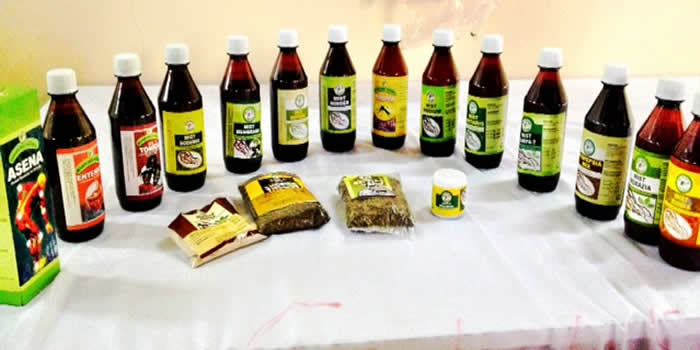
Dr Donkor outlined the specific role the CPMR plays in supporting the FDA’s regulation of herbal medicine. According to him, any manufacturer seeking to bring a herbal drug to market is required by the FDA to first submit the product to the CPMR for laboratory analysis.
This analysis, he explained, assesses the safety of the product among other technical parameters, after which the manufacturer receives a technical report to submit to the FDA alongside the product itself for formal registration. Once the FDA reviews and is satisfied with both the technical report and the product, registration is granted.
Dr Donkor said this process means that any herbal product bearing an FDA registration number can generally be considered safe for consumption, urging the public to specifically look out for this registration number when selecting traditional medicine products.
“Once a product is registered by the FDA, to a large extent it is safe, and one of the requirements is that the label carries clear directions on dosage and mode of administration.”
Dr. Donkor
While acknowledging that home remedies can be beneficial, Dr Donkor cautioned against self-administered preparations made without guidance from a trained traditional medicine practitioner.

He explained that the primary danger with home-prepared remedies lies in the absence of clear dosage and quantity guidelines, which can expose users to risks of toxicity and other safety concerns.
He advised that individuals seeking traditional remedies should consult a qualified health practitioner, whether a herbalist or a pharmacist trained to administer traditional medicine, rather than preparing treatments independently at home.
Cultural Bias Against Indigenous Medicine
Addressing broader societal attitudes toward traditional medicine, Dr Donkor argued that Ghanaian culture has developed a bias against anything perceived as indigenous or traditional, a mindset he believes needs to be unlearned.
He noted that Ghanaians relied on traditional treatment methods long before the introduction of Western medicine, and said health professionals, including doctors, pharmacists and allied health practitioners, should begin examining how earlier generations managed their health needs.
Describing his own professional journey as a pharmacologist, Dr Donkor said he began questioning these assumptions early in his career, a process that shaped his current focus on incorporating traditional medicine more meaningfully into the broader healthcare system.
Dr Donkor identified the country’s current approach as a parallel system rather than a genuinely integrated one, explaining why many patients rarely encounter herbal medicine units even in hospitals that offer them.
He noted that approximately 54 to 56 regional and district hospitals across the country, including facilities such as LEKMA, Dodowa and the Police Hospital, maintain dedicated herbal medicine units.
However, he explained that under the current parallel structure, patients must independently know to request the herbal unit upon arrival at a hospital, as the general hospital system is otherwise oriented toward directing patients to the standard Outpatient Department for orthodox treatment.
“Right now, if you don’t know a hospital has a herbal unit, you will never receive that option, because the moment you walk in, the system is programmed to take you to the normal OPD,”
Dr. Donkor
What True Integration Would Look Like
Describing his vision for genuine integration, Dr Donkor explained that in an ideal system, a patient would have their vitals taken and be attended to by a clinician who would then present both herbal and orthodox treatment options, guiding the patient’s decision based on clinical judgement.
He contrasted this with the current reality, where practitioners in herbal units typically only discuss herbal treatment, while orthodox practitioners rarely mention herbal medicine as an alternative, leaving many patients with the impression that allopathic treatment is their only available option.
READ MORE: Ghana Reviews Response, Maps Out Measures to Tackle Mpox