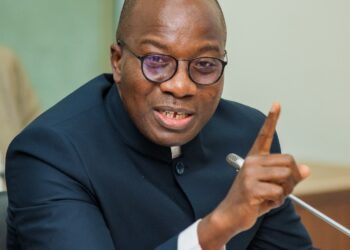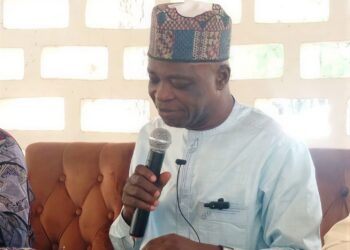
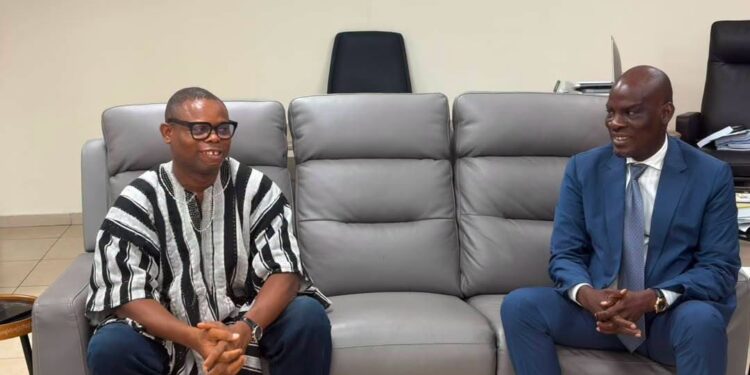
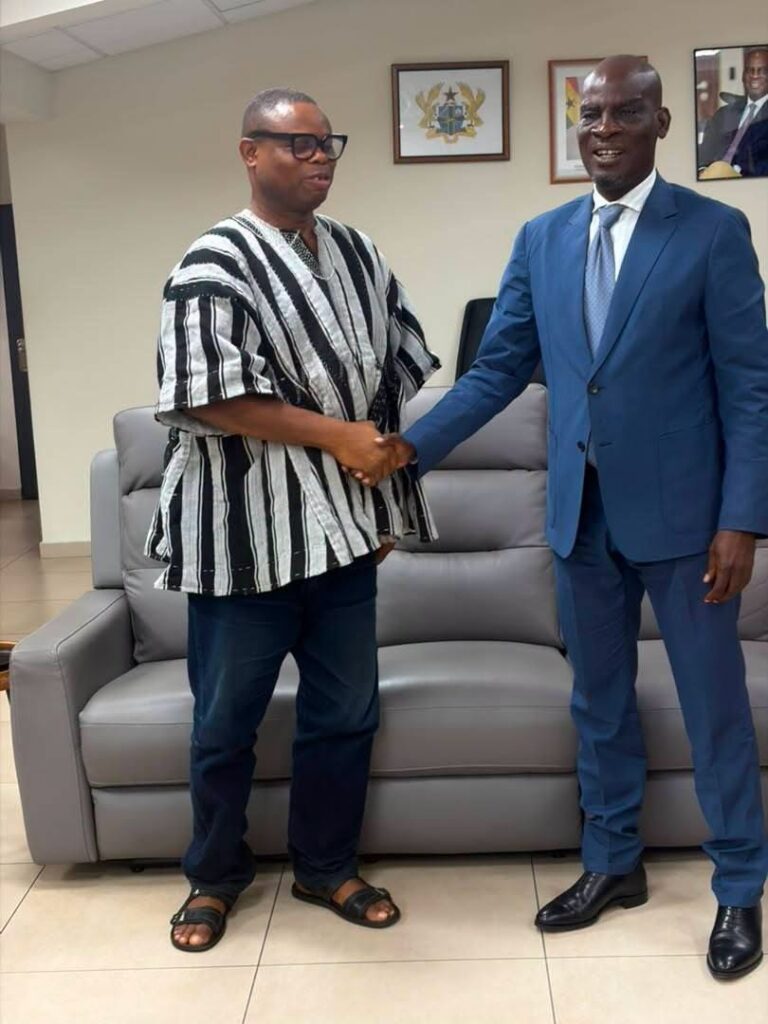
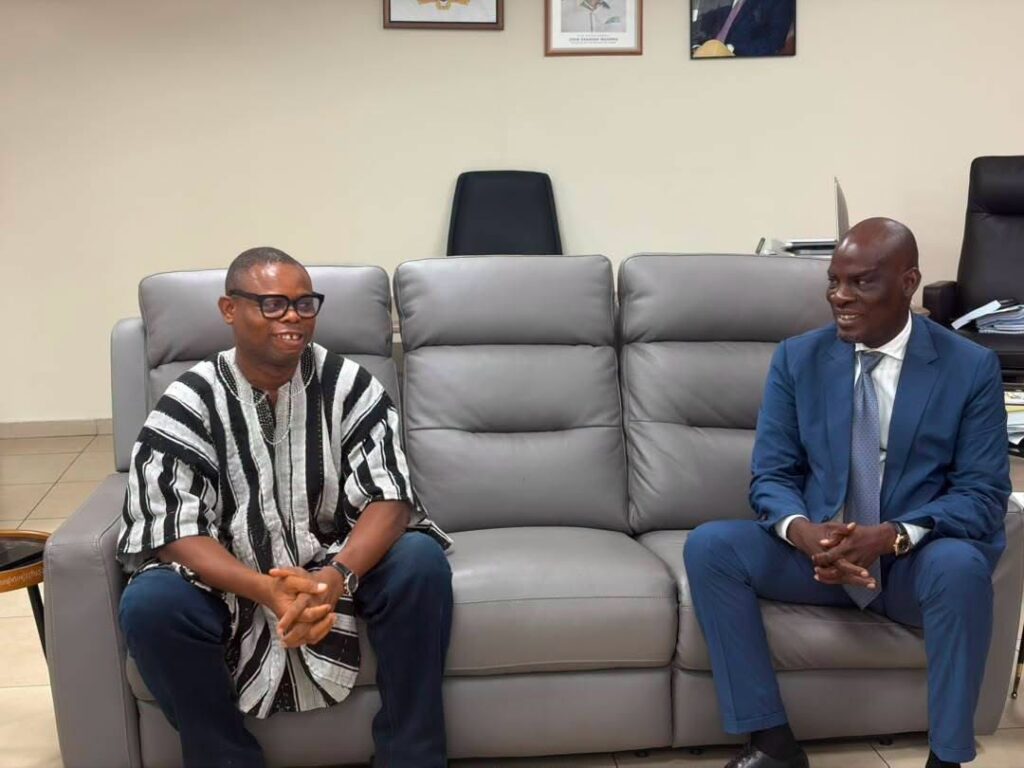
The IMANI Center for Policy and Education held a policy engagement with the Ministry of Education during which Education Minister Haruna Iddrisu argued that Ghana’s education debate has become too concentrated on the upper levels of the system while the foundation remains under severe pressure.
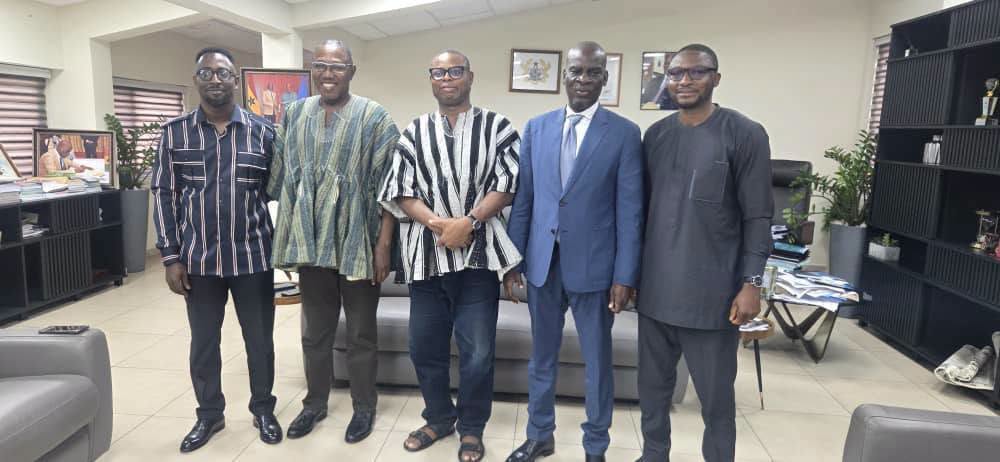
The meeting, led by IMANI Founding President and Chief Executive Officer Franklin Cudjoe alongside associates Kay Codjoe and John Sitsofe Mensah, was received by Iddrisu and his Deputy, Dr Clement Abas Apaak.
The Minister used the session to press a case that basic education infrastructure requires the same urgency governments have attached to access and feeding programmes at the senior high school level.
A Deficit the Numbers Confirm
The Minister’s concern finds direct support in official data. The 2025 Auditor-General’s report found that 10,730 public basic schools across 13 regions had no classroom blocks, affecting 3,050,808 pupils who were learning under trees, in sheds, churches and other temporary structures.
Section 36 of the Pre-Tertiary Education Act places responsibility on the Ghana Education Service to construct, equip and maintain public basic and senior high schools, a mandate the infrastructure figures suggest remains substantially unmet. Hon Iddrisu was careful to frame his argument as one of balance rather than opposition to existing programmes.
He said feeding programmes and Free Senior High School are not unimportant, but argued that when Free SHS was introduced, substantial political attention and public resources naturally shifted toward secondary education, leaving basic education without the sustained attention its infrastructure and quality deficits required.
Feeding a child matters, but so does providing that child with a proper classroom, safe sanitation, a teacher and an environment in which learning can actually take place.
Questioning Whether the Constitutional Foundation Is Complete
The Minister’s argument reaches into Ghana’s constitutional commitment to Free Compulsory Universal Basic Education. He questioned whether the country has sufficiently fulfilled that obligation before allowing national conversation to be dominated by Free SHS, stressing that basic education forms the foundation of the entire system.
Weaknesses in literacy, numeracy and learning conditions at kindergarten, primary and junior high school levels do not disappear when a child reaches secondary school. They move upward with the student.
UNICEF’s 2025 Education Budget Brief projected basic education at 24.1 percent of the Ministry of Education budget, while warning that insufficient investment in foundational learning could weaken outcomes at higher levels and deepen inequality.
The lesson, as the discussion framed it, is not that secondary education should lose funding, but that Ghana cannot sustainably expand the top of the system while underinvesting in the bottom.
Teacher Deployment as a Hidden Shortage
Teacher supply and deployment formed the second major part of the discussion. Hon Iddrisu said the problem is not simply how many teachers Ghana employs, but whether those teachers are deployed according to need, since national ratios can suggest adequate staffing even as individual schools, districts and regions remain short of teachers in critical subjects.
World Bank reporting shows that at least 19,987 trained teachers were recruited and deployed in 2022 and 2023, with 11,110 placed in GALOP basic schools.
Yet deployment remains central to whether recruitment actually reaches underserved classrooms, meaning teacher policy should be driven by school-level data showing where shortages exist, which subjects are affected, and what incentives are needed to retain teachers in underserved communities.
Recruitment without rational deployment can increase the wage bill without solving the classroom problem.
Sanitation, Discipline and Shared Responsibility
Sanitation featured prominently in the Minister’s concerns. He argued that the state of toilets, water systems and hygiene facilities directly affects attendance, health, dignity and learning, meaning a serious national school infrastructure programme must extend beyond classroom blocks to include water, sanitation, electricity, furniture and accessibility.
On discipline, Hon Iddrisu rejected placing responsibility solely on students or solely on teachers, describing it instead as a shared institutional and social responsibility.
Students must be held to standards, he said, but teachers and school authorities must also demonstrate professionalism and accountability, with parents, chiefs, religious leaders and opinion leaders brought into the conversation. Ghana cannot repair discipline in schools if every stakeholder defines the problem as somebody else’s responsibility.
Scholarships, Special Education and Support Staff
Scholarship administration also featured prominently in the discussion. With the former Scholarships Secretariat replaced by the Ghana Scholarships Authority under Act 1149, Hon Iddrisu argued for greater harmonisation of publicly funded scholarship schemes, aiming for a coherent national system in which awards are properly managed, prioritised, monitored and accounted for.
The law provides for considerations including merit, financial need, disability, fields of study and the developmental needs of the country, and greater coordination could reduce duplication and strengthen public confidence in how scholarships are allocated.
The Minister urged stronger attention to special and inclusive education, suggesting that GETFund should dedicate a meaningful share of its resources to special needs education and training.
Ghana’s 2026 education budget allocates GH¢52.85 million to Inclusive and Special Education, though wider needs, including specialist teachers, accessible infrastructure and assistive technologies, remain substantial and require sustained financing.
The meeting also considered the role of domestic bursars and matrons within the education system.
Hon Iddrisu said their responsibilities, commitments and institutional support should be reviewed to ensure they are properly equipped to meet the Ministry’s standards and expectations, noting that their work touches food safety, catering, sanitation, stock management and student welfare, making them part of the broader education quality system.
A Connected Set of Problems Demands a Connected Strategy
The significance of the IMANI meeting lay in linking problems Ghana already knows individually. Infrastructure affects learning. Teacher deployment affects equality. Sanitation affects attendance. Discipline affects school culture.
Scholarships affect opportunity. Special education tests inclusion. Every weakness at the basic level eventually appears higher up the system.
The discussion concluded that Ghana needs an education strategy that strengthens the foundation while protecting the gains made in secondary access, requiring measurable infrastructure targets, transparent financing, school-level teacher deployment data, stronger sanitation standards, disciplined institutions, accountable scholarships and sustained funding for learners with special needs.
The meeting placed a fundamental question before the country: Ghana’s next phase of education reform cannot be judged only by how many students enter senior high school or how much government spends keeping them there. It must also be judged by the quality of the basic education that prepared them to arrive.
READ ALSO: Ghana’s Fiscal Test Shifts from Targets to Spending Control