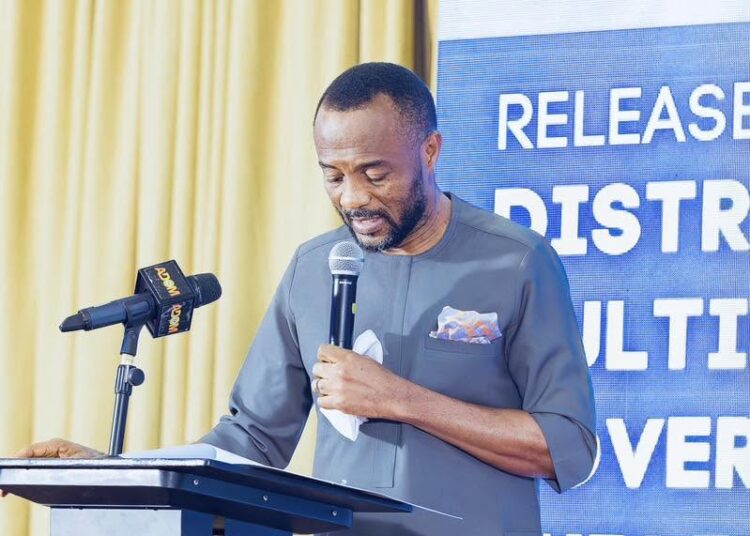
Hon. Jerry Ahmed Shaib, Member of Parliament for Weija-Gbawe Constituency and Second Deputy Minority Whip, has called for standard reserve reporting on GoldBod holdings to restore public trust, financial integrity, and rigorous institutional oversight to Ghana’s national gold reserve management.
According to the lawmaker, while the foundational concept of building gold-backed foreign reserves remains a sound economic policy inherited by the state, the current administration’s incompetent management has transformed a promising strategy into a costly financial burden.
Hon. Shaib clarified that the Opposition’s critique is not directed at Dr. Mahamudu Bawumia’s original vision of sovereign gold accumulation, but rather at the poor executive supervision, lack of operational transparency, and administrative failure that led to over a billion dollars in losses within a single year.
“Transparent accounting for all gold reserves under standard reserve reporting, not accounting kept outside the normal books. Two independent international institutions have now confirmed the same thing, and Parliament has taken the first step toward accountability. Ghanaians deserve competent stewardship of a good idea, not excuses.”
Hon. Jerry Ahmed Shaib

Elaborating further on the critical need for standardized public accounting, Hon. Shaib highlighted that the Speaker of Parliament’s admission of the Minority’s motion provides a pivotal opportunity to examine off-balance-sheet gold trading and unrecorded financial commitments.
Recent independent findings published by both the World Bank and the International Monetary Fund have validated long-standing public concerns, revealing that undisclosed off-taker agreements, unapproved price discounts, and hidden transaction fees have exposed the state to massive fiscal vulnerabilities.
The Second Deputy Minority Whip stressed that routine executive press statements and verbal denials cannot substitute for formal parliamentary scrutiny, arguing that Ghanaians deserve a thorough, evidence-based investigation into how national mineral assets are being handled behind closed doors.
Demand for Parliamentary Scrutiny and Commercial Disclosure
The urgent call for standard reserve reporting on GoldBod holdings is anchored in the necessity to resolve deep information asymmetry surrounding the commercial execution of domestic gold purchases.
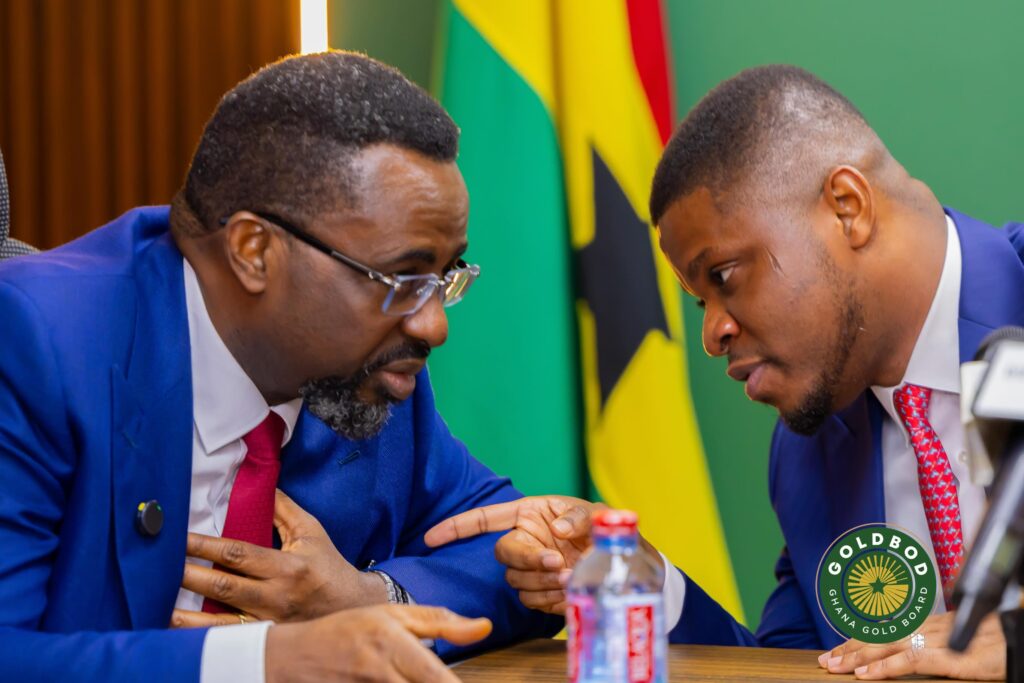
Industry observers and extractive governance experts have continuously raised alarms over the complete opacity shrouding key commercial terms, including the specific identities of off-takers, the magnitude of price discounts granted on bullion sales, and the precise allocation of transaction costs between GoldBod and the Bank of Ghana.
Hon. Shaib pointed out that keeping these vital financial transactions outside normal accounting ledgers conceals critical data from public oversight and statutory auditing bodies.
He emphasized that “truth can only come through a proper parliamentary inquiry,” where state officials are compelled under oath to produce contract documents, discount approvals, and full loss breakdowns for public verification. Without such disclosures, the public remains uninformed about who ultimately benefits from state-backed gold trades.
Unrecorded Contingent Liabilities and World Bank Warnings
Beyond immediate trading losses, the imperative for standard reserve reporting is underscored by explicit warnings from multilateral financial institutions regarding growing systemic risks.
On page 49 of its latest country economic evaluation, the World Bank explicitly urged Ghanaian authorities to establish systematic public disclosure of all contingent liabilities tied to sovereign gold schemes.

Operating gold purchase and barter arrangements off the official balance sheet creates dangerous fiscal blind spots, masking potential liabilities that could severely impact state institutions like COCOBOD and worsen balance-sheet weaknesses in vulnerable commercial banks.
Extractive sector analysts note that unhedged exposure to volatile global gold prices, combined with unverified intermediary fee structures, creates an unsustainable economic risk profile that can only be remediated by subjecting all gold reserves to standard reporting protocols. Failing to integrate these metrics risks deepening the country’s fiscal deficit.
Establishing Reform Roadmaps for Extractive Governance
To address the structural deficiencies highlighted by international monetary authorities, the government must formulate a clear plan and binding implementation timeline to reform gold reserve management and extractive sector governance.
Transitioning GoldBod operations to standard reserve reporting requires integrating all domestic gold purchases, local refining quotas, and foreign exchange swap arrangements directly into published monetary statistics and audited central bank balance sheets.

Hon. Shaib reaffirmed that the Parliamentary Minority will relentlessly pursue statutory accountability until robust legal and operational safeguards are institutionalized across all state-backed commodity trading platforms.
Enforcing standard reserve reporting ensures that Ghana’s rich gold wealth is managed with professional competence, protecting public funds and fostering long-term macroeconomic stability for future generations.
READ ALSO: Ghana’s Bond Market Takes Major Hit as Turnover Collapses By 68%