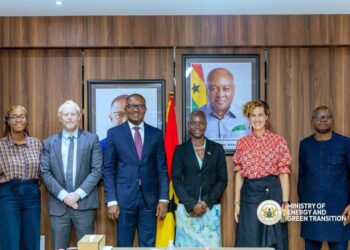
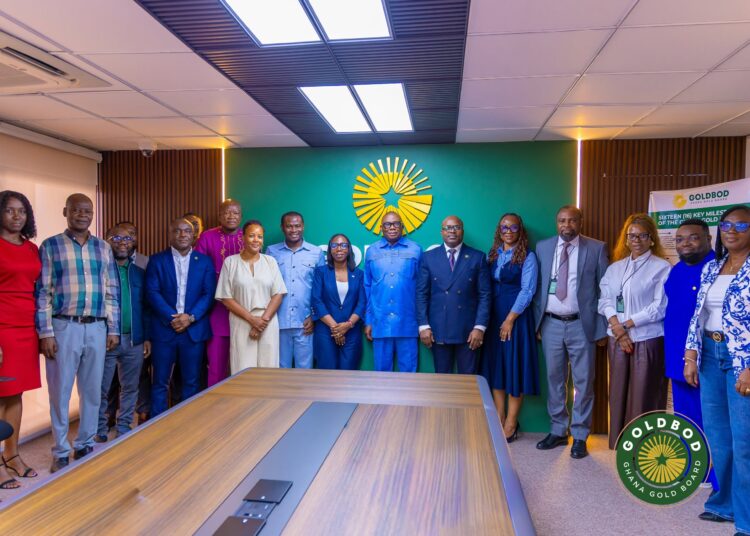
The Ghana Gold Board (GoldBod), the Economic and Organised Crime Office (EOCO), and the United Kingdom Ghana Gold Programme (UKGGP) have convened their first technical meeting under a joint collaboration framework to track, trace, and dismantle illicit financial inflows into Ghana’s gold trading ecosystem.
This inter-agency initiative directly targets long-standing vulnerabilities within the extractive sector, where unrecorded capital movements, illegal artisanal mining financing, and trade-based money laundering continue to sidetrack vital state revenues.
By formalizing this triad partnership, the institutions intend to create an ironclad monitoring matrix that curbs systemic leakages and restores fiscal integrity to Ghana’s gold supply chains.
“We give full support to management and look forward to ensuring that the gold trade is conducted in compliance with local and international standards. These frameworks are from credible sources and are traceable.”
GoldBod Deputy CEO
Building upon this strategic alignment, the collaborative framework transitions the partner agencies from high-level institutional commitments into an operational structure with defined responsibilities, structured intelligence sharing, and joint enforcement protocols.
Gold remains a pivotal pillar of Ghana’s macroeconomic stability, representing the country’s single largest export revenue earner. However, porous borders, informal trading networks, and inadequate cross-border transaction tracking have historically created fertile ground for illicit financial flows (IFFs).
Through this structured operational mechanism, the institutions will deploy specialized analytical tools and real-time oversight to secure domestic trade points, sanitize regional supply chains, and align local commercial activities with globally accepted responsible sourcing standards.
Strengthening Sector Compliance and Intelligence Sharing
Achieving long-term stability within the extractive industry requires an aggressive shift toward total institutional transparency and robust regulatory compliance.
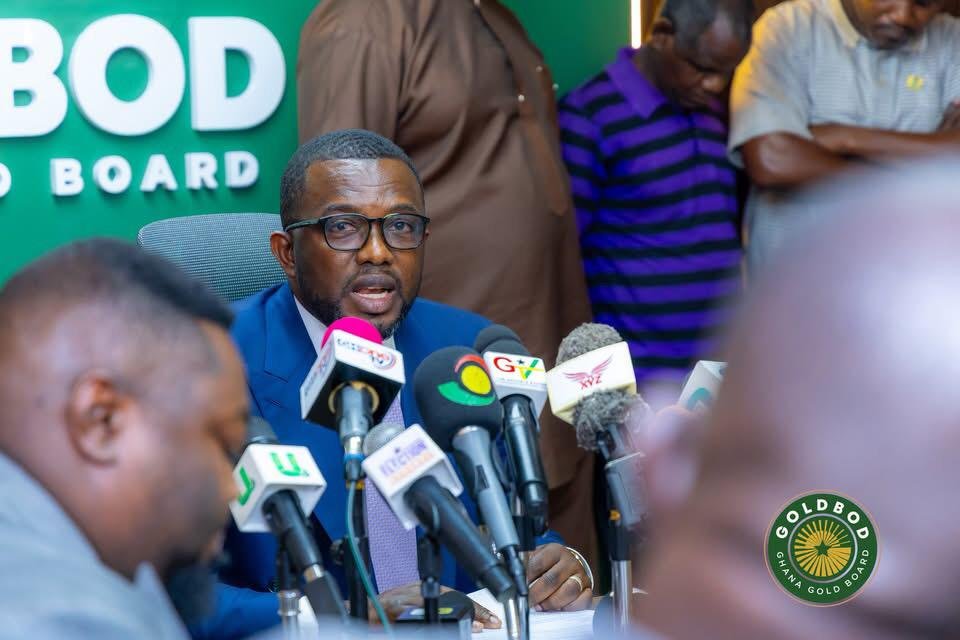
Speaking during the technical engagement, the Deputy Chief Executive Officer of GoldBod emphasized that establishing operational synergy with law enforcement agencies is central to protecting the country’s gold assets.
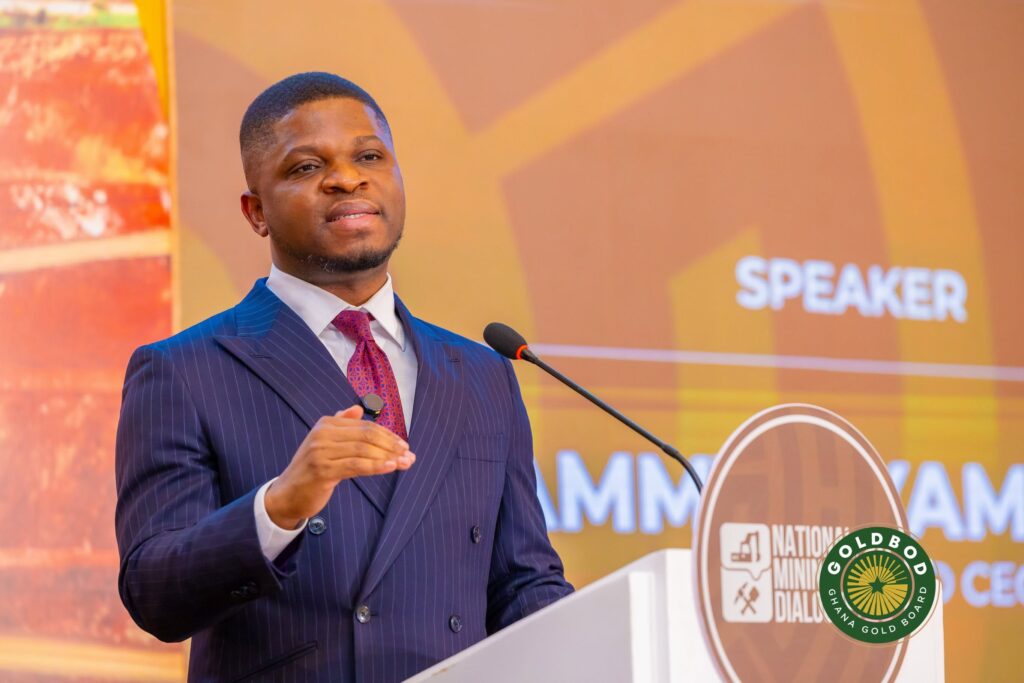
He noted that stronger collaboration between the Ghana GoldBod and EOCO would enhance intelligence sharing, strengthen monitoring and enforcement, and help identify and disrupt illicit financial flows associated with gold trading.
Without stringent compliance controls, informal aggregators and rogue trading networks often bypass domestic tax regimes, depriving the state of critical revenue needed for national development while simultaneously undermining reputable market participants.
To counter these vulnerabilities, the joint operations center will leverage advanced tracking technologies and shared regulatory databases to monitor every link of the gold value chain, from mine site origin to final export hubs.
International compliance frameworks, including the OECD Due Diligence Guidance for Responsible Supply Chains of Minerals, serve as the technical benchmark for this crackdown. By enforcing these benchmarks, the partnership aims to prevent conflict minerals and illegal capital from entering the formal banking system.
This systemic clean-up not only deters financial crimes but also ensures that compliant Ghanaian exporters gain unhindered, premium access to global bullion markets that increasingly demand strict environmental, social, and governance (ESG) compliance.
Securing National Revenues Through Advanced Monitoring
From a law enforcement standpoint, curbing extractive financial crime demands seamless operational coordination between regulatory custodians and financial intelligence units.
Head of Investigations, Felix Mawulolo Amegashie noted that gold remains a critical part of the national economy and that the partnership gives both institutions a clearer line of sight over the money moving through the sector.
He added that with EOCO’s support, the work ahead is to keep Ghana’s gold trade sanitised. By systematically mapping the movement of capital alongside physical gold transactions, security agencies can swiftly flag discrepancies, investigate shell companies, and prosecute syndicates using gold as a conduit for trade-based financial crimes.
Mobilizing Technical Expertise and Global Standards
The inclusion of international development partners introduces crucial technical capacity to Ghana’s domestic enforcement machinery. The UKGGP supports Ghana’s efforts to build a transparent, well-regulated and responsibly sourced gold sector, and its involvement brings technical support and international good practice to the programme.
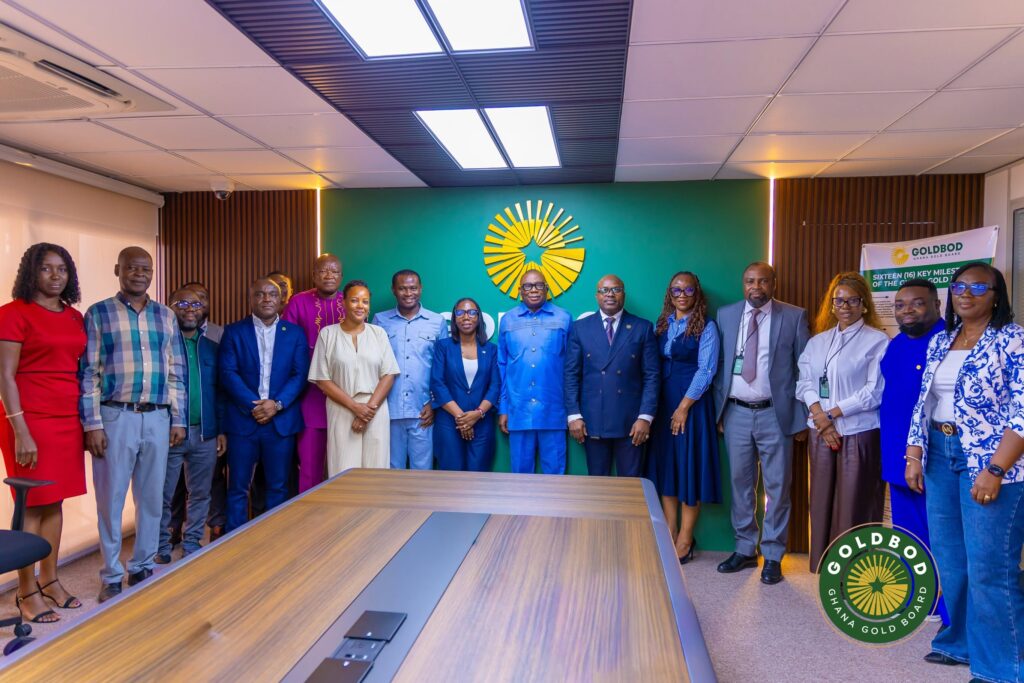
Through specialized training, capacity-building workshops, and forensic auditing assistance provided by international experts, domestic officers will be better equipped to detect sophisticated money laundering schemes and cross-border trade misinvoicing.
Ultimately, ending illicit gold flows requires an enduring commitment to structural reform, rigorous enforcement, and active international cooperation. As this technical partnership takes operational effect, Ghana sets a benchmark for extractive sector governance across Sub-Saharan Africa.
By harmonizing law enforcement capabilities with regulatory oversight and global technical expertise, GoldBod and EOCO are well-positioned to eliminate illicit financial networks, protect the nation’s resource sovereignty, and secure a transparent, highly profitable gold sector for future generations.
READ ALSO: Access Bank Leads Africa’s Fastest Cross-Border Banking Expansion