Egypt’s latest renewable-energy initiative carries a significance that extends well beyond the addition of new generation capacity.
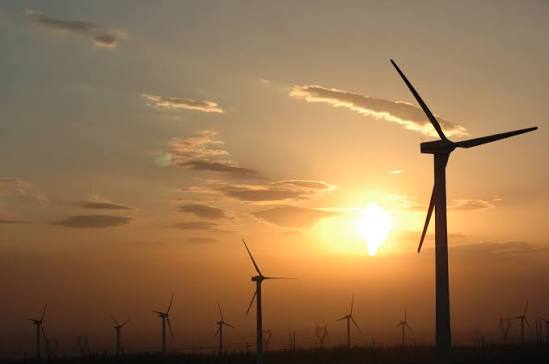
The country is pairing a planned 2,000-megawatt (MW) wind project in the Gulf of Suez with its first wind-turbine manufacturing plant, linking electricity generation directly to industrial development and technology localisation.
The project is being developed with China’s SANY Renewable Energy under an agreement involving the Egyptian Electricity Transmission Company and Egypt’s New and Renewable Energy Authority.
The wind project is expected to connect to Egypt’s national grid within 23 months after final agreements, while the manufacturing facility is intended to supply the domestic market and potentially export to African and Middle Eastern markets.
The development presents a useful question for Ghana: should renewable-energy investment be measured only by how many megawatts are added, or also by how much productive capacity is built around those megawatts?
From Renewable Generation To Industrial Capacity
Egypt’s approach is notable because the manufacturing component is being developed alongside the generation project.
The planned factory is expected to have an annual production capacity of 2 GW, according to Egypt’s Ministry of Electricity, with the government explicitly linking the investment to local manufacturing, technology transfer and potential exports.
That changes the economic equation.
A conventional renewable-energy project can deliver electricity while much of the value chain remains offshore: turbines, components, specialised engineering services and technology can all be imported.
Egypt is attempting to capture a larger share of that value domestically.
For Africa, where renewable-energy deployment increasingly requires large volumes of imported equipment, that distinction matters.
A wind farm can reduce fuel consumption and emissions, but a manufacturing ecosystem can additionally create engineering capabilities, supplier networks, technical employment and opportunities for regional exports.
The industrial benefits, however, will depend on how much technology, skills and component production actually become embedded locally rather than the factory functioning primarily as an assembly or import-dependent operation.
What The Egyptian Model Means For Ghana
Ghana has renewable-energy ambitions, but the country’s opportunity is not simply to replicate Egypt’s wind project.
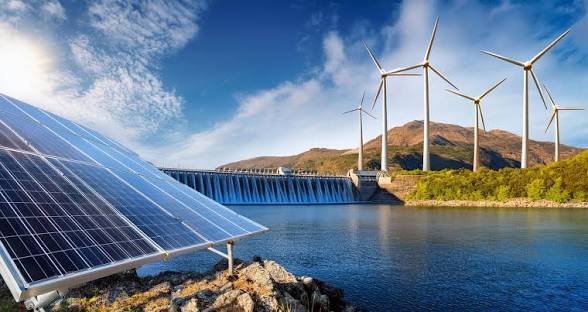
Ghana’s more immediate renewable-energy potential is concentrated particularly around solar, alongside existing hydropower resources and emerging interest in other technologies. The more relevant lesson is therefore the structure of the investment.
Ghana’s Renewable Energy Master Plan has previously identified local assembly and manufacturing of renewable-energy technologies as an objective, including measures around local content, procurement and support for domestic manufacturers.
There is also evidence that Ghana’s renewable-energy sector already has the beginnings of a local capability base.
Research on Ghana’s solar industry has found opportunities for local companies in areas such as cables, mounting structures and other auxiliary components, while identifying limited local manufacturing capacity and financing as constraints.
That suggests a more practical starting point for Ghana may not be manufacturing complete solar modules or wind turbines immediately.
The country could progressively build competitive domestic supply chains around mounting systems, electrical equipment, cables, installation services, maintenance, software, engineering and other balance-of-system components, before moving into more technologically demanding manufacturing.
Ghana Cannot Afford A Megawatt-Only Transition
The central policy issue is therefore not whether Ghana should copy Egypt, but whether every major renewable-energy investment should be designed to leave more capability behind.
If a project brings foreign capital into Ghana but most equipment, specialised services and intellectual property remain imported, the immediate electricity benefit can be substantial while the industrial multiplier remains limited.
Conversely, poorly designed local-content requirements can increase project costs and discourage investment if domestic suppliers are not yet capable of meeting international standards at competitive prices.
The answer lies somewhere between the two: use foreign investment to deliberately build local capability without sacrificing project economics.
That requires measurable technology-transfer obligations, training programmes, local supplier development, research partnerships and procurement strategies that give capable Ghanaian firms a route into renewable-energy value chains.
Ghana’s own renewable-energy technology-transfer programme provides an example of this principle.
Ghana has already recognised technology transfer as part of its renewable-energy strategy through the Renewable Energy Technology Transfer (RETT) project. However, Egypt’s latest model raises the question of whether Ghana can move beyond technology adoption and training towards deeper domestic manufacturing and supply-chain development.
The Regional Market Is The Bigger Opportunity
The strongest case for localisation may ultimately be regional rather than purely domestic.
Ghana’s electricity market alone may not provide sufficient scale to justify manufacturing every renewable-energy component. But Ghana sits within the ECOWAS market and the African Continental Free Trade Area, creating a potential customer base beyond its borders.

Egypt is explicitly looking beyond its domestic market, with the planned turbine facility positioned to serve markets in Africa and the Middle East.
Ghana could pursue a similar logic in areas where it can establish a genuine competitive advantage.
The objective should not be manufacturing for the sake of manufacturing. It should be identifying renewable-energy components and services that Ghanaian firms can produce competitively, then using regional demand to achieve the scale required for investment.
That would make renewable-energy policy part of industrial policy rather than a standalone electricity programme.
The Real Test For Ghana
Egypt’s initiative is still at an early stage, so its eventual industrial impact remains to be demonstrated. But its underlying strategy is clear: build the renewable-energy asset and the industrial capability around it at the same time.
That is the more important lesson for Ghana.
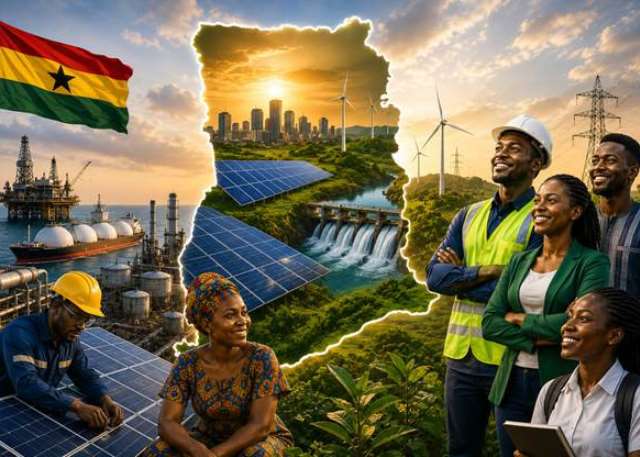
The country’s energy transition will require substantial capital, technology and equipment.
The policy choice is whether those investments simply add generation capacity or whether they also strengthen Ghanaian engineering, manufacturing, technical skills and businesses.
For Ghana, the target should therefore move beyond more renewable megawatts toward more renewable-energy value retained domestically.
That is where the real economic opportunity lies: turning the energy transition from an equipment-import exercise into a platform for industrial development.
READ ALSO: Gender Ministry To Establish 16 Shelters, Five Child Protection Bills Advance