The United States has extended visa sanctions against officials of the Palestinian Authority (PA) and members of the Palestine Liberation Organization (PLO).
The U.S. Department of State announced the decision after reporting to Congress that the PA and PLO had again failed to meet commitments outlined under U.S. legislation governing their relationship with Washington.
“As a consequence of their failure to reform, contrary to their commitments to the United States, and their ongoing activities that undermine the prospects for peace, the United States will extend sanctions that deny visas to PLO members and PA officials.”
The US State Department
The decision comes ahead of the UN General Assembly, where Palestinian President Mahmoud Abbas had been expected to address world leaders next week. It prevents Abbas from travelling to New York for the United Nations General Assembly for the second consecutive year.
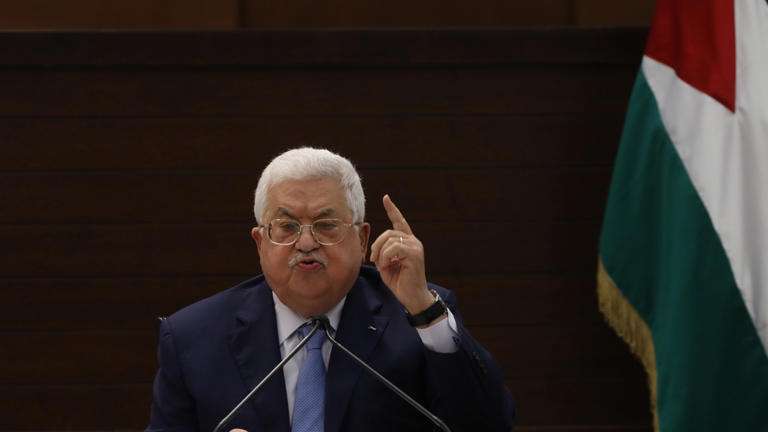
Washington said that the Palestinian leadership had failed to undertake reforms it had previously committed to and accused the PA and PLO of taking actions that undermine prospects for a negotiated Israeli-Palestinian settlement.
In its statement, the State Department cited what it described as efforts to pursue Palestinian statehood through international organisations rather than direct negotiations.
It also accused the Palestinian leadership of supporting actions involving the International Criminal Court and International Court of Justice and of seeking unilateral international recognition of Palestinian statehood.
The department further criticised what it described as continued payments to people whom the United States considers convicted attackers and their families, as well as the glorification of terrorism in public statements and school textbooks.
The State Department said that these actions were inconsistent with commitments made under the PLO Commitments Compliance Act of 1989 and the Middle East Peace Commitments Act of 2002. The department said that the sanctions were being extended under Section 604(a)(1) of the Middle East Peace Commitments Act.
The move represents a continuation of Washington’s restrictions on senior Palestinian officials and adds another obstacle to Abbas’s ability to participate personally in high-level diplomatic engagements at the United Nations.
Abbas’s speech this year had been expected to press for international recognition of Palestinian statehood and renewed momentum behind a two-state solution, following a wave of recognitions this month by the United Kingdom, France, Canada and other Western governments, as well as to draw attention to the humanitarian catastrophe in Gaza and the rapid expansion of illegal Israeli settlements and settler pogroms across the occupied West Bank.
No Israeli officials face equivalent US travel restrictions, despite an International Criminal Court arrest warrant issued against Israeli Prime Minister Benjamin Netanyahu over alleged war crimes in Gaza.
Last year’s ban drew criticism from Palestinian officials and UN human rights experts, who said the visa bans breach the US’s obligation to allow individuals invited by the UN to travel to its New York headquarters, and have argued that singling out Palestinian representatives while shielding Israeli leaders undermines Washington’s stated commitment to a negotiated peace.
The State Department framed the decision as part of an effort to hold the PA and PLO accountable for what it considers actions that undermine peace efforts. “It is in our national interest to impose consequences and hold the PLO and PA accountable for glorifying terrorism,” the department said.
The decision also comes against the backdrop of continued international efforts to address the Israeli-Palestinian conflict and growing diplomatic debate over Palestinian statehood.
Standing Waiver Keeps Palestinian UN Mission Operational
Despite extending the visa restrictions, the United States will maintain a standing waiver for personnel assigned to the PLO Observer Mission to the United Nations.
The State Department said the waiver allows personnel notified to the PLO Observer Mission to continue carrying out their functions at the United Nations, even as individual PA officials and PLO members remain subject to visa restrictions. “The Department has maintained the standing waiver for personnel notified to the PLO Observer Mission to the United Nations as was the case in the Department’s prior determinations,” the statement said.
The waiver means that the sanctions will not prevent the Palestinian mission’s regular personnel from continuing their work at UN headquarters in New York.
However, the extension of visa restrictions means Palestinian officials covered by the sanctions, including Abbas, remain unable to travel to the United States to participate in UN proceedings.
The distinction allows the Palestinian mission to maintain its routine diplomatic presence at the United Nations while Washington continues to restrict the travel of designated PA and PLO officials.
READ ALSO: Constitutional Review Implementation Committee Began Work On Day One, Targets November Timeline