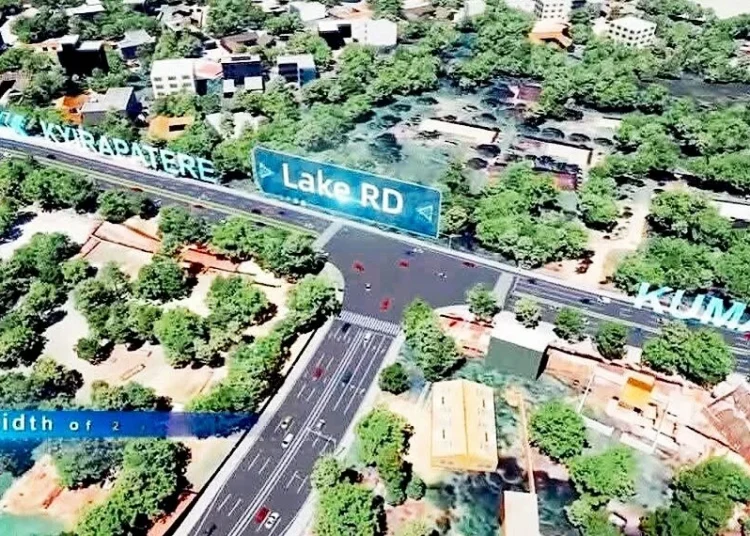
The Accra-Kumasi Expressway dominated Ghana’s online economic conversation and produced the clearest delivery narrative of the monitoring period, according to IMANI Africa’s latest PULSE report.
The study tracked political content across seven digital platforms between 8 August and 7 September 2026. The project’s prominence rests on a combination of financing and visible progress.
Finance Minister Cassiel Ato Forson announced that the full amount required for the project would be secured by the end of 2026 without borrowing, while Ghana Armed Forces engineers completed clearing of the 175.6-kilometre route in 19 weeks, one week ahead of the 20-week estimate.
Infrastructure produced the densest policy content
Infrastructure recorded 512 mentions with a substance index of 0.85 and sentiment of 0.15. Of 498 classified mentions, 422 were policy-oriented, making it one of the two clearest cases in the dataset of policy discussion surviving without being swamped by personality framing.
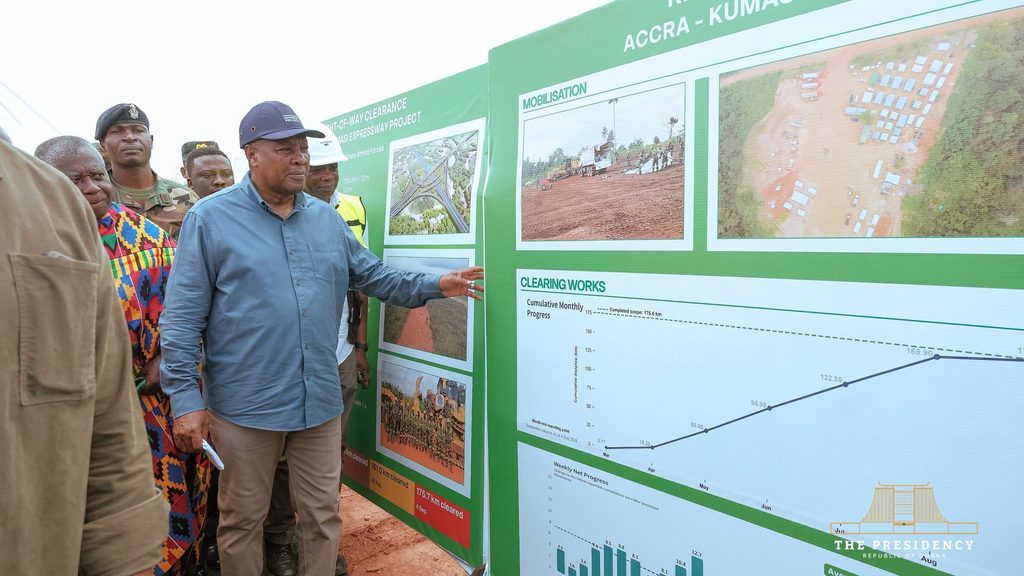
The expressway defined that theme almost entirely. IMANI attributes its strength to the pairing of a financing commitment with a measurable implementation milestone, a combination that gave supporters of the administration something concrete to point to rather than an announcement alone.
The project was repeatedly connected to the Mahama government’s Big Push Infrastructure Programme and the wider New Economy agenda. Personality content in the theme was comparatively limited and largely took the form of partisan credit-claiming, with NDC-aligned voices presenting the road as evidence of purposeful governance.
The New Economy programme drives the jobs conversation
The proposed $10 billion New Economy programme anchored the jobs theme, which recorded 212 mentions with a substance index of 0.84 and sentiment of 0.11. Monitored content referenced roughly $2.5 billion annually across seven strategic sectors, with agriculture and agro-processing positioned as lead sectors and a target of 250,000 jobs.
The programme also dominated foreign policy, which recorded 1,180 mentions with a substance index of 0.63 and sentiment of negative 0.09.
IMANI notes that the conversation there had less to do with traditional diplomacy than with Ghana’s economic relationship to the international system, built around converting cocoa into chocolate, bauxite into aluminium and critical minerals into batteries.
Conventional diplomatic content appeared only modestly, with Ghana’s representation at the inauguration of São Tomé and Príncipe’s President Carlos Manuel Vila Nova among the few clear examples.
World Bank warnings about infrastructure capacity and fiscal risks attached to the programme supplied the main counter-narrative, and the report observes that international institutional assessments are increasingly being folded into domestic arguments over economic strategy.
Resource revenues and health spending carry the delivery case
The economy theme recorded 1,243 mentions with a substance index of 0.73, second only to governance on volume. A reported dividend payment from Perseus Mining, described as seven times the previous year’s figure, generated 1,307 engagements, one of the strongest individual engagement figures in the dataset.
Health supplied the other pillar of the delivery narrative. The theme produced only 143 mentions but scored roughly 0.85 on substance, with 107 of 126 classified mentions policy-oriented.
President Mahama’s enrolment of 13,500 nurses and midwives onto the government payroll, together with reported clearance of outstanding arrears, drew appreciative responses from the Coalition of Unpaid Nurses and Midwives.
The near-completion of the Sewua Regional Hospital and debates over Agenda 111 and Zipline also featured. The energy theme, at 349 mentions and a substance index of 0.51, carried the government’s production agenda.
President Mahama’s direction to develop a strategy for Tema Oil Refinery and Sentuo to process roughly 100,000 barrels of locally sourced crude per day formed the clearest policy thread, alongside a planned 1,200-megawatt state-owned power plant intended to improve electricity reliability and affordability.
Where the delivery narrative meets resistance
The economic conversation was not uniformly favourable. One substantive critique in the data questioned whether Ghana could use gold-purchasing revenues to acquire medium-scale mining concessions and formalise mechanised gold production.
Education supplied a sharper grievance. Unpaid teacher salaries generated limited volume but significant political weight, because the delay was attributed personally to President Mahama and Ato Forson. IMANI’s broader point holds here. Delivery is now the government’s strongest asset online, and also its most direct liability when delivery fails.
READ ALSO: Equalities Minister Defends UK Economy’s Strong Position