Ghana is moving a virtual-asset market used by more than three million people into formal financial oversight, marking a significant shift from years in which cryptocurrency trading, wallets and related services expanded largely outside dedicated supervision.
The Bank of Ghana, Securities and Exchange Commission and Financial Intelligence Centre are now operationalising the Virtual Asset Service Providers Act, 2025, with licensing, registration and coordinated oversight at the centre of the new regime.
Regulators say billions of dollars in virtual-asset flows are already linked to Ghana, while a 2025 registration exercise identified more than 100 service providers offering payments, exchanges, wallet services, brokerage and investment advice.
Bringing that activity into the regulatory perimeter could improve consumer protection and transaction visibility, but it also gives authorities a clearer view of risks that can spill into payments, capital flows and financial stability.

The latest push follows Ghana’s decision to fully operationalise the virtual-asset framework by 2027. The question is therefore no longer whether cryptocurrency exists in Ghana, but how regulators manage a market large enough to affect household savings, cross-border transfers and demand for foreign-currency-linked assets without suppressing useful financial innovation.
Regulation Catches Up With an Existing Market
The Bank of Ghana’s policy position makes clear that virtual assets can no longer remain outside Ghana’s financial regulatory remit. Act 1154 provides the legal foundation for registration, licensing and supervision, while the Bank, SEC and FIC are dividing responsibilities according to the activity and risk involved.
That approach matters because Ghana is not regulating an industry before it emerges. It is formalising one that already has millions of users and a growing connection with banks, securities markets and digital payments.
The central bank’s earlier registration exercise found service providers operating across exchanges, custody, transfers and investment services, activities that can create consumer and financial-system risks when they sit beyond effective supervision.
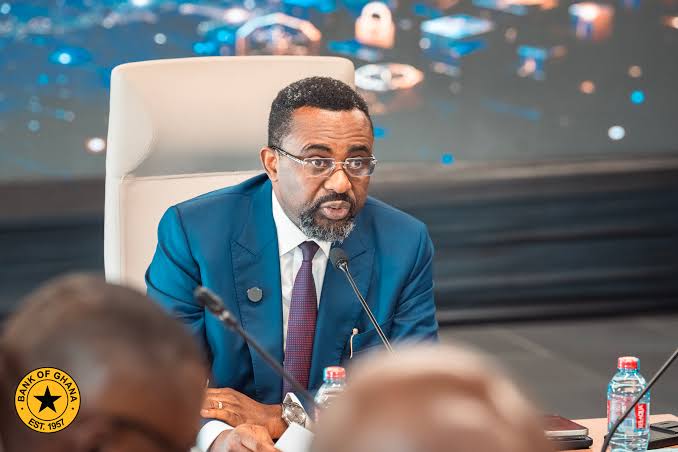
Philip Kwaw Sebuabe, Head of the Bank of Ghana’s Virtual Assets Department, captured that shift at the Digital Assets Summit Africa in Accra: “The choice is no longer whether virtual assets should exist. It is whether they will develop deliberately, transparently and safely, or whether the public will navigate them alone.”
Stablecoins Add a Monetary Dimension
The regulatory challenge extends beyond fraud and investor losses. Stablecoins and other assets linked to foreign currencies can become alternative stores of value or transfer instruments, particularly when users want exposure to the dollar.
If adoption becomes sufficiently large, that behaviour can complicate the central bank’s view of foreign-exchange demand and the channels through which monetary policy reaches households and firms.
The risk should not be overstated. Virtual assets are not legal tender in Ghana, and regulators are not treating cryptocurrencies as substitutes for the cedi. But bringing exchanges, wallet providers and stablecoin-related services into formal supervision gives the authorities more information with which to assess whether activity is affecting payment flows, currency demand or financial-system exposures.
This is why the Bank’s regulatory framework explicitly identifies monetary policy, financial stability and possible disintermediation of payment systems among the risks that require monitoring. Regulation, in this sense, is partly about visibility: policymakers cannot manage effectively what remains largely outside their information set.
Licensing Could Strengthen Trust and Traceability
The regime also creates a clearer compliance burden for firms. Virtual-asset service providers are expected to meet anti-money-laundering, governance, cybersecurity, disclosure and customer-asset protection requirements, while regulators develop activity-specific licensing rules.

The SEC has already admitted 20 firms and institutions into its virtual-asset sandbox, covering exchanges, trading platforms, tokenisation, brokerage and real-world asset custody. Controlled testing allows regulators to observe products before wider deployment while firms demonstrate whether their systems can meet market-integrity and investor-protection standards.
That process reinforces the recent Bank of Ghana warning that digital-asset firms must build compliance into their operations. For legitimate operators, clearer rules may raise compliance costs in the short term, but they can also reduce uncertainty and improve confidence among consumers, banks and institutional investors.
2027 Will Test Regulatory Capacity
The harder task is implementation. Digital assets move across borders and platforms quickly, while new products can emerge faster than conventional financial rules. Ghana will therefore need regulators with the technical capacity to supervise firms, share information across agencies and respond to risks without treating every new technology as something to prohibit.
Consumer education will be equally important. Licensing a provider cannot eliminate price volatility, investment losses or scams, and regulation should not be interpreted as a government guarantee that every virtual asset is safe.

The value of the framework will depend partly on whether users understand the difference between a regulated intermediary and the underlying risk of the asset being traded. Ghana’s decision to regulate rather than ban the market recognises that virtual assets have already become part of the country’s financial landscape.
The success of the new regime will therefore be measured not by how many crypto businesses it attracts, but by whether greater innovation comes with better transparency, stronger consumer protection and fewer blind spots for the financial system.
READ ALSO: Mahama Heads To 81st UN General Assembly With Two High-Level Side Events