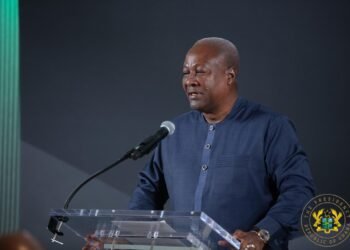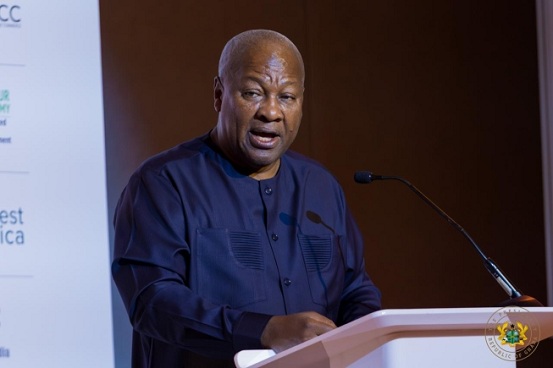
President John Dramani Mahama has launched the High-Level Panel Report of the Accra Reset, titled “A Sovereign Future for Health,” describing it as a defining milestone in Ghana’s push for self-reliance among nations of the Global South in shaping their own health futures.
Marking one year since the launch of the Accra Reset initiative, the President said the effort represented a deliberate rejection of the notion that the health, dignity and future of Global South nations should remain perpetually tied to foreign donor generosity, arguing that decades of so-called “country ownership” of health programmes had, in practice, left real decision-making power concentrated in distant boardrooms.
Describing the historical imbalance between rhetorical ownership and actual control, President Mahama used a vivid analogy to capture the frustration underlying the Accra Reset’s origins.
“To put it plainly, we were handed a broken cauldron and asked to own a soup cooked entirely in someone else’s kitchen,”
President John Dramani Mahama
Building on this critique, the President declared unequivocally that genuine ownership cannot exist without accompanying control over the resources, funding and priorities shaping national health programmes.
Sovereignty Paired with Domestic Accountability
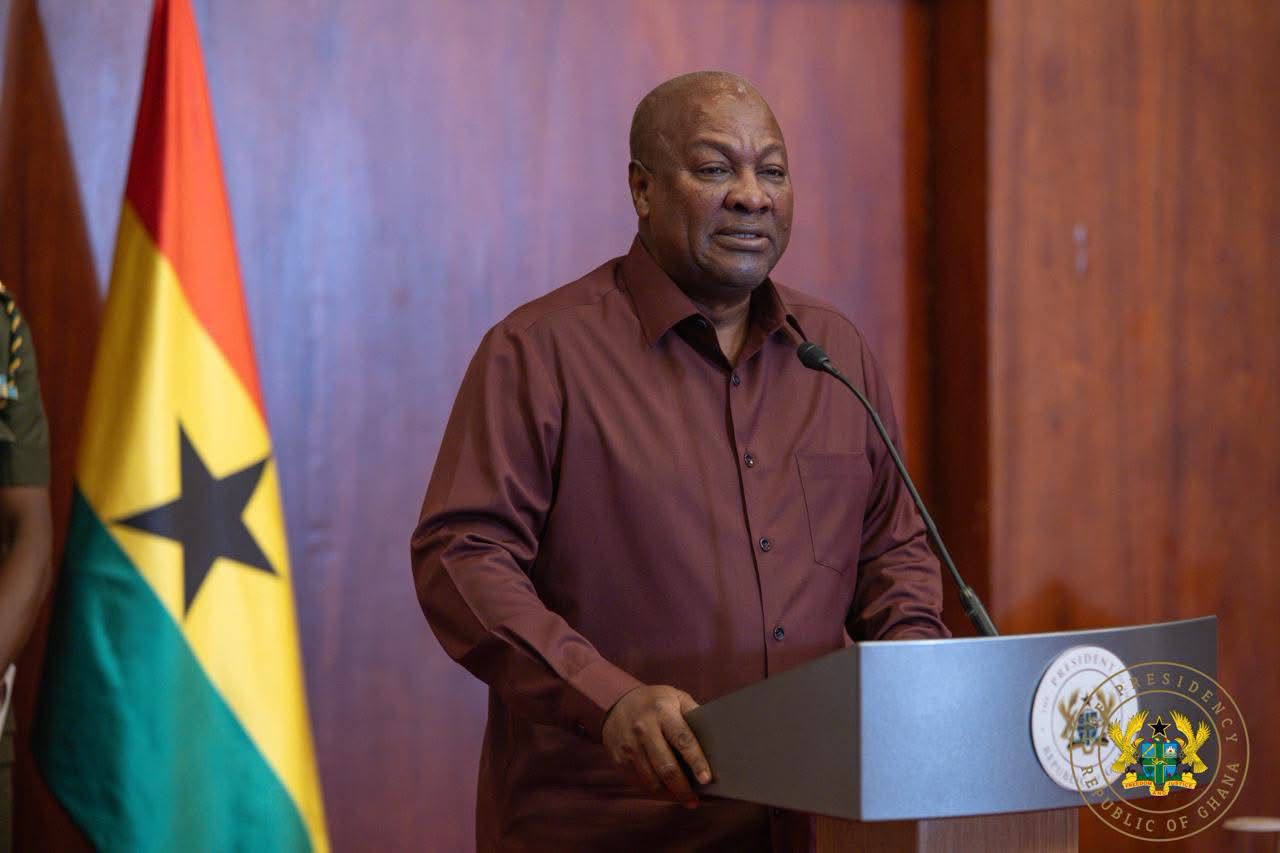
While asserting Ghana’s demand for greater control over its own health financing and priorities, President Mahama was careful to stress that such sovereignty comes with a corresponding obligation toward strict domestic accountability.
“Through the Accra Reset, we declare unequivocally that there can be no ownership without control,”
President John Dramani Mahama
He explained that under the broader Resetting Ghana Agenda, government is actively tightening fiscal management, intensifying the fight against corruption, and building local industrial capacity to ensure Ghana’s own pharmaceutical companies can manufacture essential medicines domestically rather than remaining dependent on foreign aid for basic medical supplies.
According to the President, the newly launched report sets out a clear pathway toward what he termed a “New Global Bargain,” built around three interconnected pillars.
The first is ownership, backed by genuine control over resources and production capabilities.
The second is cooperation defined by human dignity and mature, equal partnerships with global allies, rather than the historically lopsided donor-recipient dynamic. The third pillar is absolute domestic accountability, intended to ensure that public resources serve citizens fully, down to the last pesewa.
Health Chosen as The First Battleground
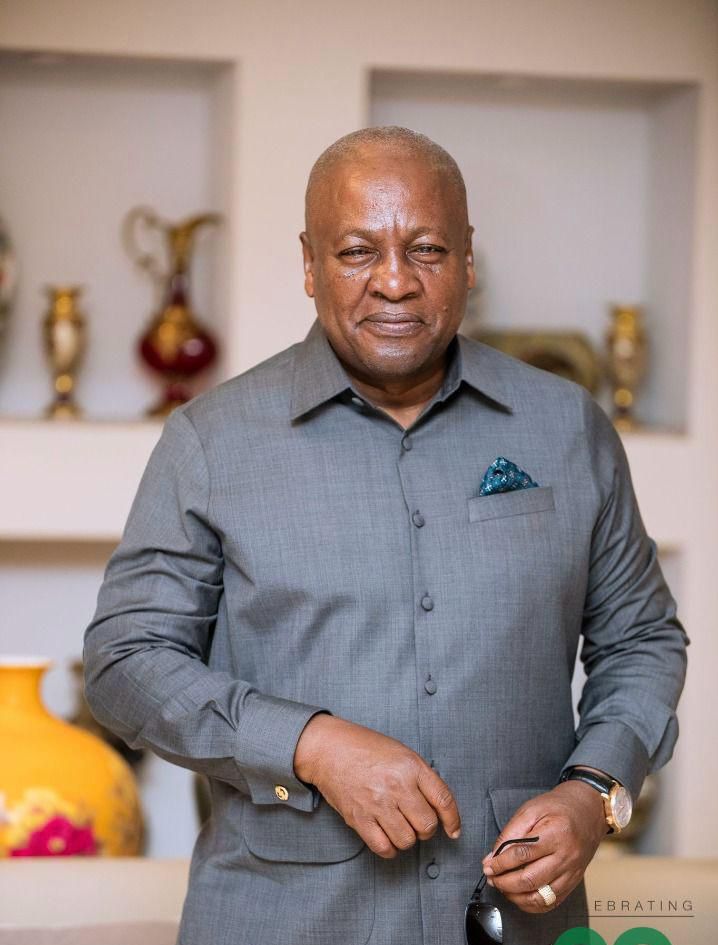
President Mahama disclosed that health has been deliberately selected as the first sector in which this new approach will be tested and demonstrated, with a specific focus on addressing the persistently unacceptable maternal mortality rates recorded across Sub-Saharan Africa.
He pointed to specific initiatives already underway to translate this commitment into concrete action, including Mother Africa and Business United for Mothers, Babies and Youth (BUMBY), describing these programmes as vehicles for ensuring that broader policy commitments deliver real, tangible protection to the mothers, babies and young people who need it most.
The launch of the Accra Reset report reflects Ghana’s ambition to position itself not merely as a recipient of international health assistance, but as an active architect of a new framework governing how African nations engage with global health partners.
By explicitly linking the initiative to Sub-Saharan Africa’s maternal mortality crisis, the report connects Ghana’s sovereignty agenda directly to a concrete, measurable public health outcome that has drawn sustained regional and international attention in recent months.
Building On a Year of Groundwork
Marking the anniversary of the original Accra Reset launch, this latest report appears to consolidate a year’s worth of policy development and diplomatic engagement into a formal, structured framework intended to guide future negotiations between Ghana, other Global South nations, and international development partners on health financing and programme ownership.
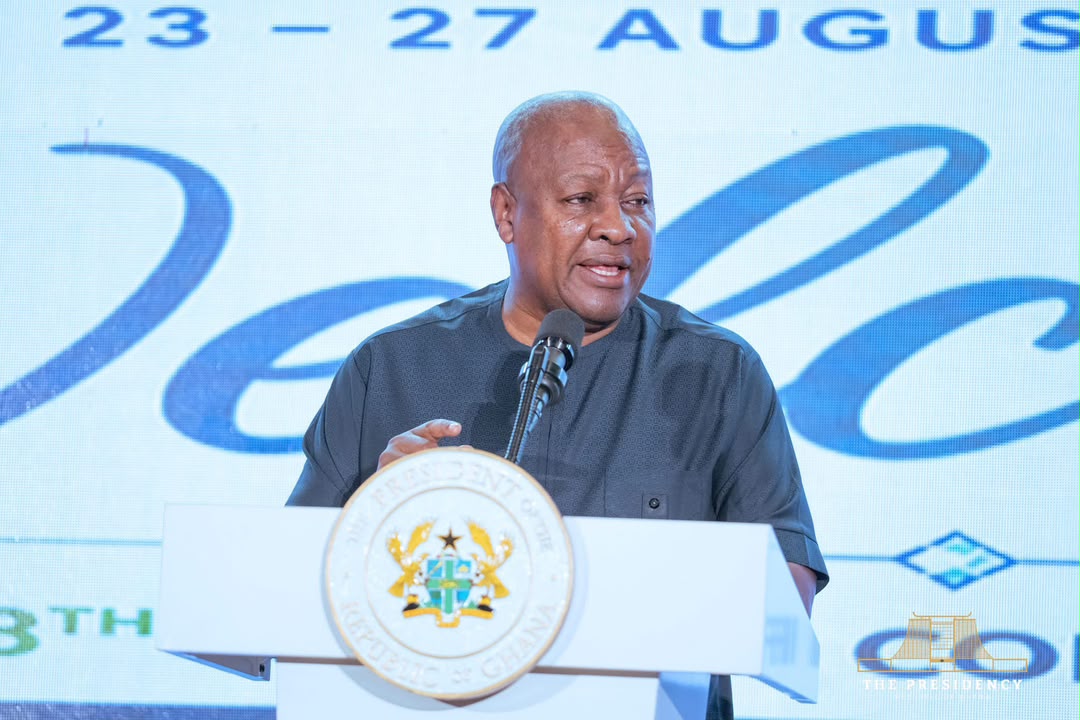
With the High-Level Panel Report now formally launched, attention will likely turn to how quickly the principles outlined, ownership backed by control, mature partnership, and strict domestic accountability, translate into concrete shifts in how health programmes across the Global South are financed and governed.
Given the explicit focus on maternal mortality as the initial proving ground for this new approach, the coming months are likely to serve as an early indicator of whether the Accra Reset framework can move beyond declaration toward measurable improvement in one of the region’s most persistent public health challenges.
READ MORE: Mahama Marks Founder’s Day, Urges Unity To Realise Nkrumah’s Vision