Hon. Dr. Gideon Boako, Member of Parliament for Tano North and economist, has publicly challenged claims surrounding the reported $1.1 billion gold reserves support provided by the Ghana Gold Board (GoldBod) to the Bank of Ghana (BoG).
According to Dr. Boako, the publicized transaction does not represent a fresh injection into the nation’s foreign exchange reserves, but rather serves as a overdue fulfillment of existing contractual obligations owed to the central bank.
“The $1.8 billion from which about $1.1 billion is being deemed as addition to reserves is therefore just a repayment, or supply, of what GoldBod already owed BoG. This ought to be clarified. It is also important to note that under the current GoldBod gold purchasing architecture, with the BoG exiting the gold purchasing funding scheme, all gold purchased by GoldBod with funds sourced from commercial banks must go back to the commercial banks through FX sales.”
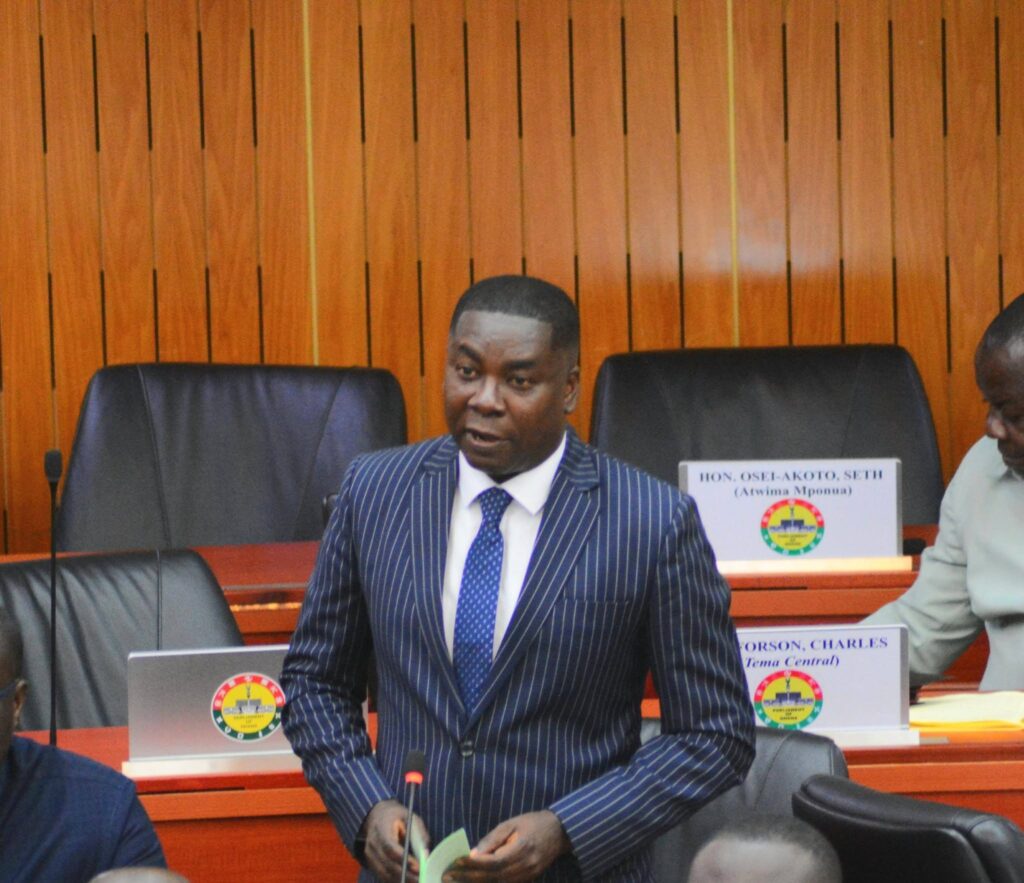
Hon. Dr. Gideon Boako
Expanding on the situation, the lawmaker revealed that GoldBod accumulated a debt of approximately GH¢3.7 billion in undelivered gold supplies to the Bank of Ghana throughout 2025.

This shortfall occurred after the central bank advanced local currency funds to GoldBod to purchase bullion on its behalf, a mandate GoldBod failed to fulfill for several months.
Consequently, Dr. Boako clarified that the $1.1 billion portion extracted from the recent $1.8 billion transaction simply constitutes a debt repayment or physical delivery of commodities previously paid for, rather than a genuine addition to Ghana’s foreign exchange reserve build-up.
Structural Realities of Gold Procurement Funding
Under the operational guidelines governing GoldBod’s current purchasing framework, the central bank’s decision to exit direct funding schemes effective July 1, 2026, fundamentally alters how gold acquisitions interact with national reserves.
When GoldBod secures capital from commercial lending institutions, the foreign exchange proceeds generated from gold exports must logically return to those commercial banks to settle outstanding cedi advances.
If off-takers provide the initial capital, the physical gold or corresponding dollar value must similarly be routed back to those off-takers.
Dr. Boako noted that it remains mathematically and operationally impossible to utilize third-party capital to purchase gold and subsequently surrender the resulting foreign currency proceeds to the central bank for reserve accumulation.
The MP stressed that commercial lenders will invariably demand the full dollar equivalent of their advanced cedi capital.
Attempting to allocate a discounted dollar return to commercial banks while diverting the remainder to bolster central bank reserves would create unsustainable liquidity deficits for private lenders.
Financing Ambiguities and Ministry of Finance Capital
According to the Tano North legislator, the only legitimate pathways for GoldBod to generate genuine reserve support for the Bank of Ghana are through direct funding allocations from the Ministry of Finance (MoF) or by floating its own independent debt instruments.
While GoldBod has not issued any debt securities to date, public records indicate a GH¢5 billion capital commitment from the Ministry of Finance earmarked for gold purchases.
This structural dependency raises critical questions regarding the exact origin of GoldBod’s current operational liquidity.
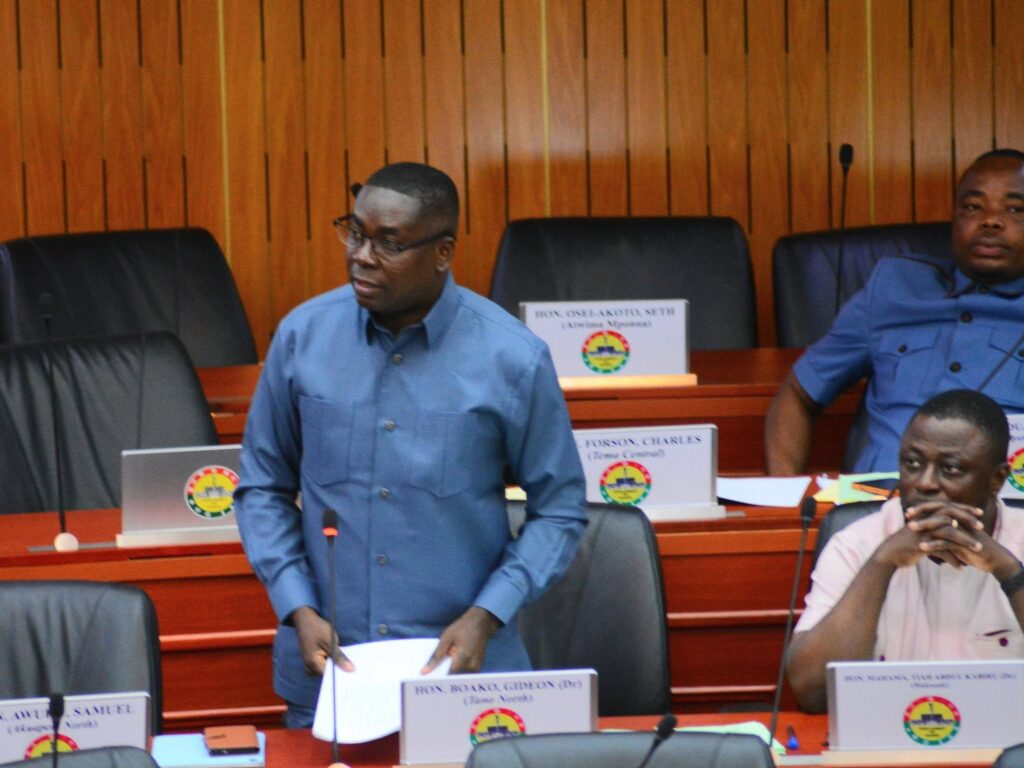
Dr. Boako questioned how much of the GH¢5 billion MoF allocation has actually been disbursed and spent so far. Furthermore, he raised concerns over whether the central bank might be clandestinely financing GoldBod’s operations despite its official policy declaration to cease funding activities.
The lawmaker cautioned that transparency remains non-negotiable when evaluating public sector balance sheets and national reserve accounting.
“As our elders say, ‘the length of the toad is known after death,‘” Dr. Boako remarked, asserting that the true state of GoldBod’s financial arrangements will only become clear when its underlying balance sheets and transaction ledgers are fully audited.
The Imperative for Domestic Gold Procurement Initiatives
The broader initiative to leverage domestic gold production for national reserve accumulation stems from Ghana’s ongoing strategic push to stabilize the cedi and reduce reliance on foreign currency debt markets.
As Africa’s leading gold producer, Ghana historically exported raw bullion without capturing the direct foreign exchange reserve benefits needed to cushion the local economy against macroeconomic volatility and external shocks.
By establishing dedicated domestic purchase schemes, state institutions aim to divert locally mined gold directly into the central bank’s vaults, building physical gold holdings alongside traditional foreign currency reserves.
This framework was designed to bolster national liquidity, mitigate currency depreciation, and provide a self-sustaining hedge against global inflation.
However, as highlighted by economic experts, the strategic merits of domestic gold purchasing depend entirely on transparent execution, clear funding boundaries, and accurate reserve reporting.
Without strict adherence to commercial accountability and financial clarity, the national economic benefits of domestic gold accumulation risk being obscured by debt roll-overs and unverified balance sheet claims.
READ ALSO: “Ghana Comes First”: Queiroz Leaves Black Stars After Mutual Contract Termination