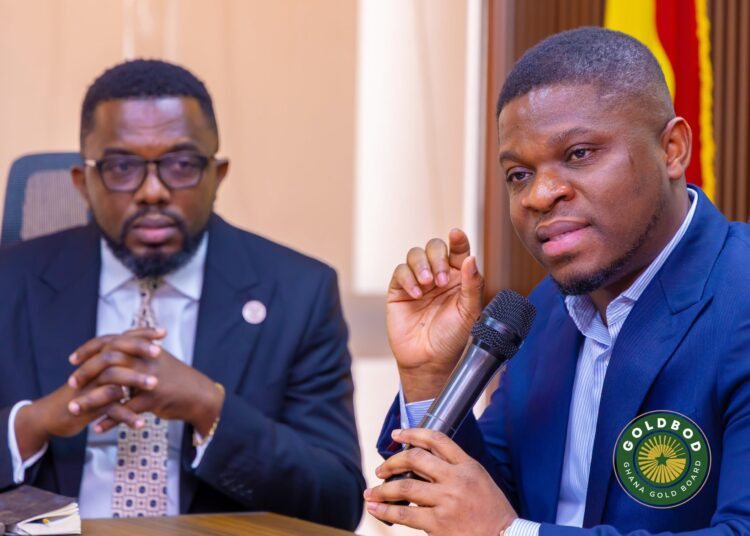
The Chief Executive Officer of the Ghana Gold Board (GoldBod), Sammy Gyamfi, Esq., has revealed that Ghana’s artisanal and small-scale mining (ASM) sector generated an unprecedented US$10.8 billion in foreign exchange for the national economy in 2025.
Speaking during a courtesy call paid on him by a high-level diplomatic delegation from the Kyrgyz Republic, Mr. Gyamfi explained that this massive financial inflow was made possible following landmark structural reforms aimed at curbing illicit trade and integrating small-scale operators into the formal domestic financial architecture.
He emphasized that the regulatory mechanisms introduced by GoldBod have systematically redirected informal mineral wealth into official state channels, turning a once-fragmented sector into a vital driver of national foreign exchange reserves.
“GoldBod had helped increase gold captured from the artisanal and small-scale mining (ASM) sector to 104 metric tonnes, from about 60 tonnes previously. According to Mr. Gyamfi, the ASM sector generated about US$10.8 billion in foreign exchange for the Ghanaian economy in 2025. He also highlighted GoldBod’s efforts to deepen domestic value addition through refining, noting that the Board is working with local refineries to process gold in Ghana before export.”
Ghana Gold Board (GoldBod),
Kyrgyzstan Seeks Ghana’s GoldBod Expertise After Decades of Informal Trading
The Foreign Affairs Minister of the Kyrgyz Republic, Hon. Jeenbek Kulubayev, commended Ghana’s progressive framework, noting that his nation is eager to replicate the GoldBod operational model to address its own longstanding extractive challenges.
Hon. Kulubayev disclosed that Kyrgyzstan’s gold sector remained largely informal for nearly 25 years, during which numerous entities operated without regulatory licenses, severely weakening the national economy and denying the public the full socio-economic benefits of its natural resources.
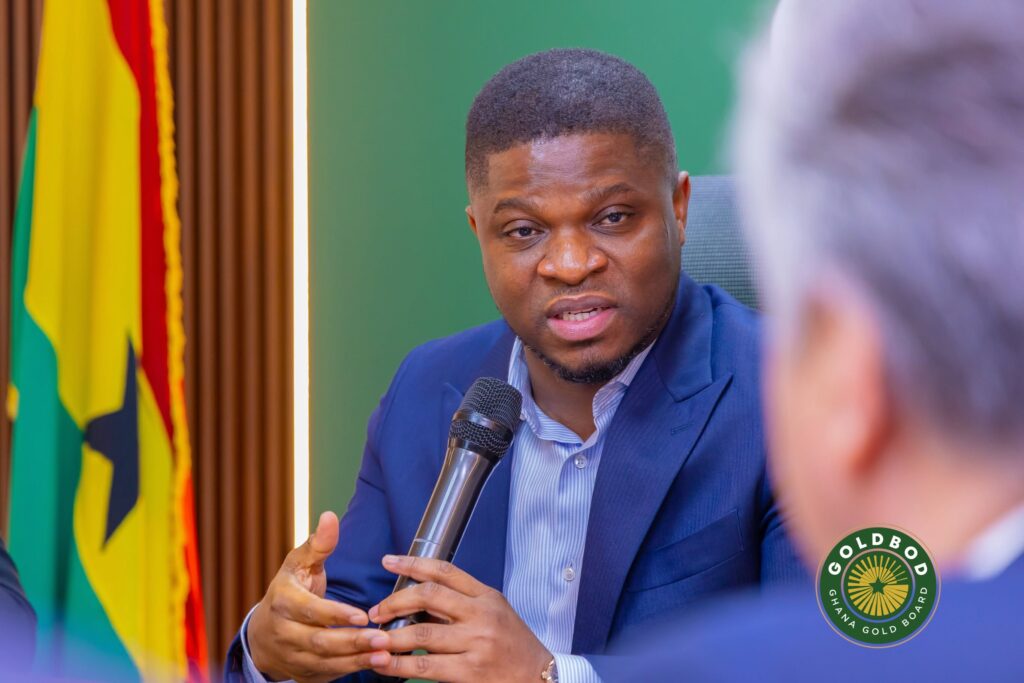
He explained that following a change of leadership in 2022, the Kyrgyz government made sector formalization a national priority, achieving noticeable infrastructure upgrades in roads and public amenities, yet still requiring major institutional investors and technical partnerships to unlock the sector’s full capacity.
Mr. Gyamfi assured the delegation that Ghana’s journey provides a tested roadmap for other gold-producing countries seeking to secure maximum socio-economic value.
He stated that GoldBod’s interventions extend beyond raw purchase volume, noting, “The reforms were also aimed at ensuring that by-products such as silver and other economic opportunities associated with gold processing are retained within the domestic economy, leading to job creation.”
He added that Ghana remains fully open to bilateral knowledge-sharing, technology transfer, and joint investment ventures with Central Asian partners.
Strategic Need for Gold Sector Formalization Across Emerging Markets
The growing global interest in Ghana’s GoldBod framework underlines an urgent economic imperative facing gold-rich developing nations: the critical need to eliminate illicit financial flows, dismantle cross-border smuggling networks, and retain high-value mineral processing within sovereign borders.
Unregulated artisanal mining historically drains developing economies through unrecorded exports, environmental damage, and loss of tax revenue.
By centralizing domestic gold purchasing, providing competitive market pricing to local miners, and integrating domestic refineries into the value chain, Ghana has successfully established a transparent, traceable, and highly lucrative supply model.
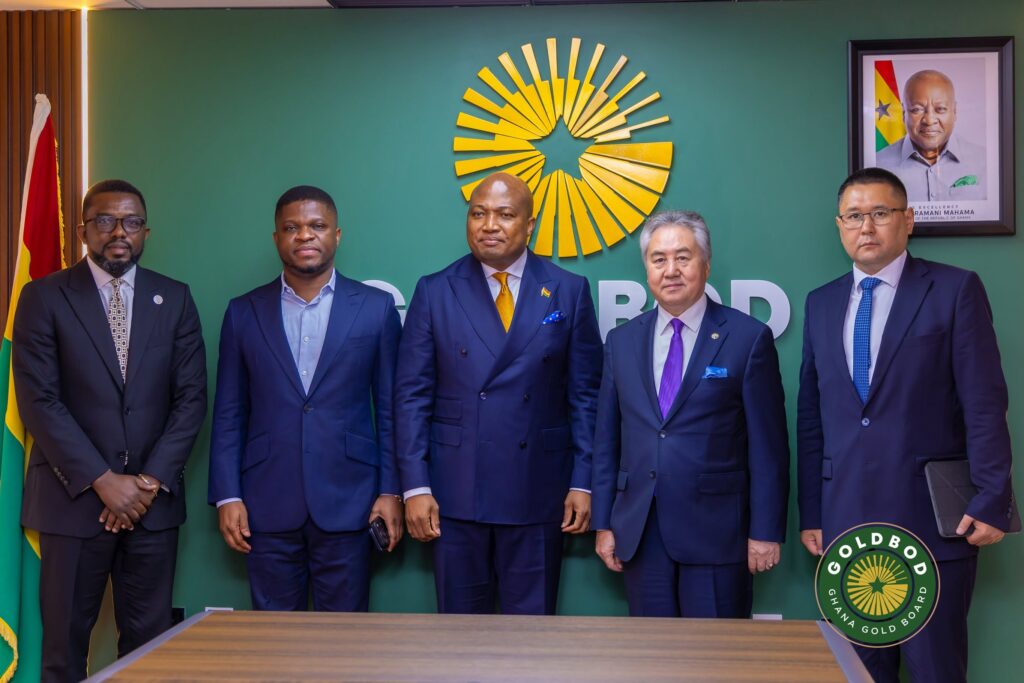
To institutionalize this growing bilateral relationship, Ghana’s Foreign Affairs Minister, Samuel Okudzeto Ablakwa, recommended the swift execution of a comprehensive framework agreement to guide structured technical exchanges and institutional cooperation between the two states.
While the bilateral engagement did not lead to an immediate signing, it established a strong foundation for future formal agreements, trade exchanges, and economic cooperation between Ghanaian entrepreneurs and Central Asian investors.
READ ALSO: Tennessee Suspends Executions After Failed Lethal Injection Attempt