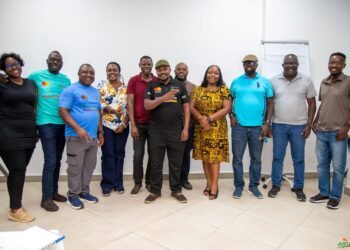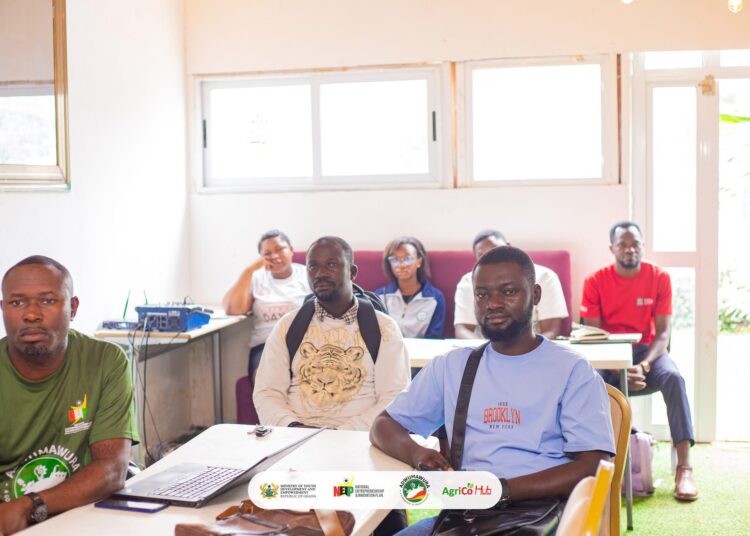
The Adwumawura Programme is placing practical business skills at the centre of entrepreneurship development, with a strong focus on helping business owners understand how to price their products, promote their brands, close sales and retain customers.
The programme emphasises that building a sustainable business goes beyond producing a good product or service. Entrepreneurs also need to understand the commercial decisions that determine whether a business can attract customers, generate sufficient revenue and remain competitive.
A key area of focus is pricing, which the programme describes as more than simply “Picking a Number.” Participants are being encouraged to understand the difference between cost-based and market-based pricing and to identify pricing strategies that allow businesses to remain profitable while offering value to customers.
Cost-based pricing requires entrepreneurs to understand the expenses involved in producing and delivering a product or service before determining an appropriate selling price. Market based pricing, on the other hand, considers factors such as customer demand, competitors’ prices and the perceived value of the product.
The emphasis on pricing is particularly relevant to Ghanaian small businesses, many of which operate in competitive markets where rising input costs and changing consumer behaviour can affect profitability.
The Ghana Enterprises Agency (GEA) identifies business management, marketing and productivity as important areas of support for small and medium-sized enterprises (SMEs).
Its SME High Growth Programme provides training and capacity-building support aimed at helping enterprises improve competitiveness, increase sales and create sustainable jobs.
The Adwumawura Programme therefore places marketing and promotion alongside pricing as essential components of business growth. Participants are encouraged to consider the channels through which their target customers can be reached, including social media, referrals and other forms of direct communication.
Highlights on Business Promotion
The programme stresses that promotion must go beyond simply announcing that a product exists. Businesses must communicate their value proposition in a way that captures attention and gives potential customers a reason to buy.
This approach is increasingly important as Ghanaian businesses expand their presence online.
In July 2026, the GEA announced a digital visibility initiative designed to help selected SMEs improve their presence through websites, social media, WhatsApp Business and other new-media channels.
The initiative recognises that an online presence has become an important part of how SMEs become visible, credible and reachable to customers. The programme’s focus on digital promotion is therefore consistent with wider efforts to help Ghanaian businesses use technology to reach markets more effectively.
Focusing on Sales
The next stage of the Adwumawura training focuses on sales. According to the programme, entrepreneurs must learn how to identify the right customers, present the value of their products, respond to objections and close sales with confidence.
“Finding The Right Customers, Presenting Value, Handling Objections, and Closing with Confidence” are identified as important steps in converting prospects into paying customers.
For entrepreneurs, this means understanding that sales is not simply about convincing someone to buy. It involves identifying a genuine customer need, demonstrating how the product or service addresses that need and building enough trust for the customer to make a purchasing decision.
The programme also draws attention to an area that businesses frequently overlook: Customer retention, according to the programme, is critical to transforming a one-time buyer into a loyal customer. Entrepreneurs are therefore being encouraged to pay attention to complaints, feedback, referrals and after-sales service.
“That’s What Turns a One-Time Buyer into a Loyal One,” the programme notes, highlighting the commercial value of maintaining relationships with customers after transactions have been completed.
Customer retention can also help businesses reduce their dependence on continuously finding new customers. Satisfied customers can return for additional purchases and recommend businesses to friends, relatives and colleagues, creating an additional pathway for growth through referrals.
Strengthening Capabilities for SMEs
For Ghana’s SME sector, strengthening these capabilities remains an important part of enterprise development. The GEA currently operates Business Advisory Centres and provides business advisory support to MSMEs, while its programmes include training in areas such as business management, marketing, technology and business planning.
The Agency’s SME Growth Grant Programme, for instance, specifically includes marketing training covering the planning and execution of the conception, pricing, promotion and distribution of goods and services. It also seeks to equip businesses with knowledge for accessing new markets and addressing barriers to market entry.
The Adwumawura Programme’s emphasis on the complete customer journey — from pricing and promotion to sales and retention, consequently presents entrepreneurship as a continuous process rather than a single transaction.
For emerging entrepreneurs, the lessons offer a practical framework for evaluating their businesses. A product may be good, but if it is incorrectly priced, poorly promoted or presented to the wrong audience.
It may struggle to generate sales. Similarly, a business that makes sales but fails to listen to customers or provide after-sales support risks losing opportunities for repeat purchases and referrals.
The programme is therefore encouraging entrepreneurs to view every stage of the customer journey as an opportunity to build value.
From understanding the true cost of a product to determining its market price, identifying the right promotional channels, converting prospects into customers and maintaining relationships after purchase.
The Adwumawura Programme is positioning these skills as fundamental to building businesses capable of surviving, competing and growing. The broader objective is not simply to help entrepreneurs make sales, but to equip them with the practical commercial knowledge required to turn those sales into sustainable businesses.
READ ALSO:Mahama, El-Sisi Deepen Ghana-Egypt Cooperation Across Key Sectors