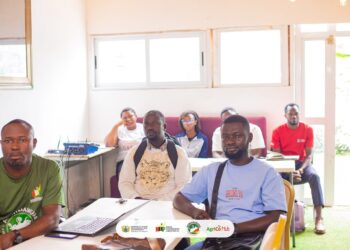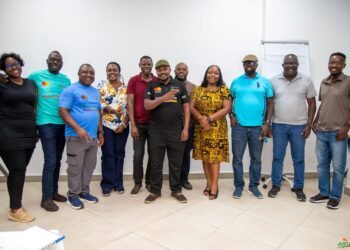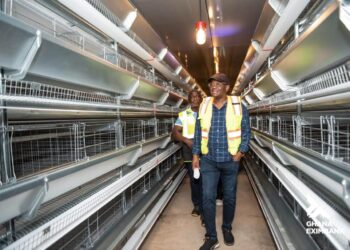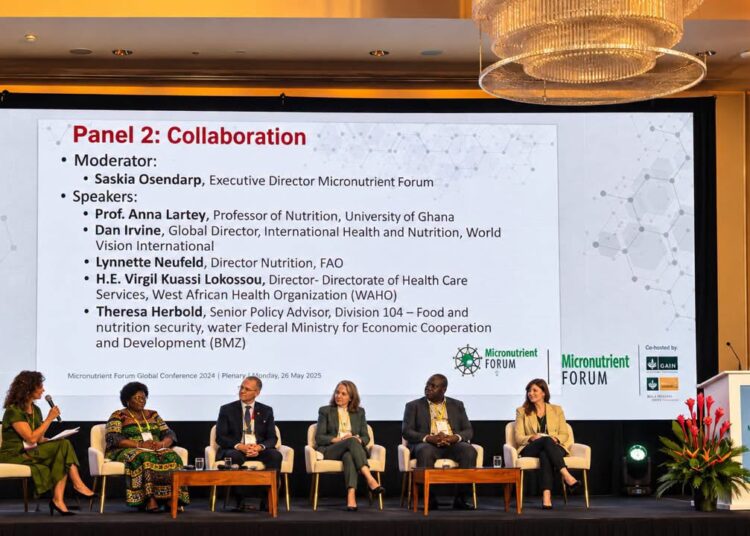
The Micronutrient Forum Global Conference 2026 takes centre Stage in Accra as one of the major international gatherings focused on nutrition, food systems and micronutrient challenges.
The conference emerges as a critical development priority as policymakers, development partners, businesses and agricultural stakeholders seek practical solutions to ensure people have consistent access to safe, affordable and nutritious food.
This brings together stakeholders to examine how evidence, partnerships, stronger nutrition governance and resilient food systems can translate into sustainable improvements in diets and livelihoods.
Food and nutrition security goes beyond ensuring that food is available. It involves creating systems in which farmers can produce sufficient quantities of quality food, businesses can develop and distribute nutritious products, and households can access food that meets their nutritional needs at affordable prices.
A key message emerging from discussions is that achieving this requires coordinated action across agriculture, markets, livelihoods, health and nutrition.
“Food and Nutrition Security means Ensuring Reliable Access to Sufficient, Affordable and Nutritious Food to Lead a Healthy Life,” stakeholders emphasise, noting that the challenge requires stronger food systems and effective policies that connect production with consumption.
The discussions in Accra also highlight the importance of resilient livelihoods. For millions of rural households, agriculture remains a major source of income and food, making investment in farmers and agricultural enterprises an important part of efforts to improve nutrition outcomes.
At the Deutsche Gesellschaft für Internationale Zusammenarbeit (GIZ) GmbH, food and nutrition security interventions span several sectors, with programmes designed to strengthen both livelihoods and access to healthier diet.
Enhancing Nutritional Resilience
Through the Global Programme Food and Nutrition Security, Enhanced Resilience, GIZ says its work has contributed to improved diets for 5.4 million people living in rural areas.
The Global Programme Modular Nutrition Actions builds on this experience by integrating effective nutrition approaches into existing development projects. Among the areas receiving attention is large-scale food fortification, which is considered an important strategy for improving access to essential micronutrients through commonly consumed foods.
The approach reflects a broader understanding that nutrition cannot be addressed by the health sector alone.
Agriculture, food processing, trade, markets, social protection and private-sector investment all play important roles in determining what food is produced, how it reaches consumers and whether households can afford nutritious diets.
In Ghana, the Market-Oriented Value Chains for Jobs and Growth in the ECOWAS Region (MOVE) programme is contributing to this broader agenda by supporting systems that improve market access while creating opportunities for farmers and businesses.
One example is the BBN Farmers COOP, an all-women rice producers’ cooperative in Ghana’s Upper East Region.
With support through a Matching Grant Fund, the cooperative has increased its productivity, improved the quality of its parboiled rice and strengthened its capacity to ensure a more reliable supply of paddy rice.
The experience demonstrates how targeted investment in agricultural businesses can have effects beyond production.
For the women farmers involved, stronger production and processing capacity can support livelihoods while contributing to more efficient food markets and a dependable supply of locally produced food.
Support for Farmers to Strengthen Local Value Chains
The cooperative therefore represents the connection between agricultural development and nutrition security, where support for farmers can help strengthen local value chains and improve the availability of food.
“Investing in agricultural businesses can contribute to stronger markets, more resilient livelihoods and better access to food.”
GIZ
The focus on women farmers is also significant because women play important roles across Ghana’s agricultural and food systems, from production and processing to marketing and household food management.
Strengthening their productive capacity can therefore contribute to broader economic and food-security outcomes.
The discussions around the Micronutrient Forum Global Conference 2026 come at a time when food systems globally face multiple pressures, including climate-related shocks, changing food prices, livelihood vulnerabilities and persistent nutrition challenges.
For countries such as Ghana, building resilient agricultural value chains means ensuring that farmers and businesses can continue producing and supplying food despite economic and environmental disruptions.
It also means creating stronger links between producers, processors, markets and consumers so that nutritious food is not only produced but remains accessible to households.
The Accra conference consequently provides an opportunity for stakeholders to examine how existing evidence and partnerships can be translated into practical action.
The central message is that improving nutrition requires more than encouraging individuals to make healthier food choices. It requires an enabling environment in which nutritious food is produced, processed, distributed and made affordable.
This places agriculture and food businesses at the heart of the nutrition conversation.
MOVE and ComCashew Funding the Agricultural Programme
The initiative involving MOVE-ComCashew is co-funded by the Bill & Melinda Gates Foundation and the German Federal Ministry for Economic Cooperation and Development (BMZ), and implemented by GIZ through the MOVE-ComCashew programme.
As stakeholders deliberate in Accra, the experiences of programmes such as MOVE demonstrate how development interventions can connect agricultural productivity, market opportunities and nutrition.
Ultimately, food and nutrition security is not only about what appears on people’s plates. It is also about the farmers who produce food, businesses that process and distribute it, policies that shape food systems, markets that determine accessibility and partnerships that help communities withstand shocks.
For Ghana and other countries seeking to improve food security and nutrition, the discussions reinforce the need for coordinated investment across the entire food system.
The challenge, stakeholders say, is to turn knowledge and partnerships into lasting improvements in what people eat and how they access nutritious food.
And as the global nutrition community gathers in Accra, the emphasis remains clear: stronger food systems, resilient livelihoods and effective partnerships are essential to ensuring that nutritious diets become accessible to more people.
READ ALSO:I Expected To Finish First Or Second — Nana Akomea