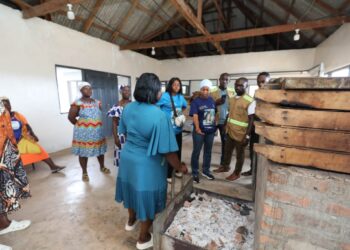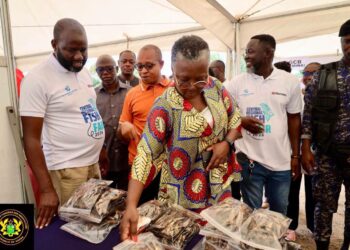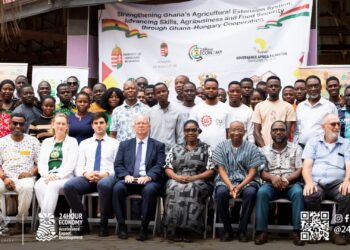
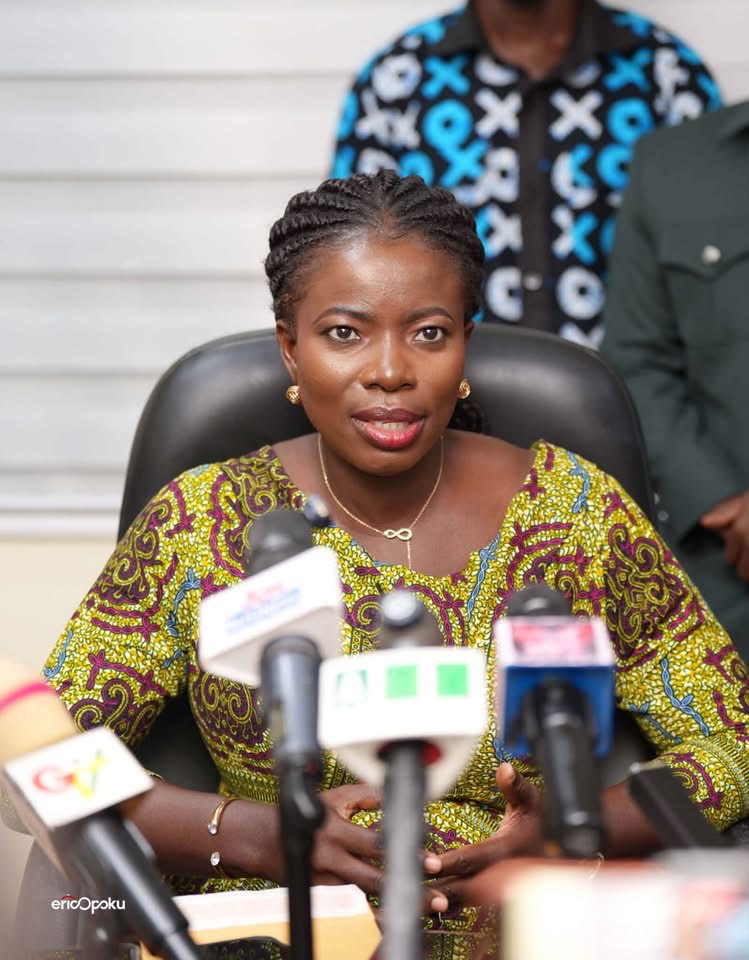
The 2023 National Best Female Farmer, Madam Edith Akosah Wheatland, has committed GH¢100,000 to support the 2026 National Best Female Farmer award, strengthening calls for greater private sector participation in Ghana’s agricultural development and recognition of women driving the country’s food economy.
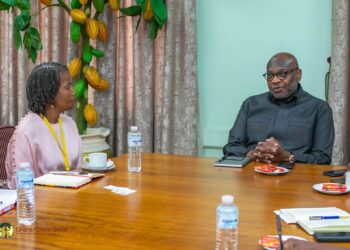
Madam Wheatland, Founder and Chief Executive Officer of Rockland Farms, presented the donation to the Ministry of Food and Agriculture as preparations to intensify for the 42nd National Farmers’ Day celebration scheduled for December 4 in Sunyani, Bono Region.
The contribution positions the National Best Female Farmer award not only as a platform for recognition but also as a mechanism for promoting investment in women led agricultural enterprises.
She says that this support is crucial in a time as Ghana is seeking to move agriculture beyond primary production towards commercially viable and value added businesses.
“Supporting women in agriculture with access to finance, markets and technology is critical to enabling them to grow their businesses and contribute meaningfully to their families, communities and the wider food system.”
National Best Female Farmer 2023, Madam Edith Akosah Wheatland
The intervention comes against a broader national push to mobilise investment into agriculture. In June 2026, the Government of Ghana and development partners launched the AgriConnect Compact, a framework aimed at strengthening food security, creating jobs, reducing food imports and mobilising investment across priority agricultural value chains.
The first phase, covering 2026 to 2030, has estimated financing needs of about US$3.5 billion, with the private sector expected to contribute alongside government and development partners.
The Compact identifies productivity, access to markets and finance, value addition and resilience as critical areas for transforming Ghana’s agri-food system. Its priority value chains include cocoa, oil palm, rice, maize and poultry, alongside cashew, coconut, rubber, fisheries and the forest economy.
For women farmers and agribusiness owners, access to productive capital remains particularly important. The Food and Agriculture Organization has documented gender disparities in Ghana’s agricultural sector involving access to credit and financial services, technology and innovation, extension services, land and control over farm enterprise.
Existing World Bank research on Ghana also indicates that women constitute a significant part of the agricultural workforce and are heavily involved in food production, processing and distribution, while facing constraints around productive capital, land, improved inputs and technology.
These constraints have direct business implications. Limited access to finance can prevent women-led farms from purchasing improved seeds, machinery, irrigation systems and other inputs required to increase productivity. Weak access to markets can also limit their ability to move from selling raw produce into processing, packaging, branding and other higher value activities.
Assisting Farmers to be Productive
The World Bank has further identified access to finance, land, productive inputs, irrigation, mechanisation, skills and knowledge as key areas requiring attention if women farmers are to unlock their productivity potential.
Against this background, Madam Wheatland’s contribution carries a wider private-sector message. It demonstrates how successful agricultural entrepreneurs can reinvest in institutions and initiatives designed to encourage more participation in the sector.
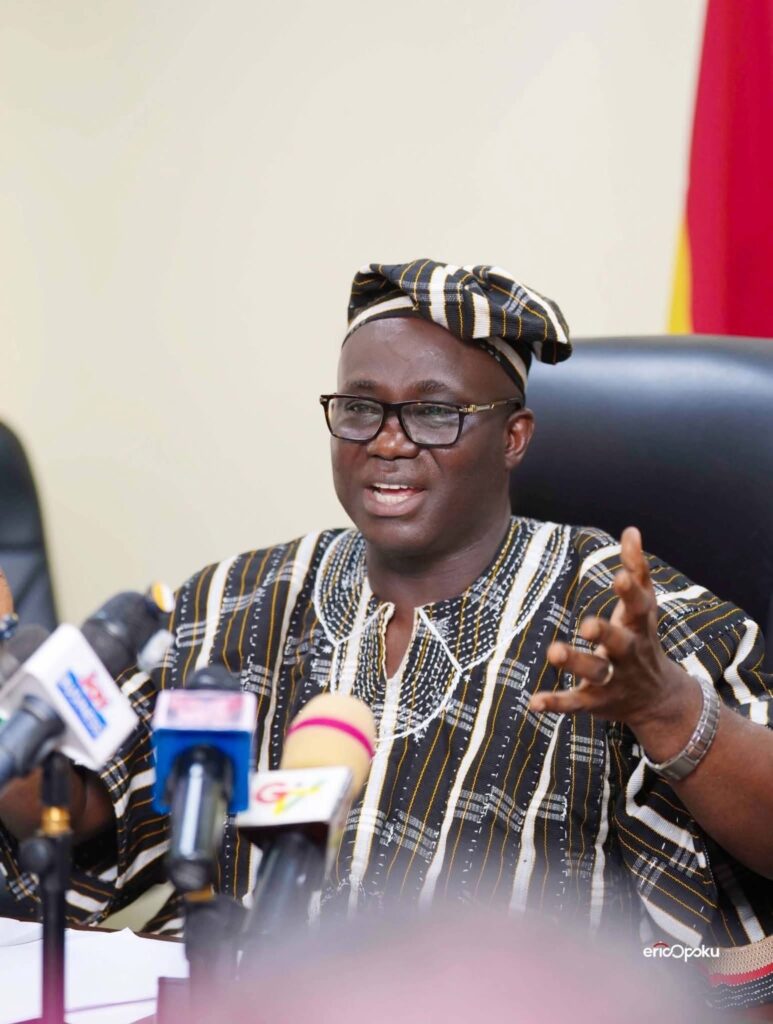
Receiving the donation on behalf of the Ministry, the Minister for Food and Agriculture, Hon. Eric Opoku, expressed appreciation to Madam Wheatland and Rockland Farms for supporting the Farmers’ Day celebration.
He urged Corporate Ghana and other well meaning Ghanaians to contribute to the celebration, stressing that private-sector participation is important to recognising farmers and ensuring the successful organisation of the national event.
“The support we receive from individuals and corporate organisations is important in helping us honour the contribution of our farmers and strengthen the celebration.”
Minister for Food and Agriculture, Hon. Eric Opoku
The Call for Private Sector Support
The call for private-sector support comes as Ghana seeks to attract more commercial capital into agriculture and build stronger links between farmers, businesses, financial institutions and markets.
The Ministry has previously stressed the need to turn agriculture into a profitable business capable of attracting young people and investment. At a recent Farmers’ Day support event, the Ministry said increased agricultural production must be matched by stronger storage, processing and market access so that higher output translates into improved farmer incomes.
This is particularly relevant as Ghana works to convert production gains into commercially sustainable agricultural value chains. The AgriConnect Compact targets the creation of more than 2.6 million jobs by 2035 and seeks to mobilise investment around food security, value addition and agricultural productivity.
The business case for supporting women in agriculture also extends beyond farm production. Women participate extensively in agro-processing, trading and distribution, creating opportunities for investment in food manufacturing, logistics, packaging, storage and retail.
FAO has highlighted the importance of access to finance and formal markets for women led agricultural businesses in Ghana, including enterprises operating in value chains such as shea.
Madam Wheatland said her donation was also intended to encourage other past National Best Farmers to give back to the agricultural sector.
Her appeal points to a potential cycle of reinvestment in which farmers and agribusiness owners who have benefited from commercial opportunities use their experience, resources and networks to support the next generation of agricultural entrepreneurs.
For Ghana, such partnerships could become increasingly important as government seeks to crowd in private investment rather than relying solely on public resources to finance agricultural transformation.
The Minister assured stakeholders that donations received towards the Farmers’ Day celebration would be used for their intended purposes, reinforcing the need for accountability in the mobilisation of private-sector support.
“The confidence of our partners is important, and we will ensure that contributions made towards the celebration are applied to their intended purposes.”
Minister for Food and Agriculture, Hon. Eric Opoku
The 42nd National Farmers’ Day is being held under the theme, “Our Farmers, Our Food, Our Future,” with the national celebration scheduled for Friday, December 4, 2026, in Sunyani.
The GH¢100,000 contribution therefore comes at a time when Ghana’s agricultural agenda is increasingly focused on investment, commercialisation and value-chain development. Beyond rewarding one outstanding female farmer, the support draws attention to the wider economic role of women whose businesses contribute to production, processing, food distribution and household incomes.
As Ghana seeks to mobilise billions of dollars for agricultural transformation, improving women’s access to capital, technology, markets and productive assets will remain central to whether that investment produces broader economic opportunities.
The donation by one award-winning farmer consequently provides a practical example of how private agricultural success can be channelled back into the sector, while strengthening the institutions and recognition systems intended to encourage more investment in farming and agribusiness.
READ ALSO: El Niño to Reach Unprecedented Levels by End-2026