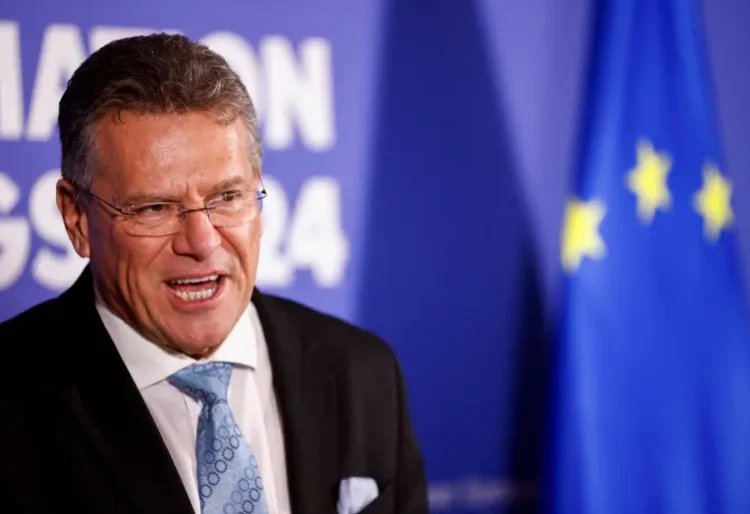
The European Union and China have reached a preliminary trade agreement following two days of negotiations aimed at easing growing tensions over trade imbalances, according to the EU’s trade commissioner.
European Commissioner for Trade, Maroš Šefčovič said that the initial agreement includes measures to reduce tariffs on some European goods entering China and stabilise rare earth supply chains. However, neither side provided comprehensive details of the proposed deal.
The agreement comes amid mounting trade friction between Beijing and Brussels over market access, Chinese exports and European restrictions on imports considered sensitive to domestic industries and national security.
Šefčovič indicated that the proposed arrangement could reduce tariffs on products benefiting “almost every” EU member state. It could also affect Chinese electric vehicles and plug-in hybrid vehicles entering the European market, potentially cutting imports by up to 50%, according to the EU trade envoy.

The preliminary agreement would still require the approval of leaders across the European Union’s 27 member states before it could be implemented.
The negotiations were intended to address key factors contributing to China’s expanding trade surplus with the bloc, which reached €360 billion, equivalent to approximately $410 billion, last year.
Beijing has also pressed the EU to reconsider restrictions on imports of advanced chipmaking machinery from China. The restrictions were imposed on national security grounds and, according to the draft, followed pressure from Washington.
Šefčovič had earlier described this week’s discussions as the culmination of three months of intensive work. He had also set an October deadline for achieving meaningful progress towards rebalancing trade between the two economies.
The preliminary agreement could provide an opening for both sides to address their differences, although the absence of detailed terms leaves questions about its eventual scope and impact.
Trade Tensions Continue Despite Negotiations
The talks come against a backdrop of increasingly strained commercial relations between China and the EU, with both sides imposing or considering restrictions on imports from the other.
Earlier this week, China’s Ministry of Commerce urged the EU to avoid protectionist policies, warning that such measures could produce unintended consequences.
The EU has introduced restrictions affecting Chinese-made electric vehicles and electric vehicle batteries, while also adopting measures to protect its steel industry. The bloc is further limiting duty-free imports of small e-commerce parcels, a move that particularly affects Chinese fast-fashion businesses.
These measures reflect European concerns about the impact of rising Chinese exports on domestic manufacturers and the competitiveness of local industries.
China has responded with its own trade actions. Last week, Beijing launched an anti-dumping investigation into imports of p-nitrotoluene from the EU. The chemical compound is used in the production of dyes and pharmaceuticals.
Chinese officials and businesses have also expressed concern over reports that some EU member states are considering additional measures to protect domestic industries.
The growing dispute has intensified wider concerns about the effects of rising Chinese exports on international markets, with some describing the trend as “China shock 2.0.”
These concerns have deepened as the United States, particularly since President Donald Trump returned to the White House, has raised tariffs and introduced other measures intended to reduce its substantial trade deficit with Beijing.
Despite resistance from some trading partners, China recorded a global trade surplus of $1.2 trillion in 2025. Its surplus is forecast to exceed $1 trillion again this year, according to the figures provided in the draft.
EU Trade Deficit With China Widens
The scale of the EU’s trade imbalance with China remains a central concern in the negotiations.
According to EU statistics cited in the draft, the bloc’s trade deficit with China widened to €103.34 billion, approximately $116 billion, during the April-to-July quarter.
Imports from China reached €153.63 billion, equivalent to about $172.3 billion, over the period. Meanwhile, European exports to China rose to €50.3 billion, or approximately $56.4 billion.
The figures underscore the disparity between the value of goods entering the European market from China and the value of European products sold to Chinese consumers.
For European policymakers, the imbalance has raised questions about market access, industrial competitiveness and the extent to which Chinese products are placing pressure on local manufacturers. Beijing, meanwhile, has challenged restrictions it considers protectionist and has called for a more open trading relationship.
The preliminary agreement could offer both sides an opportunity to reduce some of these pressures, particularly if the proposed tariff adjustments and rare earth supply-chain measures are translated into concrete commitments.
However, the lack of publicly disclosed details means the extent of the concessions remains uncertain. The proposed reductions in Chinese electric and plug-in hybrid vehicle imports, alongside the potential tariff relief for European goods, will also require further clarification.
Approval by EU leaders will be another important step before the preliminary arrangement can take effect.
As China and the EU continue negotiations, the outcome could influence not only their bilateral economic relationship but also wider discussions about tariffs, industrial protection and the future of global trade.
READ ALSO: US Imposes Sweeping Sanctions On ICC