The European Union (EU) and the Council of Europe have called on countries that retain the death penalty to immediately suspend executions, warning that the number of recorded executions worldwide rose by 78 per cent in 2025 compared with the previous year.
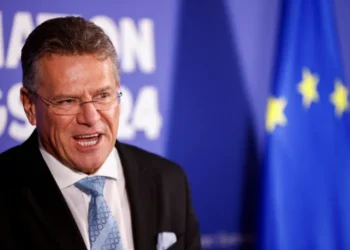
In a joint statement marking the European and World Day against the Death Penalty, EU Foreign policy Chief Kaja Kallas and Council of Europe Secretary General Alain Berset reaffirmed their opposition to capital punishment and called for its universal abolition.
The statement, shared by the European External Action Service on X, said that more than two-thirds of countries had abolished the death penalty in law or in practice. However, it warned that executions continued in several parts of the world despite progress towards abolition. “The European Union and the Council of Europe are unequivocally opposed to the death penalty, in all cases and in all circumstances,” the statement said.

The two institutions said that 17 countries were known to have carried out executions in 2025, with recorded executions increasing sharply from the previous year.
Iran accounted for most of the recorded executions, while significant increases were reported in Egypt, Kuwait, Saudi Arabia, Singapore and Yemen. Executions also continued in the United States.
The statement noted that executions in China were excluded from global statistics because of state secrecy, although it estimated that thousands of executions had taken place in the country during the year. Belarus remained the only country in Europe applying the death penalty, according to the statement.
The EU and the Council of Europe described the rise in executions as alarming and urged governments to take immediate steps towards ending capital punishment.
Countries Make Progress Towards Abolition
Despite the increase in executions, the joint statement highlighted developments in several countries that it said demonstrated continued progress towards global abolition.
Lebanon abolished the death penalty in August 2026, while The Gambia and Vietnam reduced the number of offences punishable by death.
Sierra Leone also ratified the Second Optional Protocol to the International Covenant on Civil and Political Rights, which aims to abolish capital punishment. Cambodia, the Central African Republic and Chad took steps towards ratifying the protocol.
The statement presented these developments as evidence that countries could move away from capital punishment through legislative and institutional reforms.
Nevertheless, the two institutions stressed that further action was necessary, particularly in countries that continue to impose and carry out death sentences.
They called for an immediate moratorium on executions as a first step towards abolition. They also urged countries to commute existing death sentences and ensure full compliance with international human rights law and standards while working towards ending capital punishment.
Concerns Over Executions For Drug Offences
The continued use of the death penalty for drug-related crimes was identified as a particular concern in the joint statement.
The EU and the Council of Europe argued that international human rights law restricts capital punishment to the most serious crimes, understood as offences of extreme gravity involving intentional killing.
They maintained that drug production and trafficking do not meet this threshold and challenged the effectiveness of executions as a deterrent to crime. “Evidence shows it does not deter crime better than other sentences,” the statement said.
The institutions further warned that capital punishment eliminates the possibility of rehabilitation and carries the risk of irreversible miscarriages of justice.
They also described the death penalty, including the process leading to execution, as inhumane and degrading treatment. The statement called on governments to embrace restorative justice and support efforts to move away from capital punishment.
Call For International Cooperation
The EU and the Council of Europe said that they would continue working with international partners, civil society organisations and legal professionals to advance the abolition of the death penalty.
They also opposed attempts to reintroduce or expand capital punishment, including in Europe, and emphasised the importance of public debate grounded in human rights and the rule of law.
The statement highlighted the recent World Congress against the Death Penalty in France, noting the role of the judiciary in abolition efforts and the importance of engaging young people.
The institutions also welcomed Morocco’s decision to host the 10th World Congress against the Death Penalty in 2029.
The renewed appeal comes as international efforts to abolish capital punishment face contrasting developments: several countries have taken steps towards ending the practice, while recorded executions have increased in others.
For the EU and the Council of Europe, introducing moratoriums, commuting existing death sentences and strengthening compliance with international human rights standards are essential steps towards universal abolition.
They urged all countries that retain capital punishment to join the growing international movement against executions, reiterating that the objective remains to end the death penalty everywhere.
READ ALSO: Trump Launches Inquiry Into Fed Governor Lisa Cook