The Tema Oil Refinery (TOR) and the University of Mines and Technology (UMaT) are exploring closer cooperation to align petroleum-sector education with the technical and operational demands of the refining industry, as Ghana seeks to strengthen domestic industrial capacity and develop the expertise needed to sustain critical energy infrastructure.
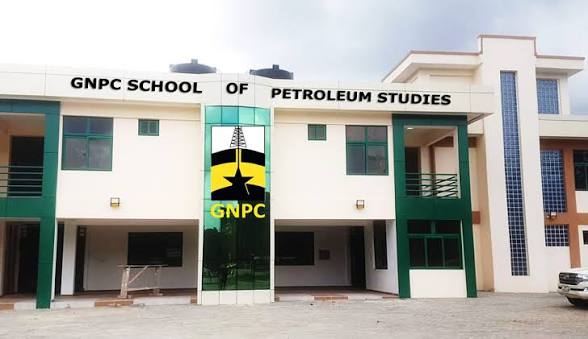
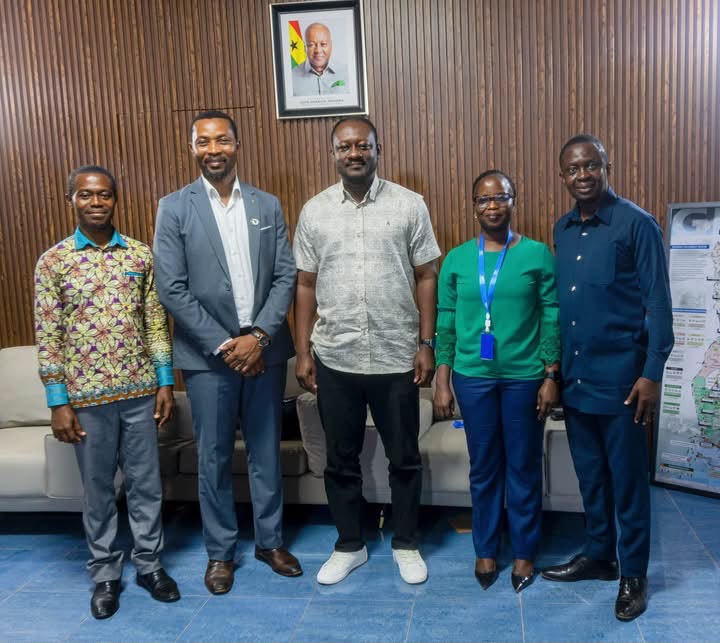
The discussions took place this week, when a delegation from UMaT’s School of Petroleum Studies met TOR Managing Director Edmond Kombat, Esq., to explore practical ways of building a stronger relationship between the university and the refinery.
The engagement centred on how UMaT’s teaching and research could better respond to the refinery’s business and operational requirements, particularly in preparing graduates with practical, industry-ready skills.
Excerpt from the discussion
While the visit did not produce a publicly announced partnership agreement or specific implementation commitments, it opened discussions on how academic expertise could be connected more closely with the technical demands of Ghana’s downstream petroleum industry.
The delegation comprised Professor Richard Amorin, Dean of the School of Petroleum Studies; Associate Professor Harrison Osei, Vice-Dean; Associate Professor Ohenewaa K. Dankwa, Head of Petroleum Geosciences and Engineering; and Dr. Ato Fanyin-Martin, Head of University Training Coordination.
Refinery Rehabilitation Highlights Need For Technical Expertise
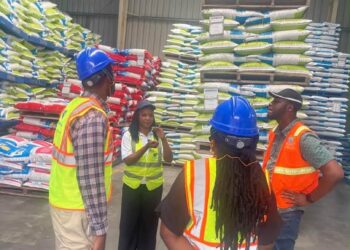
The engagement included a tour of TOR’s facility, during which the delegation observed rehabilitation work and upgrades under way on key refinery assets.
The visit offered the university representatives an opportunity to see aspects of the refinery’s ongoing work and consider areas where the institution’s teaching and research capabilities could potentially support industry requirements.

For a refinery undertaking rehabilitation and asset upgrades, technical competence is essential to the safe operation, maintenance and long-term performance of industrial equipment.
Engineers and other specialists must be equipped to work with complex processes, assess equipment performance and address operational challenges.
This creates a potential area of common interest for TOR and UMaT. The refinery has operational requirements, while the university has academic and technical expertise that could inform research, specialist training and professional development.
However, the visit does not establish that UMaT will participate directly in TOR’s rehabilitation programme. Any such role would require further discussions and clearly defined arrangements between the two institutions.
Bridging The Gap Between Academic Training And Industry
The central issue raised by the engagement is how universities can prepare graduates for the actual conditions they will encounter in industry.
Petroleum-sector education requires a strong technical foundation, but workplace readiness also depends on practical exposure and an understanding of how industrial facilities operate.
In refining, this may involve process operations, equipment maintenance, safety procedures, technical problem-solving and the coordination of different functions within a complex facility.
A closer relationship between TOR and UMaT could create opportunities to connect these requirements with the university’s academic programmes and research activities.
For TOR, engagement with the university could provide a channel to communicate its skills needs and identify areas where research may be useful.
For UMaT, closer interaction with the refinery could improve its understanding of industry expectations and help inform the development of relevant technical expertise.
The principle is straightforward: academic training becomes more responsive when employers can communicate the capabilities they need, while universities can draw on practical industry experience to shape teaching and research.
Yet the value of such cooperation will depend on whether the discussions lead to sustained activities rather than remaining at the level of institutional engagement.
What A Practical Partnership Could Deliver
The two institutions have identified the broad objective of closer collaboration, but the details of any future arrangement have not been disclosed.
Potential areas for further consideration could include industrial attachments, practical training, joint research and specialist technical programmes.
These are possible routes for translating the discussions into tangible outcomes, rather than confirmed commitments arising from the visit.
A structured arrangement could also help establish clearer priorities for research by connecting academic expertise with technical questions relevant to refinery operations.
It could provide a basis for identifying the skills required by the industry and determining how students might gain more exposure to real operating environments.
For such a partnership to deliver measurable value, both institutions would need to define their respective responsibilities, identify priority areas and establish practical ways of assessing outcomes.
Without those details, it remains too early to determine how the engagement will affect graduate employability, refinery performance or the development of Ghana’s petroleum workforce.
Why The Engagement Matters For Ghana’s Downstream Sector
Ghana’s downstream petroleum industry depends on technical personnel capable of supporting refining operations and maintaining industrial assets.
Developing that capacity requires coordination between education providers and companies that understand the demands of the workplace.

Closer industry-academia collaboration could help reduce the distance between the skills developed in university and those required by employers. It could also support applied research that responds to practical challenges rather than remaining disconnected from the needs of the sector.
For TOR, the potential benefit lies in developing stronger links with an institution specialising in mining, petroleum and related technical disciplines. For UMaT, the relationship could provide an opportunity to connect specialist education with the realities of refinery operations.
The wider value would depend on implementation. A courtesy visit can establish contact and identify common interests, but it cannot by itself guarantee a pipeline of industry-ready graduates or improvements in operational efficiency.
The institutions would need to turn the initial discussions into clearly defined programmes before those outcomes could be assessed.
From Dialogue To Measurable Results
The meeting between TOR and UMaT signals an interest in strengthening the relationship between petroleum education and industrial practice. The accompanying tour of the refinery’s rehabilitation works and asset upgrades added a practical dimension to those discussions.
The immediate outcome was an exchange on potential areas of cooperation. No formal agreement, funding arrangement, training programme or implementation timeline was announced in the information provided.
The next step will be determining whether the institutions can establish a practical framework that connects UMaT’s teaching and research with TOR’s operational requirements.
Ultimately, the success of the engagement will be measured not by the visit itself, but by whether it leads to sustained cooperation, stronger technical training and research that addresses real needs within Ghana’s petroleum industry.
READ ALSO: GRA: New Digital VAT System Won’t Add Another 20% to Bills